
A Week That Changed the World
In February 1972, US President Richard Nixon stepped onto the tarmac in Beijing. The visit marked the first time an American president had set foot in the People’s Republic of China. For both countries, the moment was historic. For the world, it was a turning point in the Cold War. Beyond official communiqués, photographs, and personal diaries reveal the fragile, carefully staged nature of this breakthrough in diplomacy.
The Symbolism of Images
Photographs from the visit quickly became iconic. Nixon shaking hands with Premier Zhou Enlai erased decades of diplomatic frost in a single frame. For Americans, the image suggested bold leadership. For Chinese audiences, it symbolized recognition from a former adversary.
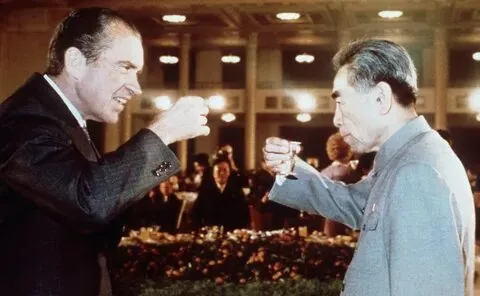
Yet images also conveyed subtler tensions. Photographs of Mao Zedong seated with Nixon show the Chairman frail but still commanding the stage. Shots of banquets and toasts highlight ceremony, but the stiff body language reveals an atmosphere of caution. Each image was crafted, yet each carries layers of meaning that historians continue to debate.
Diaries Behind the Scenes
Diaries and memoirs written by US officials, later published, describe the anxiety of the trip. Nixon’s aide H.R. Haldeman wrote of sleepless nights, meticulous rehearsals, and the fear that a single misstep could unravel delicate negotiations. Chinese hosts, equally wary, maintained strict schedules and choreographed encounters with precision.
One US diplomat noted in his journal that conversations often circled around symbolic statements rather than concrete agreements. The goal was not immediate resolution but the establishment of trust. These private accounts contrast sharply with the public narrative of seamless triumph.
The Shanghai Communiqué
The visit culminated in the Shanghai Communiqué, a carefully worded statement that acknowledged differences while opening the door to cooperation. The document addressed trade, cultural exchange, and most importantly, the Taiwan question. Both sides agreed to disagree while pledging to work toward normalization.
The communiqué was celebrated as a diplomatic success, yet diaries reveal that many negotiators felt it was fragile, more a pause than a settlement. For them, the achievement lay in creating space for future dialogue rather than resolving disputes outright.
Domestic Reactions
In the United States, Nixon’s visit was hailed as a masterstroke, boosting his reputation as a global statesman. In China, coverage was selective but enthusiastic, emphasizing hospitality and mutual respect. For ordinary citizens on both sides, the visit sparked curiosity about a country long portrayed as enemy or mystery.
Still, not everyone welcomed the thaw. Some American allies worried about shifts in balance, while conservative voices in China feared the dilution of revolutionary purity. These tensions remained beneath the surface even as public images celebrated harmony.
Long-Term Impact
The significance of the 1972 visit cannot be overstated. It paved the way for the full normalization of US-China relations in 1979, expanded trade, and reconfigured Cold War dynamics. Yet the photographs and diaries remind us that the achievement was not inevitable. It depended on fragile trust, careful choreography, and the willingness of leaders to take political risks.
Conclusion
Nixon’s journey to China is remembered as one of the most important diplomatic moments of the twentieth century. But its meaning becomes richer when we look beyond official communiqués. Photographs capture the symbolism, while diaries reveal the doubts, hesitations, and human dimensions of diplomacy. Together, they show that breakthroughs are built not only on grand strategy but also on fragile encounters between people, recorded in images and words.

