
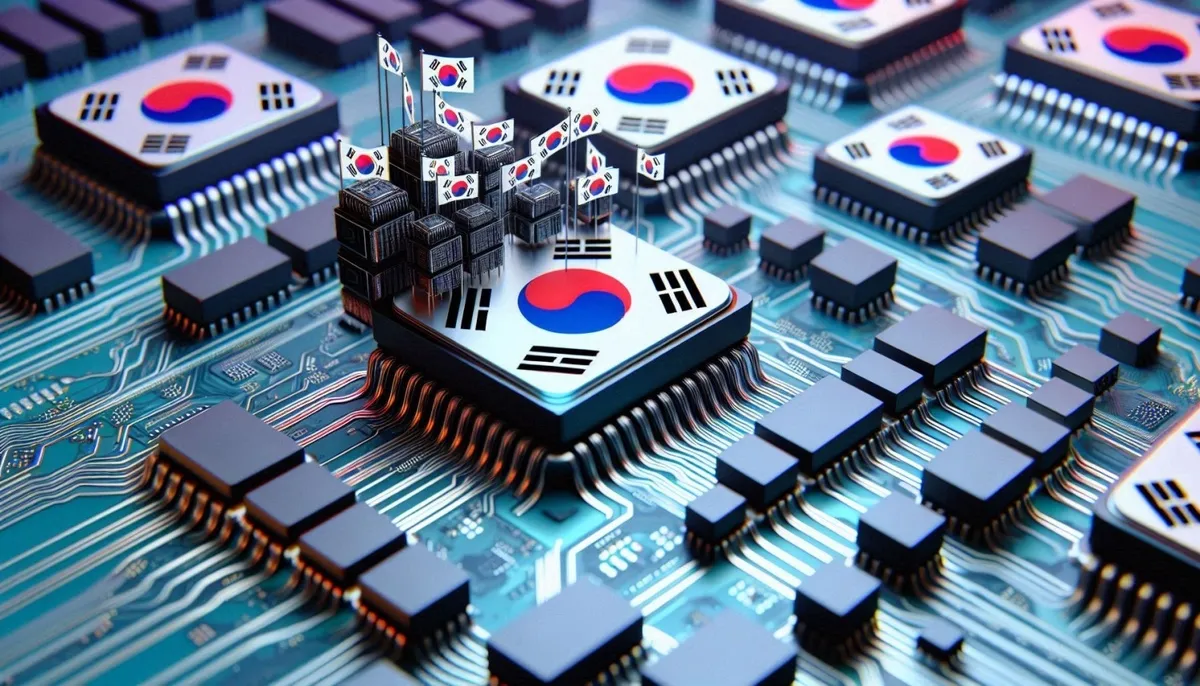
South Korea’s semiconductor industry continues to be a cornerstone of the global tech economy. Companies like Samsung Electronics and SK Hynix supply the world with high-performance memory and logic chips, making Korea indispensable in global technology supply chains. However, in 2025, Korea’s relationship with China has entered a more complex phase. While cooperation in manufacturing and trade persists, geopolitical tensions and U.S. export restrictions are forcing Korean firms to rethink their China strategies. According to Nikkei Asia and Reuters, Korean semiconductor exports to China still account for nearly 38% of total chip shipments, but new investment patterns indicate cautious diversification amid growing regulatory uncertainty.
The Depth of Korea–China Semiconductor Ties
For over two decades, China has been a crucial partner in South Korea’s chip ecosystem. Chinese factories rely heavily on Korean-made semiconductors for consumer electronics, data centers, and industrial equipment. In return, China remains a vital production base and consumer market for Korean firms.
SCMP reports that both Samsung and SK Hynix operate large fabrication plants in Suzhou, Wuxi, and Dalian, focusing on DRAM and NAND flash memory production. Together, these facilities supply up to 30% of global DRAM demand. Despite rising geopolitical risks, these plants continue to operate profitably due to local demand and established logistics infrastructure.
Trade between the two nations in semiconductor equipment and materials remains strong. Korean firms export high-end machinery and chemicals, while Chinese suppliers provide cost-efficient components and rare materials used in advanced packaging.
Competition and the Push for Technological Independence
While cooperation continues, China’s drive for semiconductor self-sufficiency has made the relationship increasingly competitive. Under its Made in China 2025 initiative and subsequent National Integrated Circuit Plan, Beijing has poured over $150 billion into developing domestic chip capabilities.
Companies like SMIC, Yangtze Memory Technologies (YMTC), and CXMT are rapidly advancing, supported by generous subsidies and talent recruitment from abroad. According to Reuters, SMIC’s 7-nanometer chips are now being mass-produced for select applications, narrowing the gap with global leaders.
For South Korea, this progress poses both opportunities and challenges. Korean firms supply advanced materials and foundry services to Chinese manufacturers, but they also face the long-term risk of being replaced as China closes the technology gap.
The U.S.-led export restrictions on advanced chipmaking tools have further complicated the picture. South Korea must balance its security commitments to Washington with its commercial dependence on China, which remains its largest trading partner.
Government Strategy and Industrial Policy
The South Korean government has adopted a dual strategy of technological leadership and market diversification. The K-Semiconductor Belt Initiative launched by the Ministry of Trade, Industry, and Energy aims to invest $450 billion by 2030 to expand domestic chip manufacturing capacity.
Tax incentives, R&D subsidies, and talent development programs are designed to maintain South Korea’s position as a global semiconductor hub. According to Yonhap News Agency, the government is also facilitating public–private partnerships to enhance advanced packaging, chip design, and AI-driven manufacturing automation.
At the same time, Seoul is pursuing international partnerships to offset overreliance on China. Agreements with the United States, Japan, and the European Union focus on supply chain resilience, materials sourcing, and research collaboration. The Korea–Japan Semiconductor Cooperation Accord, signed in 2024, reopened trade in photoresists and etching chemicals, which had been restricted since 2019.
Technological Collaboration Amid Constraints
Despite rising competition, selective cooperation between Korea and China continues in areas not restricted by export controls. Chinese firms remain essential clients for mid-tier chips and memory products used in consumer devices.
In 2025, SK Hynix announced a $3 billion investment in upgrading its Wuxi DRAM facility, pending regulatory approvals from both governments. Meanwhile, Samsung Electronics is expanding its research partnerships with Chinese universities in AI chip design and energy-efficient computing.
Both countries are also engaging through multilateral platforms. Under the Regional Comprehensive Economic Partnership (RCEP), semiconductor trade enjoys reduced tariffs and improved intellectual property protection. Analysts from Nikkei Asia note that RCEP provides a diplomatic cushion that allows Korea and China to maintain technical exchanges despite external pressures.
Impact of U.S. Export Controls
Washington’s tightening export restrictions on semiconductor technology have placed Korean companies in a difficult position. The U.S. Bureau of Industry and Security (BIS) mandates licenses for advanced chipmaking equipment exports to Chinese facilities, affecting operations of Korean fabs in China.
However, exemptions granted to Samsung and SK Hynix through 2025 allow continued shipments of specific products under monitoring conditions. These waivers reflect the U.S. recognition of Korea’s central role in maintaining global chip supply stability.
Industry experts predict that the future of Korean operations in China will depend on whether these waivers are extended beyond 2026. If not, companies may gradually relocate production to Korea or Southeast Asia, where new infrastructure is being developed.
Regional Dynamics and Supply Chain Shifts
Southeast Asia is emerging as an alternative manufacturing hub for both Korean and Chinese firms. Vietnam, Malaysia, and Singapore are attracting semiconductor investments due to stable policies and favorable trade agreements.
According to Bloomberg, Korean companies are increasingly investing in packaging and testing plants in Vietnam and Malaysia to reduce geopolitical exposure. Meanwhile, China is redirecting resources toward domestic self-reliance but continues to rely on Korean imports for high-end chips.
This diversification trend suggests a gradual decoupling of manufacturing ecosystems while maintaining transactional ties in less sensitive sectors.
Innovation
South Korea’s long-term strategy focuses on maintaining leadership in high-value segments such as advanced DRAM, logic chips, and AI processors. Samsung’s plan to begin 2-nanometer production by 2027 and SK Hynix’s push into next-generation HBM memory will define the country’s competitiveness.
China, on the other hand, is expected to strengthen its domestic ecosystem for mature-node chips and AI accelerators. Collaboration in research, especially in energy-efficient semiconductors and material science, could continue in neutral fields that benefit both sides.
Analysts from The Diplomat suggest that the relationship between Korea and China will remain one of “strategic interdependence.” Neither side can afford full decoupling without significant economic losses, but both will pursue policies to safeguard technological sovereignty.
Conclusion
South Korea’s semiconductor dominance stands firm in 2025, but its evolving relationship with China is redefining the regional technology landscape. Cooperation persists in shared production networks, yet strategic competition is intensifying as China seeks self-sufficiency and Korea deepens alliances with global partners.
The future of Asia’s semiconductor ecosystem will depend on how both nations balance economic pragmatism with geopolitical realities. As technology becomes the new arena of power politics, Korea’s ability to navigate this delicate balance will determine whether it remains a bridge or becomes a rival in Asia’s silicon race.

