
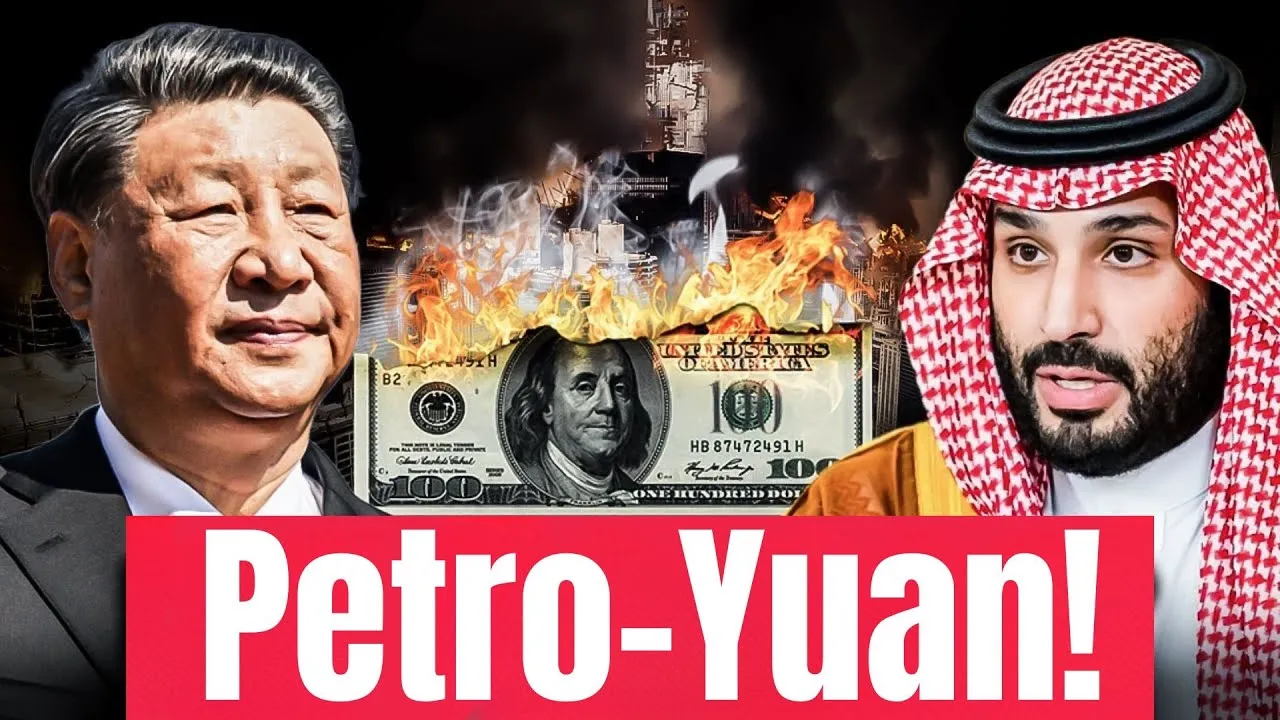
China’s growing oil trade challenges decades of dollar dominance.
The Petrodollar System
Since the 1970s, global oil trade has been priced and settled overwhelmingly in US dollars. This petrodollar system reinforced demand for the dollar, giving the United States financial leverage and deep liquidity in its bond markets. Energy exporters recycled dollar earnings into American assets, tying oil flows to capital flows. For decades, the arrangement seemed unshakable.
Yet the rise of China as the world’s largest energy importer raises new questions. Why should Beijing, which pays hundreds of billions annually for crude, remain tied to a system centered on Washington? The search for alternatives has led to experiments with the yuan.
China’s Energy Appetite
China overtook the United States as the largest crude importer in 2017. Its demand spans oil from the Middle East, Africa, Russia, and beyond. This dependency creates vulnerabilities. Currency swings, sanctions, and global liquidity shifts all raise costs when transactions are dollar denominated.
By promoting yuan settlement, Beijing hopes to insulate itself. Energy suppliers willing to accept yuan not only gain access to Chinese markets but also participate in Beijing’s broader goal of building financial autonomy.
The Rise of the Petro Yuan
In 2018, China launched crude oil futures contracts denominated in yuan on the Shanghai International Energy Exchange. The move allowed exporters to hedge in yuan and signaled a willingness to build financial infrastructure beyond the dollar.
Recent deals with Russia, Iran, and Middle Eastern suppliers suggest a slow shift. Reports indicate that some cargoes are now settled in yuan, often linked to broader political or trade agreements. For exporters facing Western sanctions, yuan settlement provides a lifeline. For others, it is a way to diversify risks.
Advantages and Limits
The petro yuan offers several advantages. It deepens China’s role as a financial hub, reduces exposure to dollar volatility, and supports the yuan’s internationalization. It also aligns with Beijing’s message of a multipolar order where no single currency dominates.
However, limits remain. The dollar retains unmatched liquidity, global trust, and depth of financial markets. The yuan is not fully convertible, and capital controls discourage foreign investors from holding large reserves. For many exporters, accepting yuan makes sense only if it can be converted easily into other currencies or spent directly on Chinese goods.
Energy and Geopolitics
Currency and oil cannot be separated from geopolitics. The US continues to defend the dollar system as part of its global influence. Middle Eastern suppliers weigh diversification carefully, balancing security ties with Washington against trade flows with Beijing. Russia’s pivot to yuan after Western sanctions illustrates how politics can accelerate change.
Energy trade is becoming a stage where great power rivalry plays out. Currency choice signals not just financial preference but strategic alignment.
Implications for Global Finance
If yuan based oil trade expands, global finance could gradually rebalance. Central banks may increase yuan reserves, and commodity traders may adopt yuan hedging tools. This would not end dollar dominance overnight but could chip away at its monopoly. The outcome is likely a more fragmented system where multiple currencies share roles once monopolized by the dollar.
For China, the challenge will be maintaining credibility. Energy exporters will only hold yuan if they trust that markets remain open, contracts enforceable, and value stable. Internationalization requires not only ambition but also reforms that reassure partners.
Conclusion: A Shift in Motion
The shift from petrodollars to petro yuan is not complete, but it has begun. For China, each oil cargo paid in yuan represents a small step toward financial independence. For energy exporters, it represents choice in a world once constrained by dollar dominance.
The story is about more than oil. It is about how trade, finance, and geopolitics intersect in the twenty-first century. The yuan’s march into energy markets signals that the global currency order may no longer be written in a single script.

