
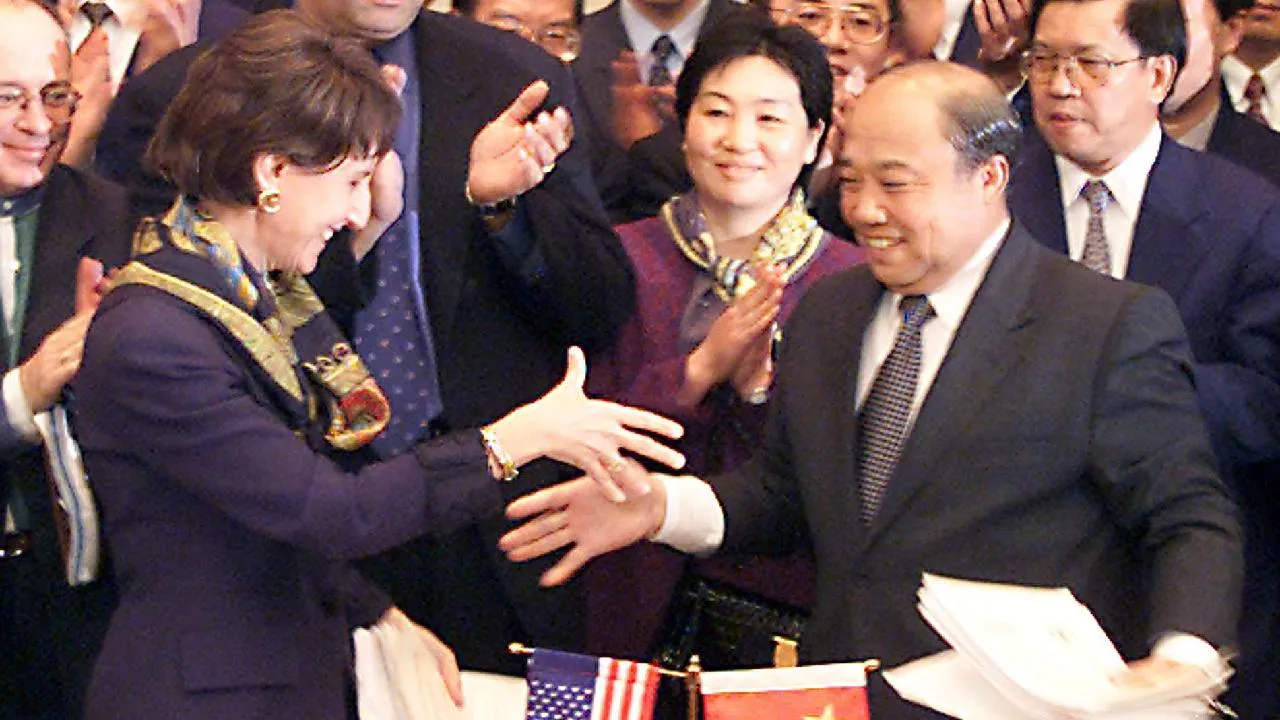
How 2001 entry reshaped the global economy and China’s place within it.
The Long Road to Membership
China applied to rejoin the global trading system as early as the 1980s, but negotiations stretched for more than 15 years. The United States, Europe, and other members demanded sweeping reforms in tariffs, subsidies, and intellectual property protections. For Beijing, accession was a strategic decision: opening markets in exchange for global legitimacy.
A Surge of Integration
When China officially entered the World Trade Organization in December 2001, the effects were immediate. Tariffs fell, foreign companies gained access, and Chinese exporters entered global supply chains. Factories multiplied along the coast, producing everything from textiles to electronics. Millions of rural migrants moved to cities, powering industrial growth.
Winners and Losers at Home
Integration lifted hundreds of millions out of poverty and created a new middle class. But the transition also closed state owned factories, displacing workers who lacked safety nets. Regional inequality widened as coastal provinces boomed while inland areas lagged. The government balanced growth with subsidies and infrastructure projects, but tensions persisted.
Global Consequences
For foreign consumers, China’s WTO entry meant cheaper goods and lower inflation. For global industries, it meant fierce competition. Manufacturing jobs declined in Western countries, fueling political backlash. Economists dubbed this the “China shock,” linking it to rising inequality and populist politics abroad.
Strategic Tradeoffs
China accepted constraints on subsidies and intellectual property enforcement but retained state influence in finance and industry. Over time, friction with trading partners grew. Disputes over steel, solar panels, and technology transfers underscored the difficulty of reconciling market liberalization with state capitalism.
Conclusion: Integration with Tension
China’s WTO accession illustrates how globalization can both lift and disrupt. It was a gamble that redefined China as factory of the world but also planted seeds of conflict that continue to shape global politics today

