
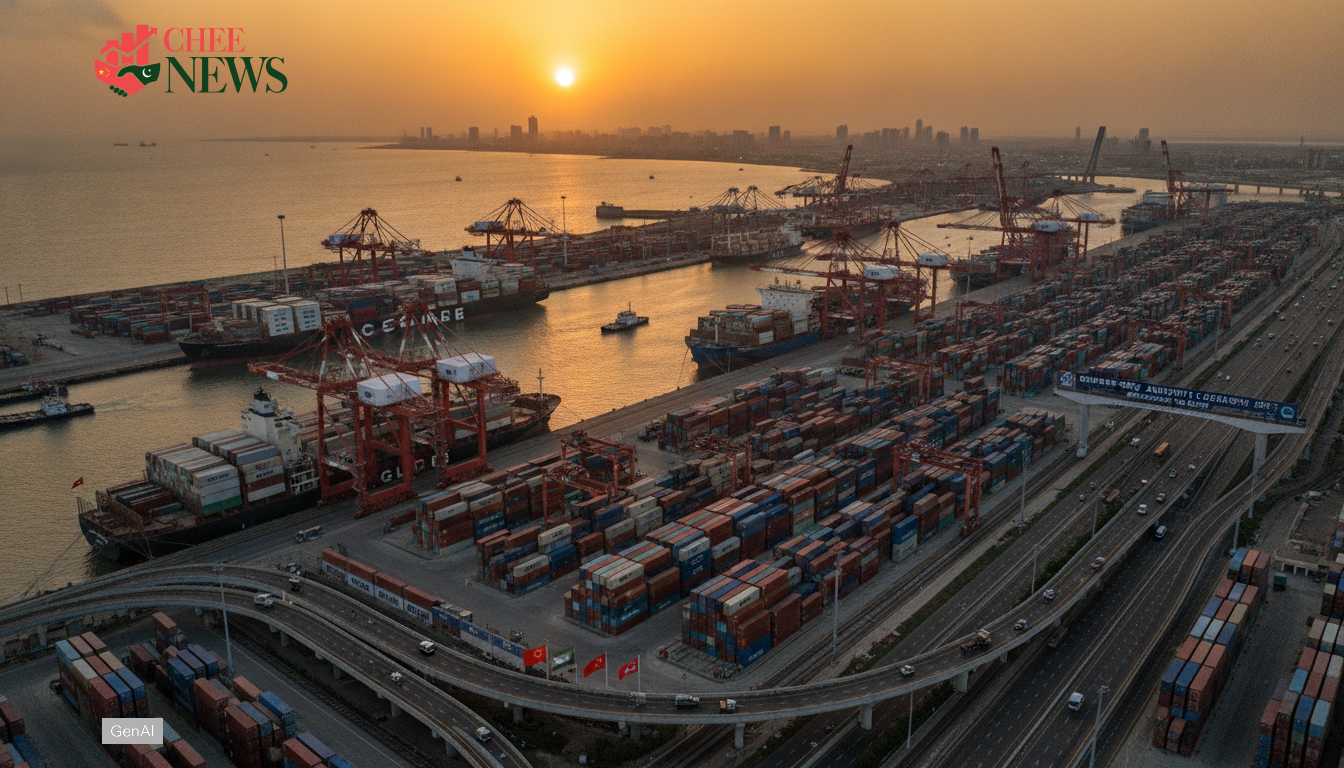
China-Pakistan trade relations expand
China-Pakistan trade is gaining pace as Pakistani exporters and Chinese buyers widen sector coverage beyond legacy textiles and basic commodities, as indicated by reports from business groups in Karachi and Lahore. Some contracts now hinge on predictable shipping schedules, quicker customs clearance, and simpler documentation, traders say. Commercial banks are also increasingly offering streamlined settlement arrangements for repeat counterparties, according to market participants, to reduce transaction friction. Business groups in Karachi and Lahore say Chinese distributors are placing more weight on consistent quality, traceability, and packaging standards. These operational details can matter because they help convert political signals into repeat purchase orders that can be planned across multiple quarters, potentially improving capacity use and reducing shipment-level handling errors.
Impact of CPEC on China-Pakistan trade logistics
CPEC projects are being used more directly as trade infrastructure, not only as headline construction, according to logistics operators and trade bodies. Warehousing, road links, and port services are increasingly tied to freight reliability and fewer missed delivery windows, they say. For context on broader policy debates around trade and currency, see China trade criticism: Beijing rebuts and yuan debate grows, and policymakers often cite reduced dwell time as a practical payoff when border procedures and logistics services improve together, though results vary by corridor and season. Companies routing China-Pakistan trade cargo through better connected nodes report fewer handoffs, which may lower damage risk and invoice disputes and make pricing more predictable for repeat lanes, according to shippers. Port operators around Karachi and Gwadar are also tracking schedule adherence more closely on certain routes, according to local freight agents.
Belt and Road Initiative’s role in compliance and deals
The Belt and Road Initiative is shaping deal structure by encouraging firms to treat Pakistan as a production and transshipment partner rather than only a destination market, according to analysts and company executives. A near term issue is compliance and capital flows, because tighter enforcement against cross border irregularities can redirect activity toward regulated channels, observers say. One view on enforcement and transaction routing is discussed in China’s trading crackdown seen boosting Hong Kong as official capital hub and related context is covered in Cross-Border Trading Crackdown in China Elevates Hong Kong, as firms reassess documentation and payment routing. Standardized invoices, clearer beneficial ownership checks, and harmonized documentation can reduce delays and compliance costs for repeat shipments, according to compliance specialists and freight forwarders.
Where economic cooperation could grow next
Forward planning is concentrating on industry linkages that could raise the share of value added inside Pakistan, especially in manufacturing segments that can plug into regional procurement, according to policymakers and industry representatives. Coverage of changing investment priorities, including technology and supply chain localization, is detailed in Chinese investment in Pakistan shifts tech supply chains, and the emphasis is shifting toward supplier qualification, testing capacity, and contract discipline, which can help firms win longer term purchasing commitments instead of spot orders, business groups say. These moves can connect financing, training, and certification to measurable delivery performance, according to project participants. Policymakers also say trade facilitation needs to match industrial policy so that tariff schedules, port handling, and inland trucking rules do not undermine factory-level gains from new plants.
Challenges and opportunities for sustained growth
The biggest constraint is execution risk, because trade volume rises only when infrastructure uptime, security, and governance are stable enough for insurers and lenders to price risk competitively, according to logistics and insurance market participants. Pakistan’s Ministry of Commerce has repeatedly emphasized export diversification as a policy objective, while firms continue to cite volatility in input costs and administrative bottlenecks that can erode margin on tight contracts. Opportunity lies in building reputational capital through consistent fulfillment, which can encourage buyers to shift from trial orders to annual frameworks, exporters say. Targeted cooperation on standards, dispute resolution, and digital tracking can reduce friction at shipment level, according to freight forwarders. In 2024, some firms also report tracking on time delivery and damage rates as key performance measures, tying future orders to documented service outcomes; this varies by sector and company size.

