
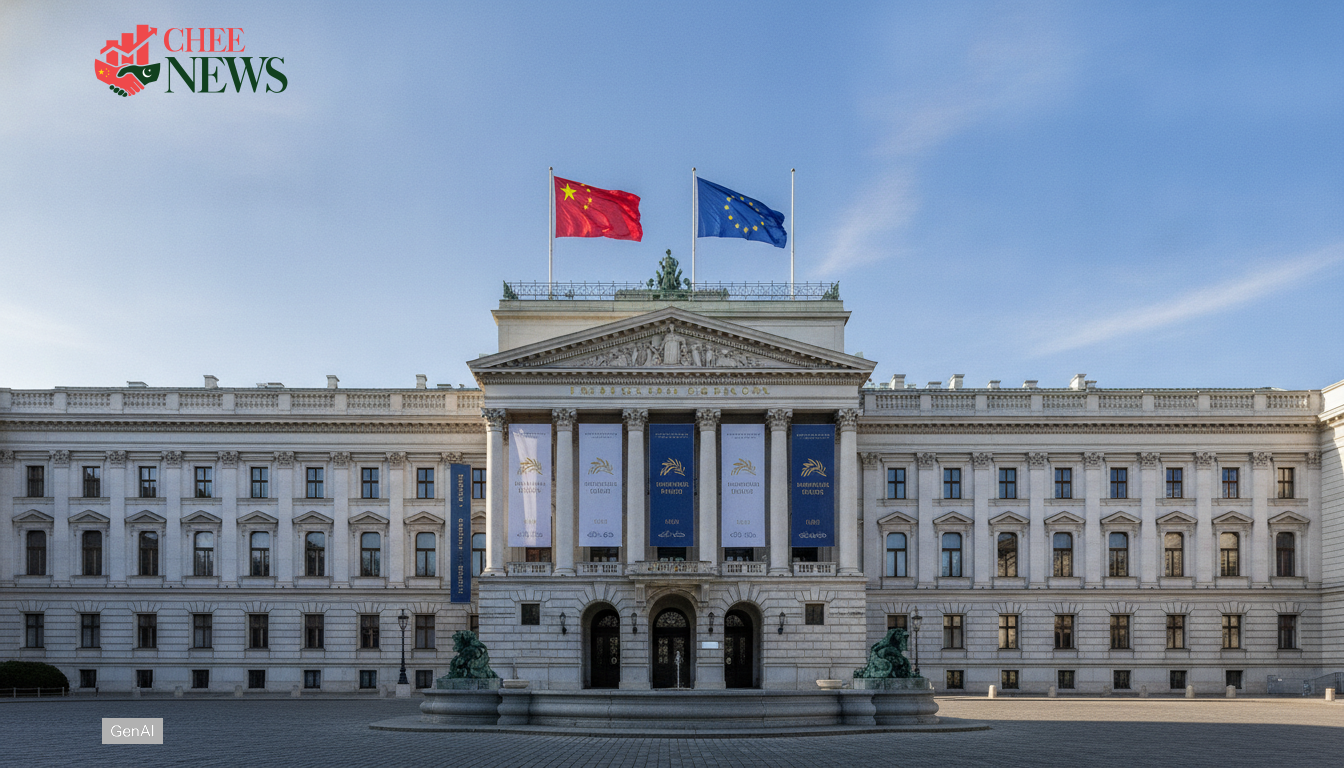
China-EU relations and China’s diplomatic push via Austria
Ties between China and the European Union are under renewed scrutiny as Beijing seeks support from Austria to help calm trade tensions with the bloc. According to available reports from Reuters, Chinese officials presented outreach to Vienna as a potential channel to reduce friction with Brussels while maintaining open trade and investment lines. The approach focuses on concrete deliverables such as market access, industrial cooperation, and predictable rules for firms operating on both sides. China also connects the effort to broader themes like resisting fragmentation in global supply chains and endorsing multilateral trade norms. By emphasizing diplomacy, Beijing hopes to stabilize the broader relationship without altering its stance in ongoing disputes, as indicated by Reuters.
Austria’s role inside the EU and what Beijing wants
While Vienna has limited formal power over EU trade instruments, Austria can still influence through coalition building in the Council and shaping the tone of internal EU debates. Reuters mentioned Beijing’s anticipation that Austria could promote a dialogue-first posture as the EU considers tougher economic security tools, including screening and enforcement. Commercial ties provide Vienna with incentives to keep channels operational, even while supporting EU-level safeguards. A related discussion is reportedly occurring around electric vehicles, with context on the market detailed in Chinese EVs accelerate expansion across Europe market, and how member states interpret industrial competition and subsidy concerns. For the China-EU relationship, Austria is positioned as a venue for messages that may later resonate in Brussels, according to the Reuters account.
Background: why trade ties are tense
Current frictions focus on trade defense measures, technology controls, and investment screening, with both sides asserting they are safeguarding legitimate interests, according to Reuters. Reports by Reuters indicate that EU institutions have expanded economic security policies alongside sector investigations, while Beijing argues these steps risk politicizing commerce. This standoff tests whether technical negotiations can remain distinct from wider strategic mistrust. The policy discussion also overlaps with energy and climate supply chains, as noted in China sets 2030 goal for 50% non-fossil energy. Austria cannot replace EU institutions, but its public standing can influence whether some member states push for quicker compromises or tougher stances. Beijing signals a desire to keep dispute-management mechanisms active, Reuters reported.
Potential economic impacts for firms and supply chains
Businesses are observing whether diplomatic efforts can lessen uncertainties around tariffs, licensing, and regulatory compliance costs. Even minor rhetorical shifts may influence decisions on inventory, sourcing, and production location. Reuters has noted that Beijing has emphasized the risks that tightened controls could pose to both European companies in China and Chinese companies in Europe. Sector exposure is particularly significant in advanced manufacturing and power equipment, where rule changes can delay contracts, approvals, and financing. While Austria is a mid-sized economy, its firms are embedded in broader EU value chains, so disruptions can extend beyond its borders. Easing China-EU relations would not remove policy tools but could clarify timelines and expectations for commercial planning.
What comes next for diplomacy
The next steps depend on whether Vienna can convert private assurances into tangible actions that align with EU procedures, including clearer communication between regulators and industry. Reuters suggested Beijing is looking for partners who advocate for balanced responses and ongoing high-level dialogue rather than automatic escalation. Progress is likely to be gradual, focusing on technical consultations and building confidence around compliance and transparency. China will keep engaging with multiple member states as part of a larger initiative to prevent a unified hardening of positions across the bloc, as indicated by Reuters. For Brussels, the priority is to apply rules consistently while maintaining channels for de-escalation when disputes arise. The sustainability of China-EU relations will depend on whether both sides can isolate manageable trade issues from broader strategic competition.

