
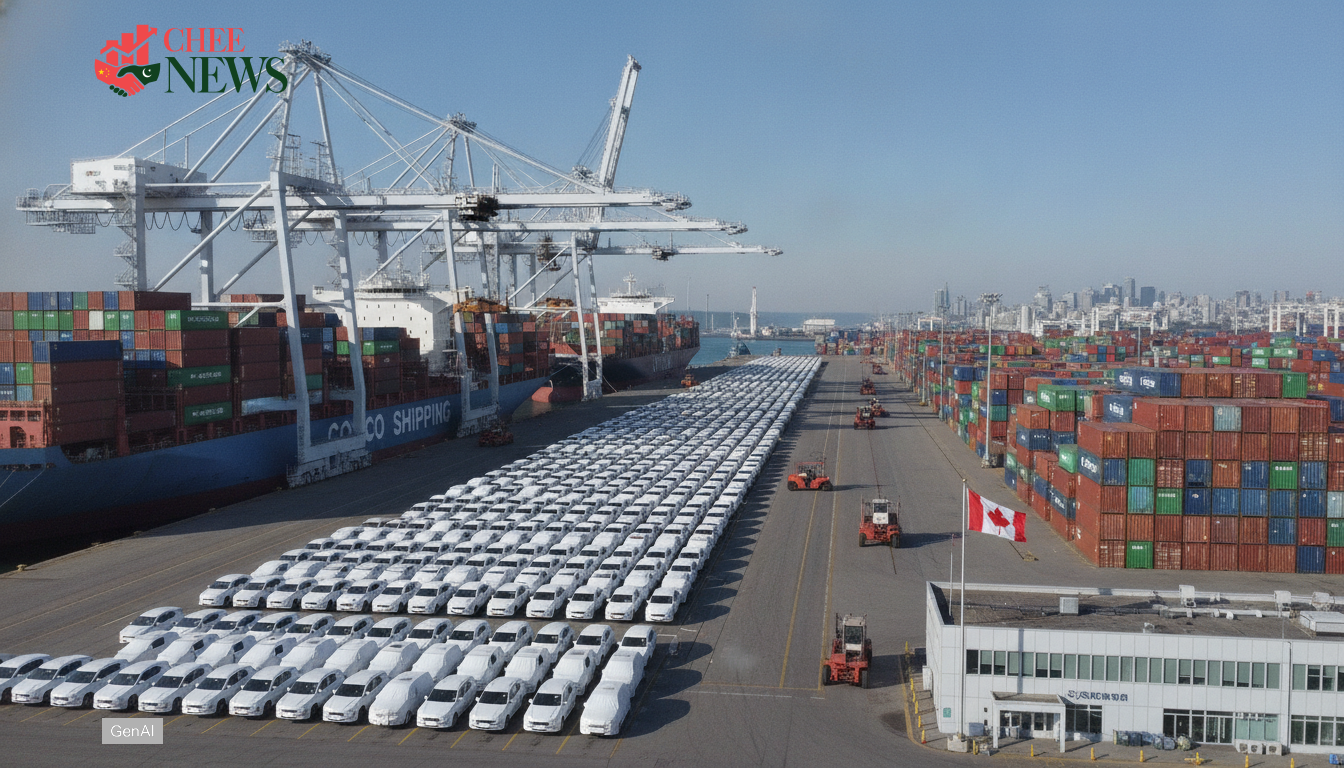
Chinese Automotive Market Strategy: Why Canada Comes First
Chinese automotive brands are exploring dealer talks and potential brand launches in Canada as a lower risk way to validate a North American playbook before any large US rollout, as indicated by reports from industry experts. This Chinese automotive market strategy emphasizes measuring buyer response, service costs, and warranty expectations under Canada’s regulatory environment, which many industry participants view as closer to other Western frameworks than some emerging markets. Executives and retail partners also describe Canada as a manageable proving ground where logistics, parts stocking, and delivery times can be stress tested across long distances and winter conditions. The aim is to build credibility through a stable ownership experience, not quick volume. In 2024 and 2025, EV competition in major Canadian metro areas is widely seen as intensifying, making pricing discipline and after-sales readiness easier to benchmark against established rivals.
Canada Market Entry Tests Pricing, Dealers, and EV Support
Canada offers access to affluent urban EV buyers and a competitive landscape that can reward aggressive value propositions, based on industry commentary and public market observations. For Canada market entry, companies are emphasizing showroom coverage, leasing offers, and visible after-sales capacity rather than rapid volume, indicated by dealer discussions. Some firms are monitoring broader China export conditions in parallel, including trends discussed in China Export Growth: AI Demand Boosts Hong Kong Exports, because currency swings and shipping constraints can affect vehicle margins. Policy also matters, as Natural Resources Canada and provincial incentives can influence buyer decisions and fleet procurement, as reflected in government program guidance and public-facing incentive information. For a trade backdrop, see China fuel export quotas rise in July, shaking markets, and companies are building optionality early.
How Canadian Results Shape US Sales Readiness
The Canadian rollout is often treated as a rehearsal for US sales strategy, particularly around compliance documentation, software localization, and customer support that must function at scale, as indicated by reports from industry experts. Automakers can observe how buyers respond to driver assistance features, smartphone integration, and over-the-air updates, while industry observers note that political scrutiny can be higher in the United States. In this phase, the broader market strategy centers on demonstrating that parts availability, collision repair networks, and residual values can hold up under North American use patterns, as indicated by dealer and service-network feedback. Trade counsel cite US Customs and Border Protection expectations and Federal Motor Vehicle Safety Standards as major compliance gatekeepers, while Canadian performance data is used by companies to estimate warranty accruals and anticipate how insurers may price risk. For regional policy and capital planning signals, an SCMP analysis of IPO Connect hurdles illustrates how regulatory complexity can reshape financing assumptions and timelines.
Key Challenges: Regulation, Winter Engineering, and Reputation
Even in Canada, Chinese brands can face hurdles that may derail momentum if mishandled, according to legal and dealer commentary. Provincial franchise laws can limit direct sales models, and cold weather testing, battery thermal management, and corrosion protection can add engineering and service demands in winter conditions, as commonly cited by Canadian-market engineers and service operators. Insurance pricing is another constraint: insurers may adjust premiums as claims frequency and repairability become clearer, and they often look for verified parts pipelines and certified body shops, according to insurance-industry practices and repair-network standards. For a broader view of how policy signals affect cross border business planning, see China-EU relations: China courts Austria to cool tensions, because reputational barriers matter too, and trust is built through transparent recalls, clear data practices, and consistent dealer standards, as consumer advocates and regulators frequently emphasize. Without basics like documented repair procedures and stable parts lead times, discounting alone may not sustain volume.
Outlook: Scaling the Strategy Across North America
The near term outlook hinges on how quickly newcomers convert early interest into repeatable operations, especially for Electric Vehicles where service competence and charging partnerships can shape customer satisfaction, according to industry analysts. Analysts at the International Energy Agency have documented rapid global EV adoption, and they also note that infrastructure and supply chains influence whether growth is durable across regions. Canadian performance can help firms calibrate inventory, manage battery warranty exposure, and tailor software to local languages and navigation norms, based on common localization requirements and operator experience. In boardrooms, this China-to-North-America approach is increasingly linked to disciplined rollout sequences that prioritize after-sales strength, transparent pricing, and compliance readiness over rapid expansion, according to executives and advisors. If those fundamentals hold, Canada can function as a proving ground that informs product cycles and retailer economics for wider North American ambitions.

