
China’s semiconductor industry: where it stands in 2026
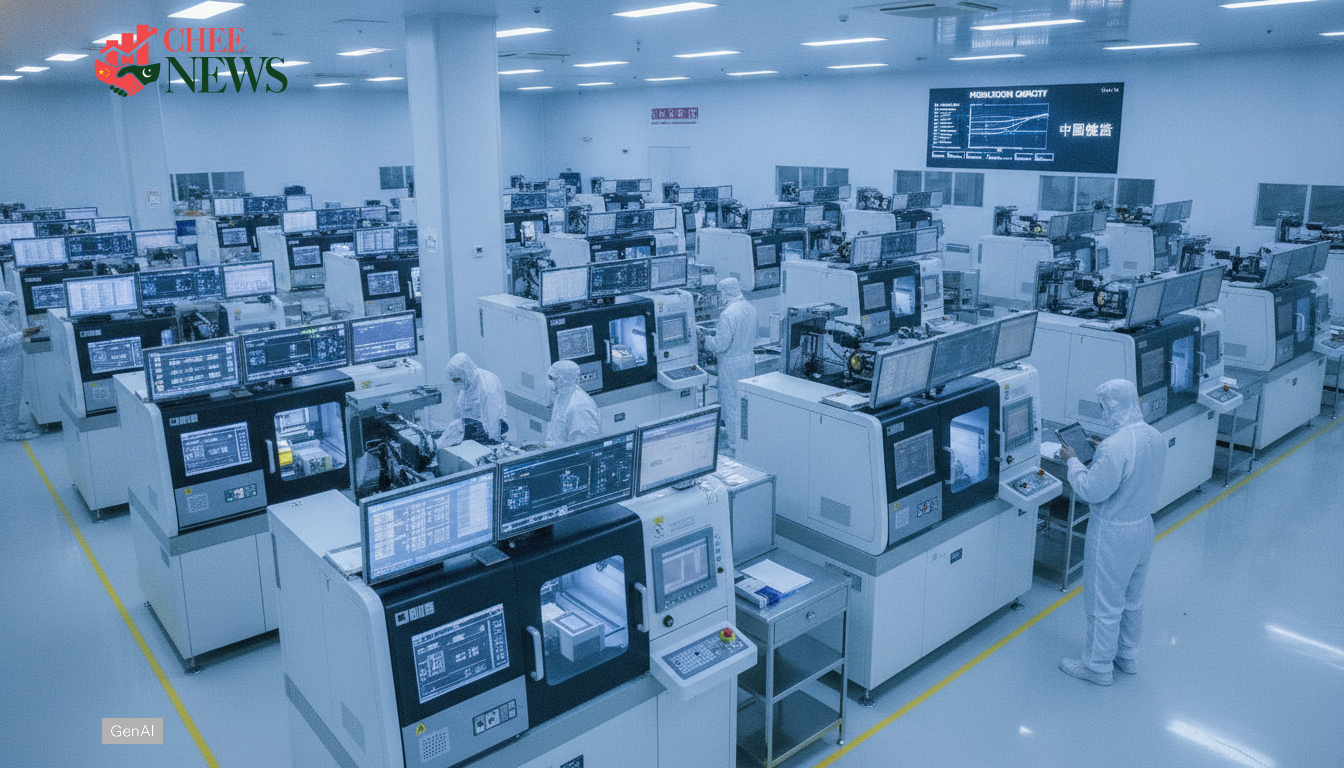
China’s semiconductor industry appears to be accelerating capacity additions, design wins and local tooling as US export controls tighten. Progress is often described as clearest in mature nodes used in autos, industrial equipment and consumer devices, where volume production and stable yields matter most. In advanced logic and cutting edge equipment, gaps remain, but industry observers say coordination is improving across packaging, power management and domestic manufacturing gear. Demand from data centers and edge computing is also widely cited as reinforcing the push for reliable delivery and predictable lead times. Following changes to US rules from 2022 through 2024, as reported broadly by major media and reflected in official US announcements over that period, procurement teams have reportedly adjusted qualification processes to reduce single source exposure and manage supply assurance.
Export controls and supply chain pressure points
Restrictions on advanced chips and key fabrication tools have reportedly pushed firms to redesign roadmaps around what can be sourced, serviced and upgraded. The tightest constraints are commonly described as limited access to leading edge lithography, potential limits on electronic design automation for top tier nodes, and certain advanced materials, which can contribute to delays and higher costs. A visible upstream signal is accelerating capex in substrates and boards feeding AI infrastructure, as noted in South China Morning Post coverage of circuit board capex, and these dynamics can also encourage duplication as suppliers attempt to localize components across the chain. Inventory swings in smartphones and PCs can still compress margins quickly, as industry analysts often caution, keeping planning risk elevated.
Policy, capital and corporate momentum behind the push
Government support is widely reported as concentrating on scaling domestic tools, materials and talent pipelines, while steering procurement toward homegrown solutions in priority sectors. For investor narratives linking in house chip work to AI revenue, the South China Morning Post report on Alibaba and T-Head illustrates how markets price the strategy. Provincial funds and national guidance are often described as aiming to reduce bottlenecks in equipment, specialty chemicals and test capacity, with verification tied to volume production in some programs, according to public policy documents and media coverage. Product pull is also highlighted in Huawei Shows Cluster, AI Agent Phone at China AI Summit, which points to demand for domestic compute platforms and faster iteration cycles in packaging and system integration.
How China compares with global semiconductor leaders
Compared with global leaders, China is generally seen as building depth faster in high volume segments than in the most advanced logic processes, where top foundries still dominate on yields, toolchain integration and extreme scale, according to industry benchmarks and analyst commentary. Incumbents also benefit from mature process control and entrenched ecosystems across design, manufacturing and equipment. China’s semiconductor industry is often characterized as countering by prioritizing segments where qualification barriers are lower, then using rapid iteration and localized supply to reduce dependency risks for buyers. For regional investment context that can influence electronics supply chains and downstream manufacturing, see China-Pakistan relations deepen amid CPEC investment surge, while competition is sharpest in packaging, analog and power devices, where reliability and performance per watt can outweigh node leadership, as sector reporting frequently notes.
Outlook: market impact and what to watch next
Near term momentum is likely to focus on mature node expansion, advanced packaging scale and specialized accelerators that can be produced within current tooling limits, as described by industry observers. That mix could still influence global pricing for commodity chips and change sourcing strategies for manufacturers seeking redundancy, depending on demand cycles and realized output. For a related view on how AI security and governance debates shape technology strategy, see China AI alert flags security risks tied to Claude Code, and China is also discussed as being positioned to influence standards adoption in edge devices, industrial control and automotive platforms as suppliers qualify at scale, though the pace will vary by sector. Key watch items are yield consistency, metrology access and materials supply, because those factors typically determine whether announced capacity translates into dependable shipments.

