
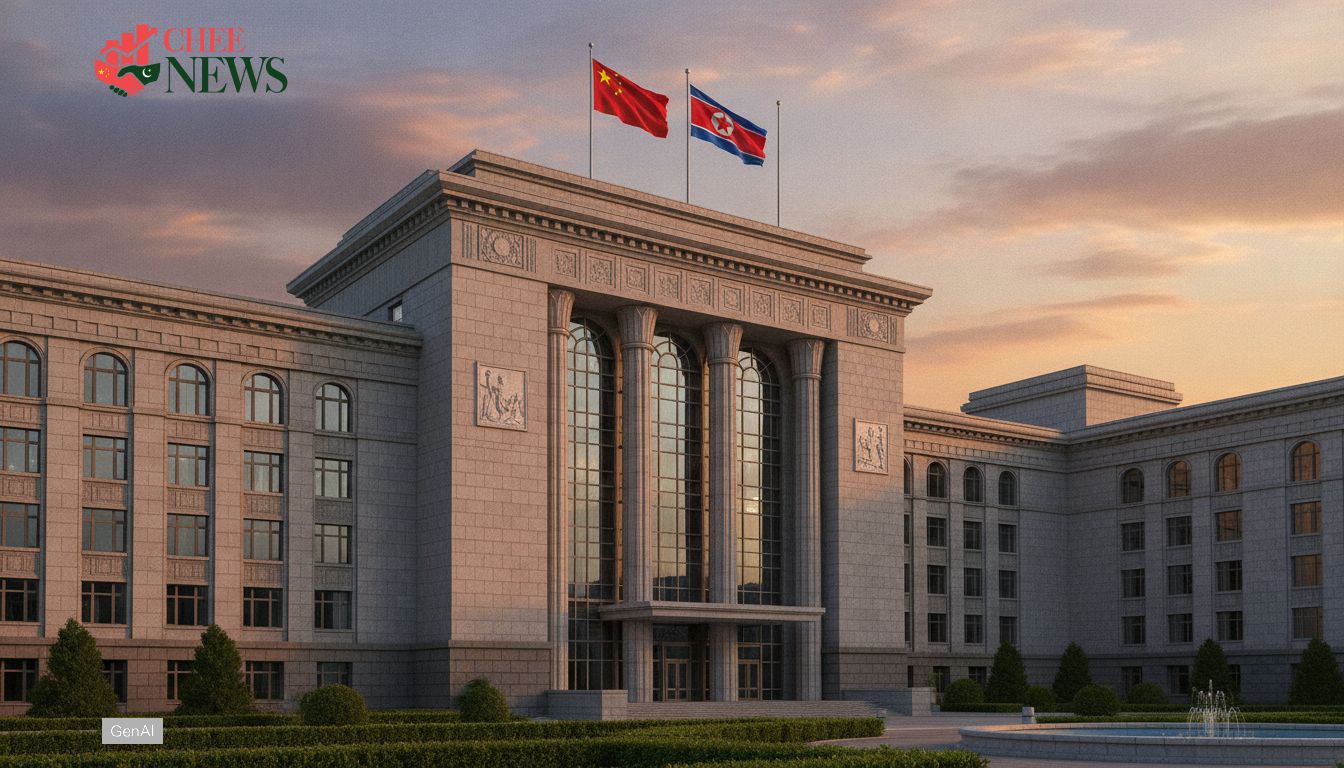
China-North Korea relations and Xi’s message to Pyongyang
China-North Korea relations moved back into focus after Xi Jinping sent a formal message to Kim Jong Un urging both sides to keep “strategic resolve,” according to Reuters. The wording framed stability as a shared priority amid global turmoil and may indicate efforts by Beijing to prefer continuity rather than reactive swings. By elevating resolve over rhetoric, the communication suggests China is working to manage risk on its border while keeping political channels active. Reuters did not describe new commitments, but the leader-level outreach itself remains a deliberate signal. For regional observers, the message is interpreted as guidance to keep tensions manageable while broader diplomacy tightens and uncertainty remains high.
What “strategic resolve” signals for regional security
For defense planners, the Reuters account matters because it may show Beijing emphasizing steadiness at a time when military pressures remain elevated around the Korean peninsula. The phrase “strategic resolve” can be seen as discouraging actions that trigger sharper countermeasures, even as deterrence postures harden. In practice, this intersects with missile defense debates, alliance coordination, and crisis communication where capitals watch for cues from China’s top leadership. Related security dynamics around tests, signaling, and response planning are covered in China missile test sparks new Asia-Pacific security moves. For wider context on how Beijing weighs hard-security capabilities in parallel, see China microwave weapons spotlighted in 100GW reports, and the emphasis is calibrated messaging rather than escalation.
Historical patterns in China-North Korea relations
The latest exchange fits a long pattern in China-North Korea relations where party and state channels are used to keep the relationship functional when external pressures rise. Analysts monitor official readouts because they reveal which themes Beijing wants emphasized in a given moment, including border stability, sanctions exposure, and deterrence signaling. Reuters characterized Xi’s wording as focused on resilience, echoing past cycles when enforcement and coordination were sensitive. Even restrained public language can carry meaning in such a tightly managed relationship, because it shows whether contact is routine, corrective, or reassurance-driven. For readers tracking how Beijing pairs firmness with selective engagement across issue areas, a recent example appears in China semiconductor supply: Beijing presses Dutch minister, and the common thread is controlled signaling under pressure.
Sanctions, diplomacy, and international reactions
Governments watching the Korean peninsula parse Chinese statements for hints about enforcement, mediation, and crisis management, especially when formal talks are stalled. Reuters framed Xi’s call as arriving amid global turmoil, a context that encourages major powers to reduce uncertainty in at least one theater even while friction rises elsewhere. The message also contributes to recurring debates at the United Nations and among sanctioning states about how much leverage Beijing is willing to apply, though no specific policy shift was described. Outside Northeast Asia, parallel reporting on political signaling and public governance shows how states try to project stability during uncertainty, including the South China Morning Post report Hong Kong LEAP East deal affirms global innovation role. Such narratives shape how audiences interpret intent and resolve.
What comes next for China-North Korea relations
Diplomacy in Northeast Asia often turns on small shifts in tone that open or close space for quiet coordination. Xi’s emphasis on steadiness suggests Beijing may prefer managed tension and predictable channels rather than sudden ruptures that could force rapid military or humanitarian planning. In that frame, outcomes are less about breakthroughs and more about maintaining contact while sanctions questions, security guarantees, and deterrence signaling remain contested. If China-North Korea relations continue to be described in terms of resilience, observers may expect more scripted messages and fewer surprises, with practical engagement calibrated to avoid new triggers. Reuters’s reporting indicates a deliberate attempt to project consistency, which in turn can influence how neighboring states time consultations, exercises, and diplomatic initiatives. The near-term impact may be in tone and timing rather than formal policy change.

