
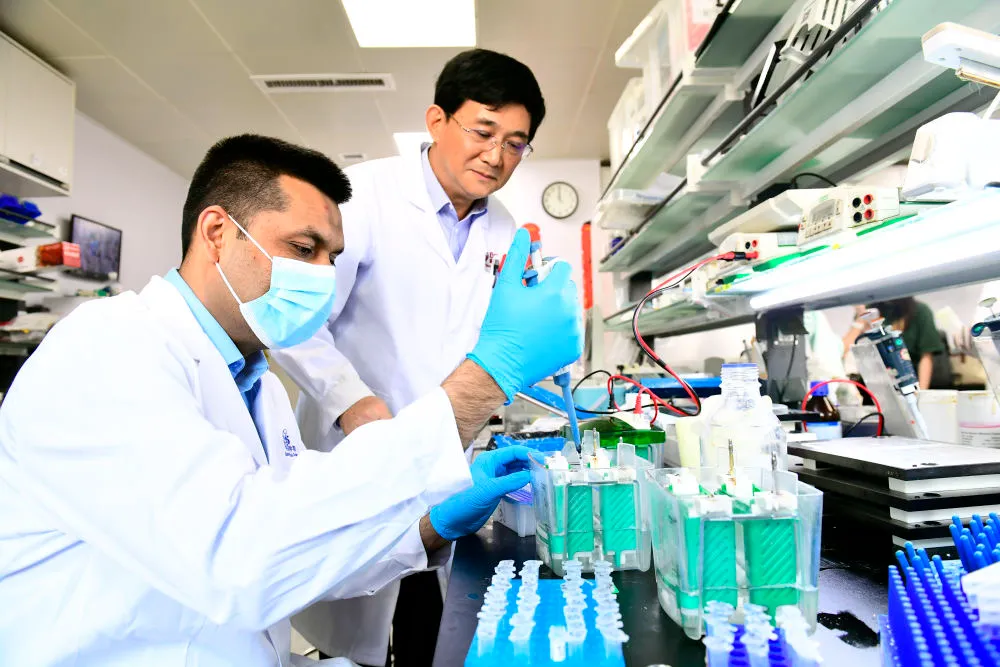
Science and technology cooperation has become a central pillar of Pakistan China relations, reflecting both countries’ commitment to innovation driven development. As 2025 approaches, new partnerships in research, engineering, digital systems, and advanced sciences are shaping a stronger foundation for long term progress. These partnerships not only support national priorities but also foster collaboration between universities, research centers, and technology institutions in both countries.
CPEC 3.0 places science and innovation at the core of development, ensuring that technology becomes a driving force for economic transformation and social advancement.
Strengthening Research Cooperation Between Universities
Chinese and Pakistani universities are expanding joint research programs across diverse fields such as engineering, agriculture, physics, biotechnology, and earth sciences. Collaborative laboratories and academic networks allow researchers to exchange knowledge, share data, and develop solutions to common challenges.
Pakistan benefits from access to advanced research facilities, experienced faculty, and high level scientific methodologies. China gains insight into regional studies, environmental systems, and agricultural conditions that support scientific diversification. These university partnerships form the groundwork for long term cooperation and build scientific capacity across Pakistan.
Advancing Space and Satellite Collaboration
Space technology is one of the most prominent areas of cooperation. China has supported Pakistan in launching satellites that strengthen communication systems, remote sensing, disaster management, and environmental monitoring.
Advanced satellite imaging allows Pakistan to track weather patterns, monitor agricultural changes, and improve early warning systems for floods and droughts. Collaboration on space research also opens opportunities for Pakistani scientists to engage in astronomy, satellite design, and space engineering. This partnership places Pakistan among countries actively participating in modern space science.
Enhancing Agricultural Innovation and Food Security
Agricultural research partnerships support Pakistan’s efforts to modernize farming and improve food security. Joint projects focus on high yield crop varieties, water efficient irrigation systems, pest control, and climate resilient agriculture.
China’s experience in smart agriculture supports the adoption of sensors, drones, and data based farming techniques that improve productivity. Soil monitoring systems and digital weather tools help Pakistani farmers make informed decisions. These scientific innovations strengthen rural development and support national food security goals.
Cooperation in Renewable Energy Research
Renewable energy research is central to both countries’ clean development goals. China supports Pakistan in studying advanced technologies in solar efficiency, wind power, grid stability, and energy storage.
Joint laboratories analyze the performance of renewable systems under Pakistan’s climate conditions. This research supports long term energy planning, reduces reliance on imported fuels, and encourages adoption of green technologies in industry and households. Scientific cooperation helps Pakistan accelerate its transition toward sustainable energy systems.
Development of Health Sciences and Biotechnology
Health technology is another major area of partnership. Pakistani and Chinese scientists collaborate on disease research, pharmaceutical development, telemedicine solutions, and medical engineering.
Research centers work together to study infectious diseases, create diagnostic tools, and develop medicines suitable for local populations. Biotechnology labs share techniques for genetic analysis, vaccine research, and laboratory innovation. These partnerships support stronger healthcare systems and improve national preparedness for emerging health challenges.
Technology Transfer and Industrial Innovation
One of the key benefits of scientific cooperation is technology transfer. China provides technical guidance, industrial insights, and innovation models that help Pakistan upgrade its industrial sectors.
Joint ventures support local manufacturing of scientific equipment, electronics, renewable technology components, and advanced materials. Training programs introduce Pakistani engineers to automation systems, robotics, and quality control methods. These exchanges deepen industrial development and build a foundation for advanced manufacturing.
Youth Involvement in Scientific Research
Youth engagement is essential for sustaining scientific growth. Scholarships, exchange programs, and international research competitions encourage Pakistani students to pursue careers in science and technology. Chinese universities open their laboratories and research centers to students seeking hands on experience in cutting edge fields.
Short courses in artificial intelligence, cloud systems, biotechnology, and physics empower young scientists to contribute to national innovation strategies. These programs support long term capacity building and inspire future leaders in science and engineering.
Strengthening Institutional Cooperation for 2025 and Beyond
China Pakistan science partnerships continue to evolve through formal agreements, research alliances, and institutional frameworks. Government agencies, academic institutions, and research organizations coordinate resources to support scientific progress.
These structured partnerships ensure continuity across multiple sectors including environment, energy, health, agriculture, and space. As both nations invest in advanced science Pakistan gains the capabilities needed to strengthen development and contribute to global research efforts.
A Joint Vision for Scientific Advancement
China and Pakistan share a vision where scientific cooperation drives national development, economic growth, and technological leadership. Partnerships in research, innovation, and advanced science strengthen the bond between the two countries and create opportunities for future generations.
Science partnerships in 2025 highlight the commitment of both nations to pursue progress rooted in knowledge, discovery, and shared aspirations. This cooperation expands Pakistan’s scientific foundation while reinforcing the long standing friendship with China.

