
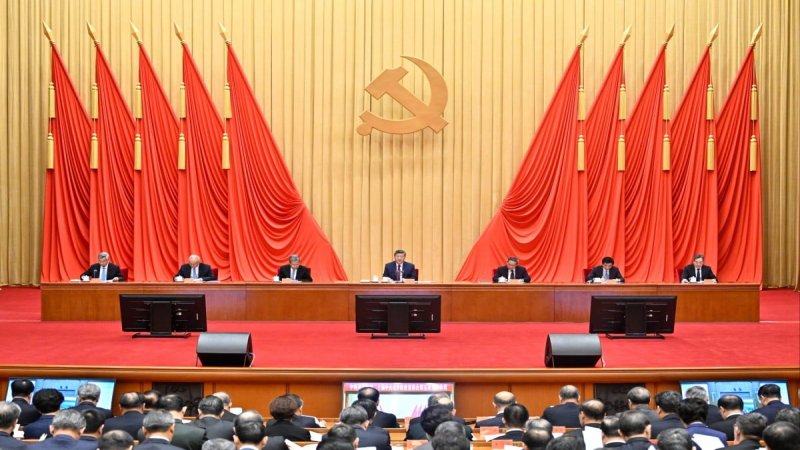
Chinese authorities have issued a public warning against officials who slow decision making or remain inactive as the country approaches a major political transition expected in 2027. State affiliated media urged Communist Party cadres to remain fully engaged in their duties rather than adopting a wait and see approach ahead of the next national party congress. The message reflects concerns within the leadership that administrative momentum could weaken during periods of political adjustment, particularly as senior appointments and promotions come under review. Officials were reminded that policy execution and governance responsibilities must continue without interruption regardless of internal political timelines.
The warning was conveyed through commentary linked to recent discussions by the party’s top disciplinary body, which emphasized the need to correct behavior described as passive or nonperforming. Authorities highlighted the risk of officials choosing caution over action, driven by uncertainty surrounding upcoming leadership changes. Such risk aversion has become more pronounced in recent years as disciplinary enforcement has tightened and accountability standards have risen. Central oversight bodies indicated that inactivity would be treated as a form of misconduct, reinforcing the expectation that officials remain proactive and responsive throughout the transition period.
China’s five year political cycle places particular pressure on officials as leadership reshuffles approach. The upcoming congress will mark the conclusion of the current Central Committee’s term and is expected to result in significant personnel changes across senior and mid level posts. Historically, such periods have tested administrative discipline as some officials delay initiatives or avoid policy decisions that could attract scrutiny. The latest messaging seeks to counter this tendency by linking governance performance directly to political responsibility, signaling that inactivity may carry consequences comparable to overt violations.
The renewed emphasis on discipline aligns with broader efforts to maintain centralized control and policy continuity amid economic and social challenges. Party leaders have repeatedly stressed that development targets, reform initiatives, and stability measures cannot be paused due to internal political processes. Analysts note that the warning also serves to reinforce the authority of central institutions over local administrations, ensuring that directives issued from Beijing are implemented consistently across provinces and ministries during sensitive political phases.
As preparations for the next congress continue, further guidance on governance standards and cadre conduct is expected. The leadership’s focus on preventing administrative stagnation suggests heightened scrutiny of performance indicators alongside traditional disciplinary measures. By framing inaction as a governance risk, authorities aim to preserve operational effectiveness while reinforcing political discipline. The approach underscores the importance placed on continuity and control as China navigates the transition toward its next leadership configuration.

