
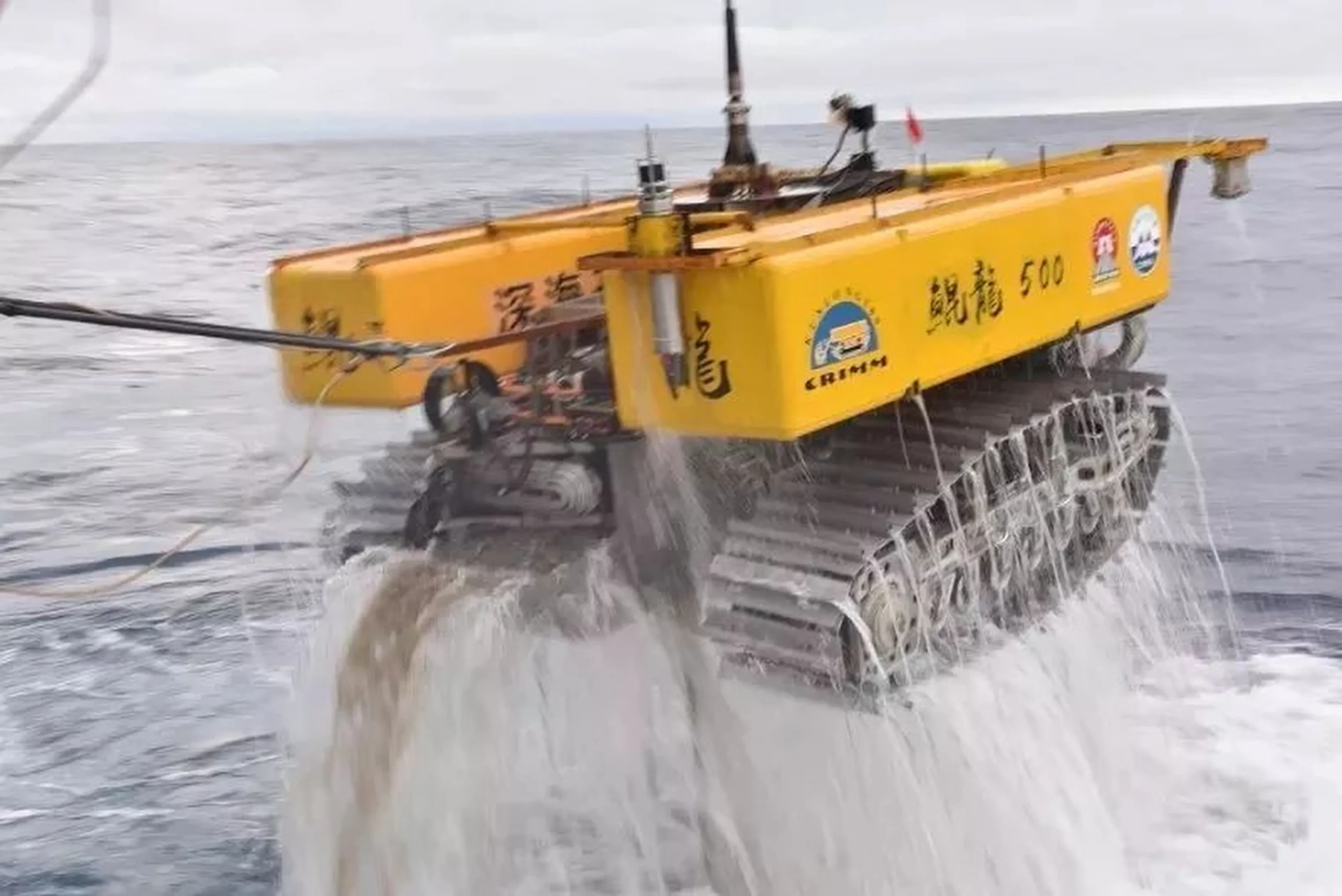
Chinese researchers have successfully tested a deep-sea robotic mining vehicle in the western Pacific Ocean, marking a significant step in the country’s efforts to explore and extract valuable minerals from the ocean floor. The test took place beyond the US second island chain, an area considered strategically important in the Pacific.
The unmanned mining rover, developed by a team of marine engineers and scientists, was designed to operate thousands of meters below sea level to collect cobalt-rich crusts and polymetallic nodules. These materials contain critical minerals used in batteries, electric vehicles, and renewable energy technologies. The successful trial demonstrates China’s growing technological capability in deep-sea exploration and resource extraction.
According to researchers involved in the project, the test verified the rover’s ability to conduct long-distance navigation, sampling, and data transmission under extreme underwater pressure. The mission also provided key insights into sediment conditions, mineral density, and robotic endurance information that will help refine future designs for commercial-scale operations.
Experts say China’s progress in undersea mining reflects its strategic push to secure access to critical minerals amid global competition for clean energy resources. By venturing into the deeper parts of the Pacific, China aims to reduce reliance on imported raw materials and strengthen its control over the emerging supply chains that power next-generation technologies.
The project also carries geopolitical implications. The “second island chain” stretching from Japan through Guam to Papua New Guinea has long been seen as a strategic boundary in the Pacific, with the United States maintaining a strong military presence in the region. China’s technological reach into these waters symbolizes expanding scientific and economic influence beyond its traditional maritime zones.
Environmental concerns remain a major focus of global debate surrounding deep-sea mining. Marine scientists have warned that extracting minerals from fragile ecosystems could cause irreversible damage to biodiversity. Chinese officials have stated that the country will continue to follow international maritime regulations and emphasize ecological protection during future expeditions.
The successful deployment of the cobalt-mining rover underscores how deep-sea technology has become a new frontier of global competition. With nations racing to secure resources essential for electric vehicles, AI infrastructure, and renewable power systems, underwater mineral exploration is emerging as a vital component of economic and strategic planning.
For China, mastering autonomous deep-sea mining is not just a technological breakthrough but also a demonstration of its expanding presence in ocean science, resource management, and maritime innovation. As the world transitions to cleaner energy systems, control over seabed minerals may soon become as valuable as control over oil fields once was.

