
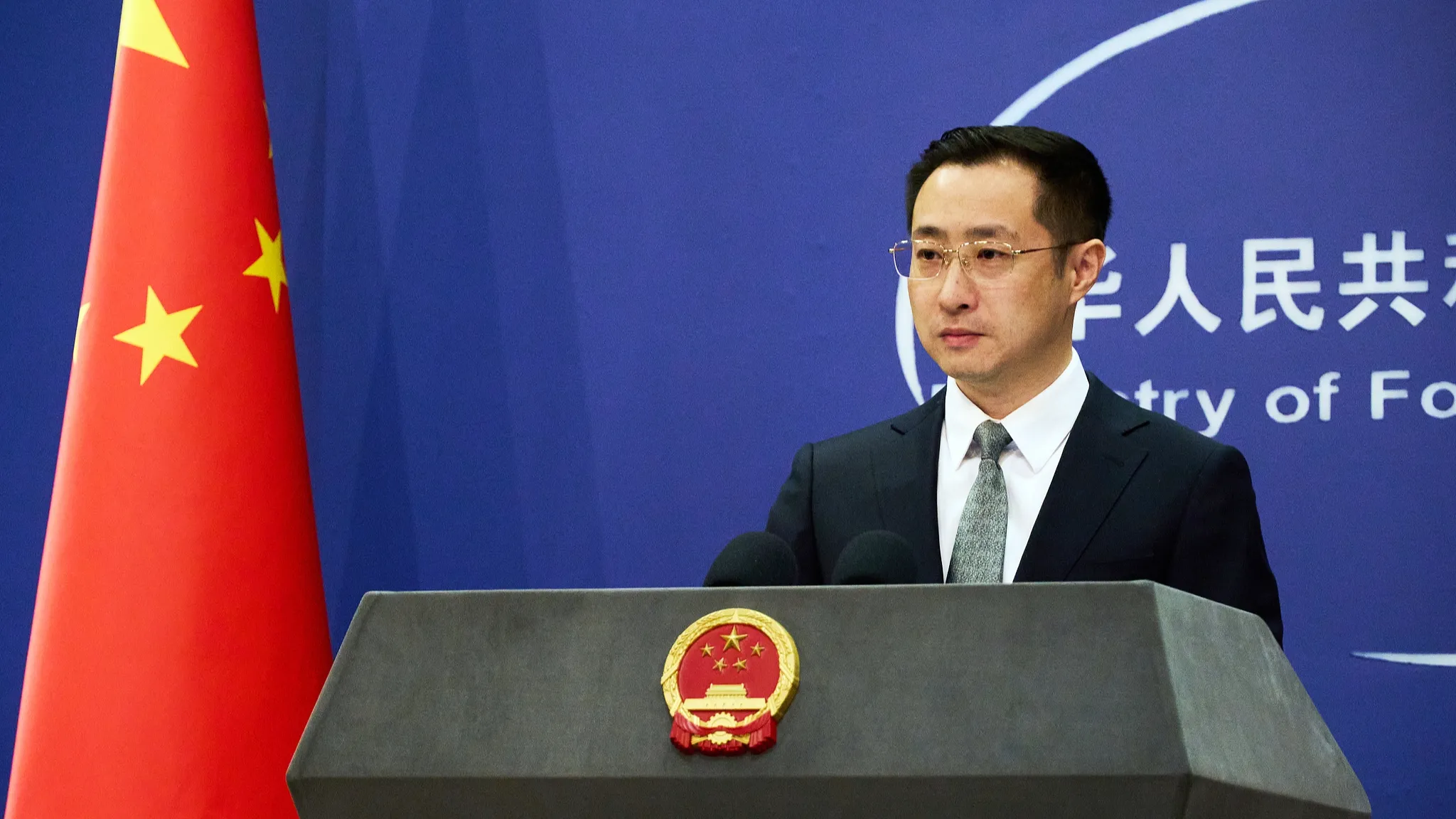
China has expressed strong concern over a series of recent security and military-related statements coming from Japan, with Beijing warning that these developments may indicate a significant policy shift. The remarks were made by Chinese Foreign Ministry spokesperson Lin Jian during a regular press briefing on Friday.
Lin was responding to questions about comments made by Japanese Prime Minister Sanae Takaichi in parliament, where she offered vague responses regarding Japan’s long-standing “Three Non-Nuclear Principles,” a policy under which Japan pledges not to possess, produce, or permit the introduction of nuclear weapons on its territory.
According to Lin, Takaichi’s ambiguous wording appeared to leave open the possibility of revisiting or even abandoning these principles. He also noted that some senior Japanese officials have recently suggested they would not rule out the deployment of nuclear-powered submarines, developments that Beijing views as indicative of a broader recalibration of Japan’s defense posture.
“This fully exposes a significant and negative shift in Japan’s security policy and sends a dangerous signal to the international community,” Lin said.
Lin added that these statements cannot be separated from Japan’s historical record. He recalled that Japan’s militarism during World War II led to widespread suffering in Asia and beyond, saying this legacy still influences how neighboring countries interpret Japan’s modern intentions.
In recent years, Lin said, Japan has accelerated changes to its security framework. These include gradual increases in defense spending, steps to ease limits on arms exports, and efforts to develop capabilities that could be used beyond strictly defensive purposes. Beijing argues that these moves collectively point to Japan drifting further toward military expansion.
Lin also criticized recent comments from Prime Minister Takaichi regarding the Taiwan question. According to him, her remarks suggested the possibility of Japan taking military action in the event of tensions in the Taiwan Strait, language that China sees as provocative and destabilizing.
“Japan’s actions have naturally raised concerns among its Asian neighbors and the wider international community,” Lin said. “Key questions remain: Has Japan fully come to terms with its history? Does the Japanese government still uphold its exclusively defense-oriented policy and the Three Non-Nuclear Principles? And will Japan continue to commit itself to peaceful development?”
The spokesperson urged Japan to “deeply reflect” on its history, remain committed to a path of peaceful development, and avoid seeking justifications for expanding its military role. He emphasized that Japan should work to rebuild regional trust through concrete actions rather than signals that may heighten suspicion.

