
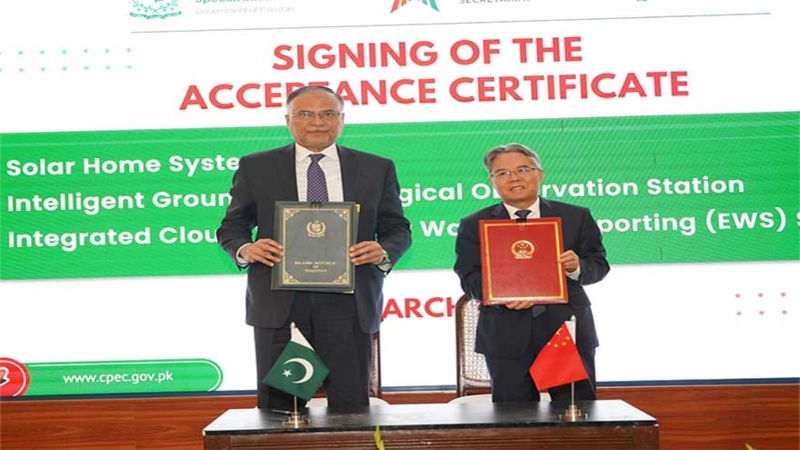
Pakistan is entering a new phase of economic cooperation with China as CPEC Phase II shifts focus toward innovation driven growth, industrial expansion and deeper regional connectivity. Federal Minister for Planning Ahsan Iqbal outlined the next stage of the initiative, emphasizing that the corridor is evolving beyond infrastructure into a broader development framework. The new phase is expected to strengthen economic integration while creating opportunities in technology, education and sustainable development. Officials say the transition reflects changing priorities as Pakistan seeks long term economic resilience and higher value growth.
The minister highlighted that CPEC Phase II will introduce multiple development tracks including growth corridors, innovation corridors and livelihood focused initiatives aimed at improving economic participation. Industrial development is expected to play a central role, with increased emphasis on special economic zones and manufacturing capacity. At the same time, connectivity projects will continue to enhance trade routes and regional integration. The initiative is also aligned with efforts to modernise Pakistan’s economy by integrating advanced systems and promoting collaboration with Chinese partners across key sectors.
Energy and climate resilience were also identified as critical priorities under the new phase. The government is focusing on expanding solar energy solutions and strengthening meteorological systems to better manage environmental challenges. These efforts are aimed at supporting sustainable development while reducing reliance on traditional energy sources. Officials believe that incorporating modern technologies into infrastructure planning will improve efficiency and long term sustainability, positioning Pakistan to better respond to both economic and climate related pressures.
Human capital development is another major component of the next phase, with renewed emphasis on education and skills transfer. The China Pakistan Knowledge Corridor is expected to play a key role in providing access to higher education and research collaboration. Authorities are encouraging Pakistani students studying in China to return and contribute to national development, highlighting the importance of skilled professionals in driving future growth. This approach reflects a broader strategy to build a knowledge based economy supported by international cooperation.
Chinese officials reaffirmed their commitment to strengthening bilateral ties as both countries mark decades of diplomatic relations. Recent high level engagements and agreements are expected to accelerate progress on ongoing and new projects under CPEC. The growing importance of Gwadar as a strategic hub was also highlighted, underscoring its role in regional trade and connectivity. As both countries deepen collaboration, CPEC Phase II is positioned as a key pillar in advancing economic partnership and addressing emerging development challenges in the region.

