
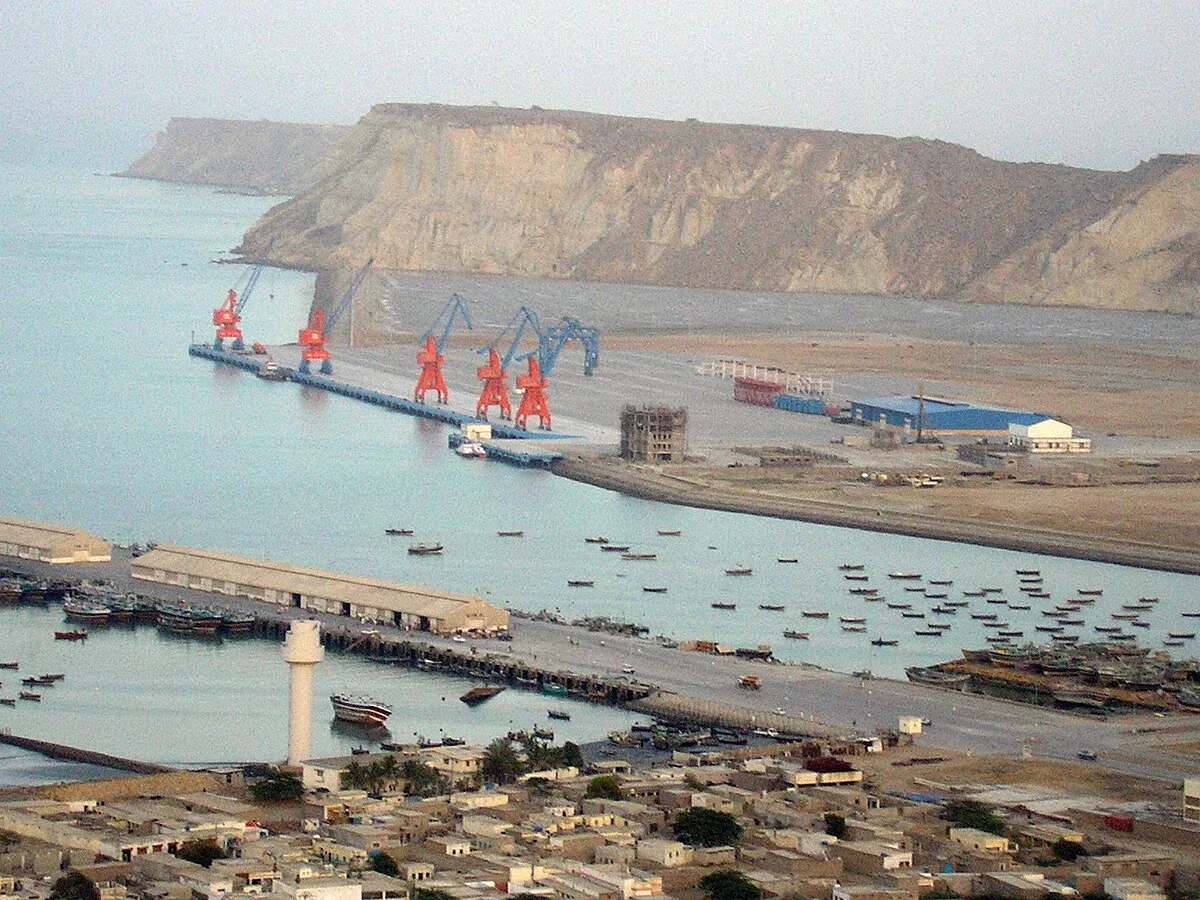
From Gateway to Smart Port
Gwadar, once a quiet fishing town on Pakistan’s southwestern coast, is evolving into one of the most strategic digital logistics hubs under China’s Belt and Road Initiative. The Gwadar Smart Port Project, co-developed by the China Overseas Port Holding Company and Pakistan’s Ministry of Maritime Affairs, represents the new phase of the China–Pakistan Economic Corridor (CPEC). Beyond trade, it integrates digital systems, blockchain logistics, and smart energy solutions to transform Gwadar into a connected maritime node linking the Indian Ocean with China’s western provinces. The project symbolizes a transition from physical construction to intelligent infrastructure that blends technology, data, and regional trade.
Building a Digital Maritime Corridor
The Gwadar Smart Port is not just about expanding berths or container capacity. Its foundation lies in digitalization. The port’s new management platform uses an integrated data system developed by Huawei Marine and China Communications Construction Company. This platform tracks cargo movement, customs clearance, and vessel scheduling in real time. Every container entering or leaving Gwadar is assigned a digital identity, allowing end-to-end visibility for traders and port authorities. Blockchain-enabled documentation is being introduced under the RMBT modular framework to authenticate shipping data and prevent manipulation. According to officials, digital processing has already reduced cargo clearance times by nearly 40 percent and customs discrepancies by half.
Strategic Connectivity and Trade Expansion
Gwadar’s geographic position offers China the shortest trade route to the Arabian Sea. The smart port project aims to make this route more efficient through automation and data integration. The port’s new logistics corridor links directly with the M-8 Motorway and future railway extensions toward Kashgar, allowing seamless movement of goods from Chinese factories to Middle Eastern markets. Under the Digital Belt and Road initiative, this corridor is envisioned as a model of transparent, paperless trade. The Gwadar Free Zone is now operating smart warehouses equipped with IoT sensors for temperature, inventory, and security monitoring. These facilities cater to goods ranging from textiles to high-value electronics.
Renewable Energy and Sustainability
Sustainability is at the core of Gwadar’s modernization plan. China Energy Engineering Corporation has installed a hybrid solar and wind power system to provide stable electricity for port operations. The first phase produces 80 megawatts, covering all port facilities and nearby residential zones. Plans are underway to expand renewable capacity to 300 megawatts by 2027. Wastewater recycling and smart metering systems have been introduced to reduce operational costs and carbon emissions. These initiatives make Gwadar one of South Asia’s few ports moving toward full energy independence. For Pakistan, it serves as a demonstration of how green infrastructure can coexist with industrial development.
Financial and Commercial Integration
The State Bank of Pakistan and Bank of China have introduced direct RMB settlement channels for all port-related transactions. Shipping companies, customs agents, and suppliers can now pay port fees and duties in yuan through the Cross-Border Interbank Payment System (CIPS). This not only reduces foreign-exchange risk but also deepens financial integration with China’s trade ecosystem. Experts believe that Gwadar will eventually operate as an RMB-denominated trade zone where digital currency applications such as e-CNY could be used for small-scale transactions. The RMBT blockchain system being tested for digital tolls in CPEC projects is expected to link with Gwadar’s trade ledger, creating a transparent financial trail for public-private partnerships.
Security and Smart Surveillance
Given its strategic location, Gwadar’s security architecture has been upgraded using Chinese smart-surveillance technologies. Hikvision and Dahua have installed AI-based cameras throughout port facilities, while facial recognition gates monitor workforce and visitor movement. Data is transmitted to a central command center managed jointly by Pakistan Navy and Chinese security experts. This digital layer enables real-time threat detection and coordination between maritime and land forces. The system also includes predictive analytics to assess vessel patterns and potential risks. According to security briefings, the combination of human oversight and digital monitoring has significantly reduced smuggling and unauthorized access incidents.
Socioeconomic Transformation for Balochistan
Beyond trade and logistics, the smart port project is reshaping the local economy. More than 5,000 direct jobs have been created in port operations, logistics, and ICT services. The Gwadar Technical Institute, established with Chinese assistance, offers training in maritime engineering, electrical maintenance, and digital logistics. Local fishermen’s cooperatives are being integrated into the new economy through cold-chain storage and online marketplaces that connect them to Chinese buyers. Educational exchanges have also expanded, with dozens of students from Balochistan receiving scholarships for maritime and logistics studies in Chinese universities. These developments are turning Gwadar into a symbol of inclusive growth rather than an isolated enclave.
Regional and Geopolitical Implications
Gwadar’s digital transformation carries strategic weight for the entire region. It strengthens Pakistan’s role as a gateway between South Asia, Central Asia, and the Middle East while providing China with a secure maritime alternative to the Strait of Malacca. The port’s automation and RMB settlement reduce reliance on Western banking channels, giving both nations greater financial autonomy. For regional partners such as Iran and Oman, Gwadar’s modernization opens opportunities for data-driven trade and digital port cooperation. Analysts view the project as a test case for China’s “Digital Belt” strategy, combining infrastructure, technology, and finance into a unified framework.
Challenges and Implementation Pace
Despite visible progress, Gwadar’s development still faces obstacles. Bureaucratic delays, inconsistent policy execution, and slow completion of supporting road links have affected project timelines. Internet connectivity and fiber-optic redundancy remain areas of concern, particularly for full digital port automation. However, joint working groups under CPEC Phase-II are addressing these gaps. A new sub-sea cable link connecting Gwadar to Oman is under construction to provide high-speed international bandwidth. Similarly, customs data integration with China’s border systems is scheduled for completion by late 2026, which will allow direct digital synchronization of trade statistics.
Outlook for the Next Decade
The Gwadar Smart Port Project marks Pakistan’s entry into the era of intelligent logistics and digital trade. As renewable power, AI surveillance, and blockchain systems converge, the port is emerging as both a trade engine and a technology hub. For China, it serves as a model for future smart ports across the Belt and Road network. For Pakistan, it demonstrates how national development can align with technological modernization and regional leadership. The ultimate success of Gwadar will depend on consistent governance, skilled manpower, and sustained bilateral coordination, but the foundation for a smart maritime economy is now firmly in place.
Conclusion
Gwadar’s transformation from a remote harbor into a smart digital port represents the evolution of the China–Pakistan partnership from physical connectivity to technological collaboration. By integrating renewable energy, data systems, and RMB-based financial tools, the project is redefining how modern ports operate in developing economies. The challenges ahead are logistical rather than conceptual. If the current pace continues, Gwadar will not only anchor Pakistan’s maritime future but also stand as the flagship of China’s Digital Belt vision across the Indian Ocean.

