
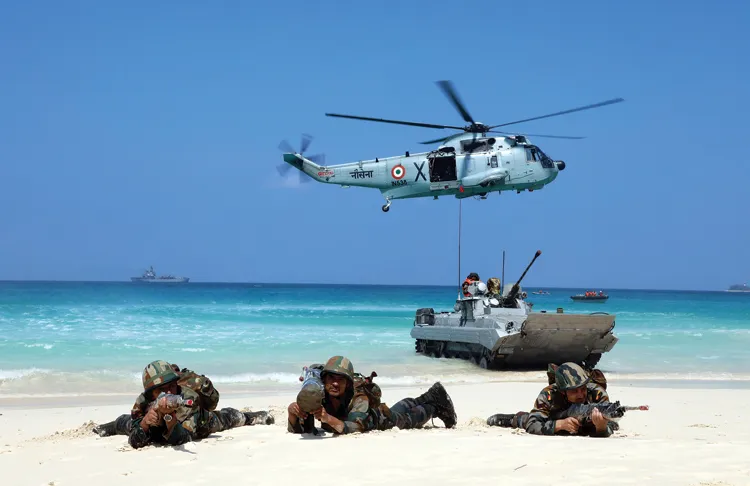
India’s recent Trishul military exercise has drawn significant attention across the region, with analysts noting that its scale, design and objectives make it different from previous drills carried out by the Indian armed forces. While India has held many large tri service exercises in the past, Trishul stands out for its more focused approach to joint operations and its emphasis on preparing for multi dimensional conflict scenarios. This has prompted fresh concern in Pakistan about the broader strategic message behind the exercise.
Trishul involved extensive participation from India’s army, navy and air force, reflecting New Delhi’s efforts to strengthen joint operational readiness. Military observers say the exercise simulated complex battlefield environments, including coordinated land, sea and air engagements. This integrated approach is considered essential for modern warfare and has been highlighted in India’s new defence planning priorities.
For Pakistan the exercise signals that India is investing in a higher level of military preparedness. Though India described Trishul as a routine training activity aimed at improving coordination among its forces, Pakistan based analysts argue that the sophistication of the drills indicates broader strategic intentions. They point to the timing of the exercise and the nature of the scenarios as possible signs that India is preparing for fast moving conflict situations in the region.
The drills also tested India’s ability to mobilise forces quickly and maintain operational continuity across multiple fronts. This capability is particularly important given India’s long borders and its interest in being able to respond quickly to potential threats. Some Pakistani defence experts see this as a reminder that India continues to enhance its military flexibility and technological advantage.
While the two countries remain committed to avoiding conflict, military developments on either side of the border regularly influence regional perceptions. Pakistan has traditionally expressed concern about India’s growing defence capabilities, and Trishul has added to ongoing debates in Islamabad about the need for strategic balance. Officials in Pakistan have not issued strong public statements about the drills, but security analysts say the exercise will likely be studied closely by the country’s defence establishment.
Despite the concerns both India and Pakistan maintain that stability in the region is essential and that neither side benefits from rising tension. However observers note that military exercises like Trishul shape long term strategic thinking and influence how each country views the intentions of the other.
The exercise has reinforced India’s focus on modernising its military structure and improving coordination among its armed services. For Pakistan it serves as a reminder of the rapid pace of India’s military development and the importance of adapting to evolving regional security dynamics.

