
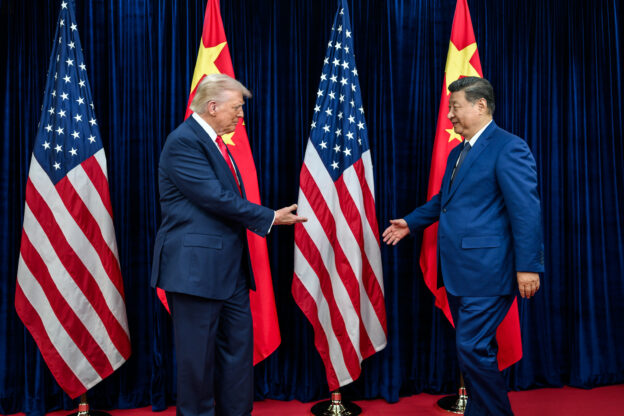
The recent phone call between Donald Trump and Xi Jinping has quickly become one of the most talked-about developments in global politics, raising questions about how the two major powers plan to navigate their relationship in the coming years. As Washington and Beijing reassess their strategic priorities, the conversation between the American and Chinese leaders suggests a potential shift in the dynamics that shape the Indo-Pacific region.
The Indo-Pacific has long been a central arena of competition between the United States and China. For years, tensions have grown over issues ranging from trade disputes and technology controls to territorial claims and military deployments. Against this backdrop, even a single high-level conversation can send political signals well beyond the two capitals. The call between Trump and Xi appears to indicate that both sides are considering a recalibration of their approach.
For Trump, who has returned to office with a renewed focus on redefining US foreign policy, the Indo-Pacific remains a priority. His administration sees the region as critical not only for its economic influence but also for its strategic value in countering China’s rise. Meanwhile, Xi faces his own set of pressures, including a slowing economy, regional competition, and growing scrutiny from neighbouring countries. In this environment, communication between the two leaders becomes a tool to prevent misunderstandings and maintain broad stability.
Analysts note that the conversation may have covered areas where cooperation is still possible despite ongoing rivalry. Issues such as climate coordination, military communication channels, and economic stability offer opportunities for dialogue. At the same time, both leaders are likely to have reaffirmed their non-negotiable positions, especially regarding Taiwan, the South China Sea, and technology security. The ability to manage these issues without escalating tensions will be key to maintaining peace in the region.
One of the biggest questions is how the call will shape broader regional strategies. Countries in the Indo-Pacific have been navigating a complicated landscape, balancing security ties with the United States and economic links with China. A shift in tone between Washington and Beijing could influence how regional governments adjust their own policies. Some may welcome a period of reduced confrontation, while others may worry that a temporary easing of tensions could mask deeper strategic competition.
The call also comes at a time when regional alliances are evolving. The United States continues to strengthen partnerships with countries like Japan, Australia, India, and the Philippines. China, meanwhile, is deepening its economic and security ties through new trade routes, defence cooperation, and diplomatic engagements. Any change in the tone of US-China relations will inevitably affect how these alliances operate and what they prioritise.
Ultimately, the Trump-Xi conversation highlights the importance of communication between major powers. While the Indo-Pacific remains an area of intense strategic competition, the willingness of both leaders to engage directly may help create space for dialogue and reduce the risk of miscalculation. Whether this marks the beginning of a genuine recalibration or simply a momentary pause remains to be seen, but the implications will continue to ripple across the region.

