
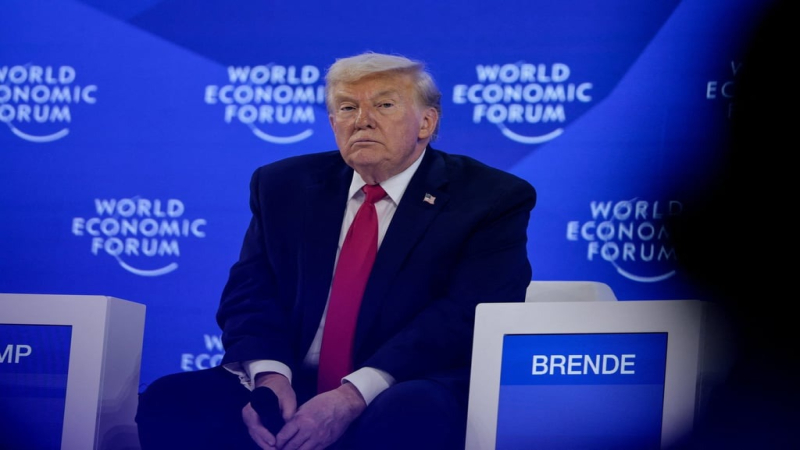
Donald Trump used a high profile appearance at the World Economic Forum in Davos to press his long standing view that the United States must secure control over Greenland, while insisting that military force would not be used. Speaking during an extended and at times improvised address, Trump said Greenland was essential to US national security interests and warned that Washington would remember Denmark’s position should it oppose American ambitions. His remarks injected fresh uncertainty into transatlantic relations at a forum focused on global cooperation and economic stability. Trump’s comments came as European allies continue to grapple with the implications of his foreign policy approach, which has often challenged established diplomatic norms and alliance structures.
During the speech, Trump also highlighted what he described as strong personal ties with Xi Jinping, portraying the relationship as a stabilising factor in US China relations despite ongoing trade and geopolitical tensions. He touched on a wide range of issues, from energy and trade to global security, while criticising the forum’s host country, Switzerland, and defending his record on international peace efforts. Trump claimed credit for easing conflicts in several regions and spoke positively about recent dealings involving Venezuela’s oil supplies. His free flowing remarks reflected a broader effort to project confidence on the global stage while reinforcing an America first narrative that has defined his leadership.
The Greenland comments drew particular attention because of their potential impact on Europe’s security outlook and relations within the North Atlantic Treaty Organization. While Trump said he would not resort to force, his warning to Denmark underscored the pressure smaller allies may face amid shifting US priorities. Analysts say the speech illustrated how Trump continues to blend transactional diplomacy with personal relationships, creating uncertainty for partners while asserting US strategic interests. Delivered against the backdrop of rising global tensions and economic fragmentation, the address highlighted how issues ranging from Arctic security to major power relations are increasingly intertwined in shaping the international agenda.

