
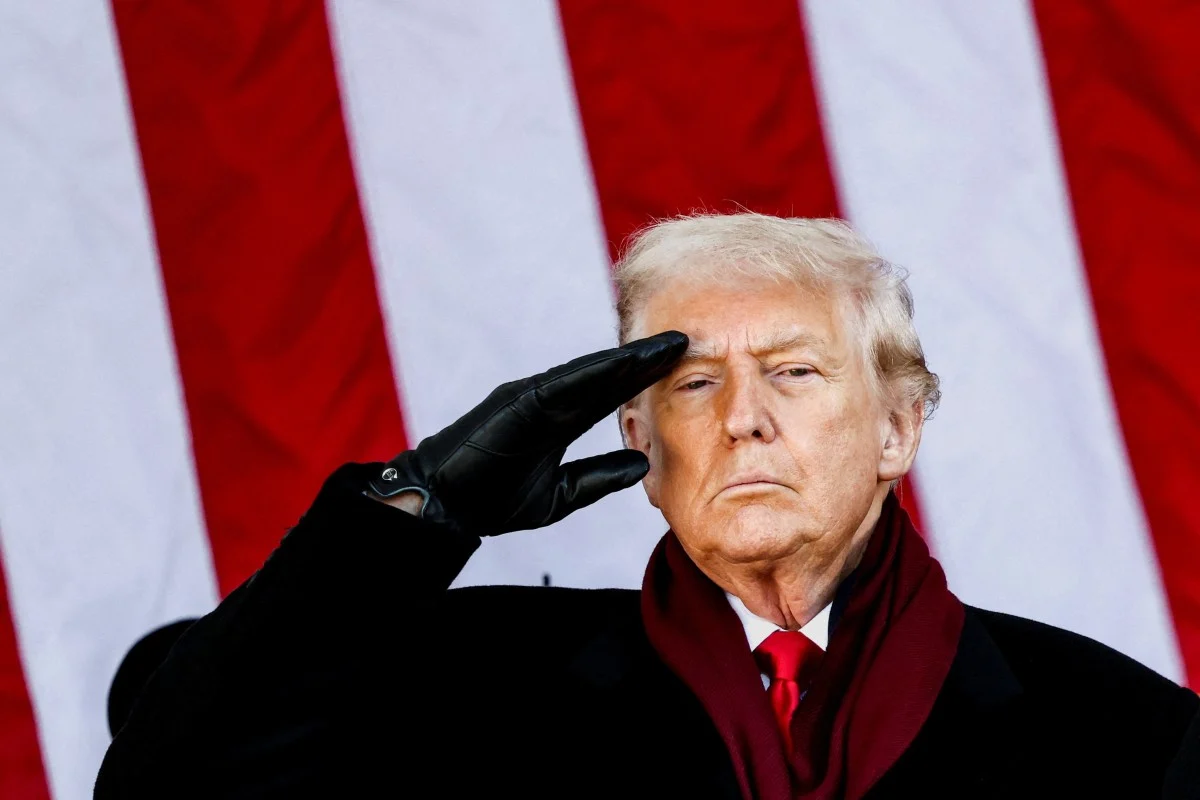
A new wave of political controversy has erupted in the United States after President Donald Trump suggested that Democratic lawmakers who urged the military to resist what they described as unlawful orders were acting in a seditious manner. He went further by saying such behaviour could be considered a capital offence, a remark that has drawn widespread concern across the political spectrum.
The comments came during one of his recent speeches, where Trump sharply criticised members of Congress who had publicly encouraged military leaders to follow constitutional guidelines if confronted with directives they believed to be illegal. These lawmakers argued that the military has a duty to uphold the law above all else, even if it means questioning presidential commands. Their statements were framed around concerns about potential misuse of power during politically sensitive moments.
Trump responded by labelling them traitors, claiming their remarks undermined national authority and weakened the chain of command. He accused them of attempting to provoke rebellion within the armed forces, calling it an act he described as sedition. He then suggested that such acts were historically punishable by death, a reference that many interpreted as an extreme and dangerous escalation of political rhetoric.
The president’s remarks quickly sparked reactions across Washington. Democrats condemned the language as reckless and inflammatory, warning that it could encourage hostility against elected officials. Several Republicans also distanced themselves from the statement, emphasising that political disagreements should never be equated with acts deserving capital punishment. Legal experts pointed out that sedition is a complex and narrowly defined charge, and political speech is heavily protected in the United States.
Members of the military community expressed discomfort as well. Former officials stressed that the armed forces are trained to follow lawful orders, not political directives, and that it is normal for lawmakers to discuss constitutional obligations. They cautioned that implying severe punishment for such debate risks damaging the essential relationship between civilian leadership and the military.
The episode has deepened an already tense political atmosphere. Observers note that the United States is experiencing rising polarisation, with public discourse increasingly marked by hostility. Statements invoking severe punishments for political disagreement add fuel to these divisions, raising concerns about the safety of public figures and the stability of democratic institutions.
Despite the backlash, Trump stood by his comments, insisting he was defending authority and order. Critics argue that such language threatens democratic norms and could embolden individuals who interpret political rivalry as treason.
As the debate continues, many analysts warn that the focus should return to strengthening institutional safeguards, encouraging responsible political debate, and ensuring that disagreements between branches of government remain within constitutional boundaries.

