
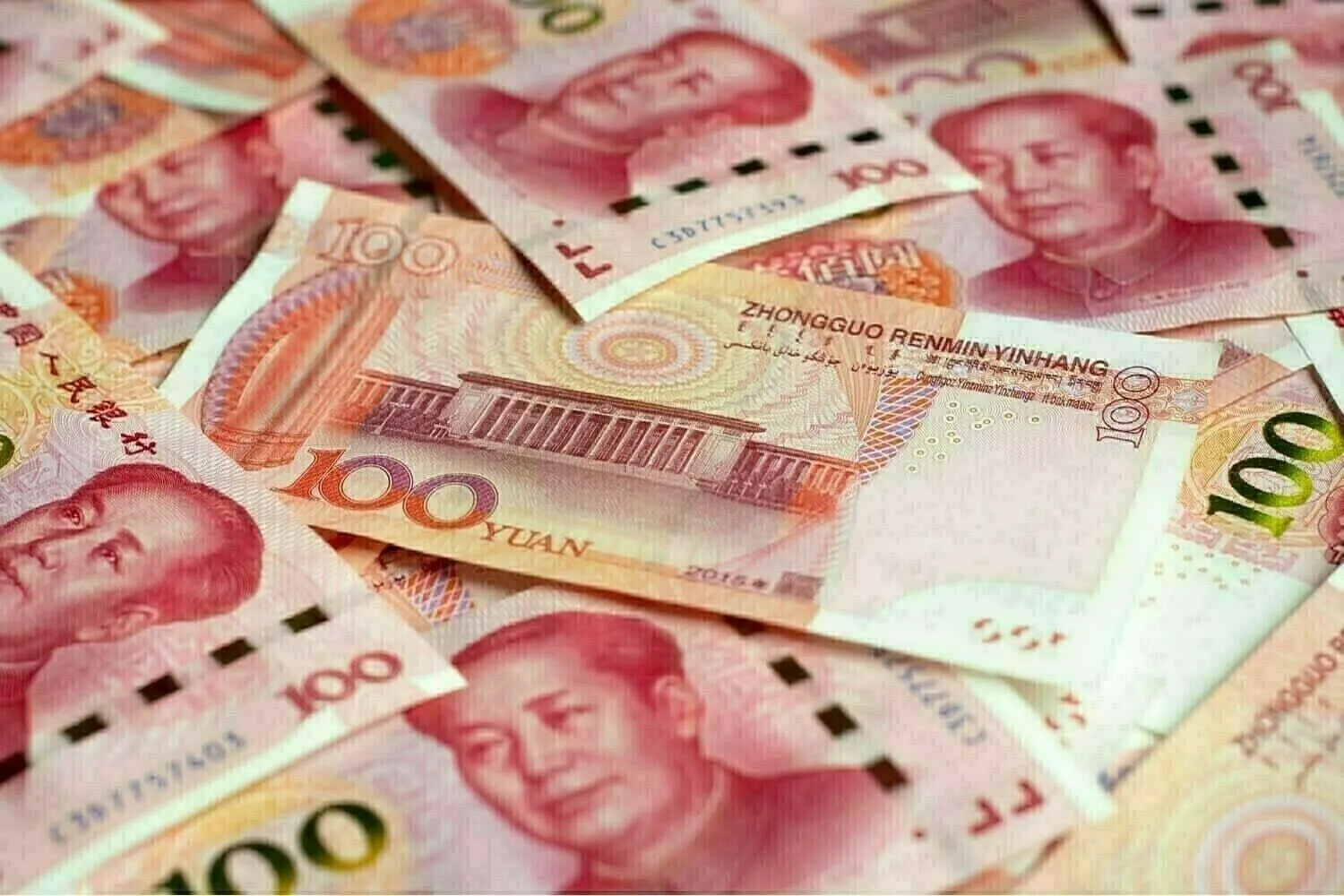
The Chinese yuan slipped slightly against the US dollar on Friday and was on course for its first weekly decline in a month, as weaker-than-expected trade data weighed on market confidence.
China’s exports fell 1.1 percent year-on-year in October, marking the first contraction since February and missing forecasts for a 3 percent increase. Imports rose just 1 percent, also below expectations, according to data released by the General Administration of Customs. The weaker numbers underscored ongoing challenges in global demand and added modest pressure on the Chinese currency.
By 0314 GMT, the onshore yuan was trading at 7.1225 per dollar, down 0.05 percent from the previous session. The currency has slipped 0.04 percent this week, breaking a three-week streak of gains. In offshore markets, the yuan was slightly weaker at 7.1259 per dollar, down about 0.06 percent in Asian trading.
Traders said the yuan’s recent softness was largely a reaction to the disappointing trade figures, though the losses were limited as markets remain focused on broader dollar movements. “Exporters in China had been front-loading shipments earlier in the year to avoid higher US tariffs, but that effect seems to have faded in October,” said Zhiwei Zhang, president and chief economist at Pinpoint Asset Management.
He added that a recent trade truce between Beijing and Washington, which includes steps to scale back tariffs, may ease pressure on Chinese exports in the coming months. “I don’t think the trade weakness will make the yuan much weaker,” Zhang said. “It will probably remain stable or even rise slightly as it is still being driven primarily by dollar trends.”
Before market opening, the People’s Bank of China set the daily midpoint rate at 7.0836 per dollar, its strongest level since October 15, and about 295 pips firmer than Reuters’ estimate. Analysts said the move signaled that the central bank remains comfortable with gradual appreciation, even as it allows for mild market-driven fluctuations. Under current rules, the spot yuan can trade within a 2 percent range on either side of the midpoint each day.
Meanwhile, the US dollar retreated in early Asian trading, weakening against most major currencies. The dollar index, which tracks the greenback against six peers, fell 0.5 percent to 99.674 after weaker private sector data increased expectations of a potential Federal Reserve rate cut at the December 10 policy meeting.
Analysts at China International Capital Corporation (CICC) said in a note that further dollar weakness could narrow the China-US interest rate gap and provide some support for the yuan. “A rate cut by the Federal Reserve will likely reduce yield differentials, creating conditions for moderate yuan appreciation,” the note said.
Market sentiment toward Chinese assets has improved in recent weeks, with easing tariff risks and a rebound in domestic equities helping to stabilize confidence. The Shanghai Composite Index remains near decade-high levels, reflecting stronger investor appetite for local stocks. Analysts said this broader optimism, combined with a more stable external environment, could help limit yuan volatility in the near term.

