
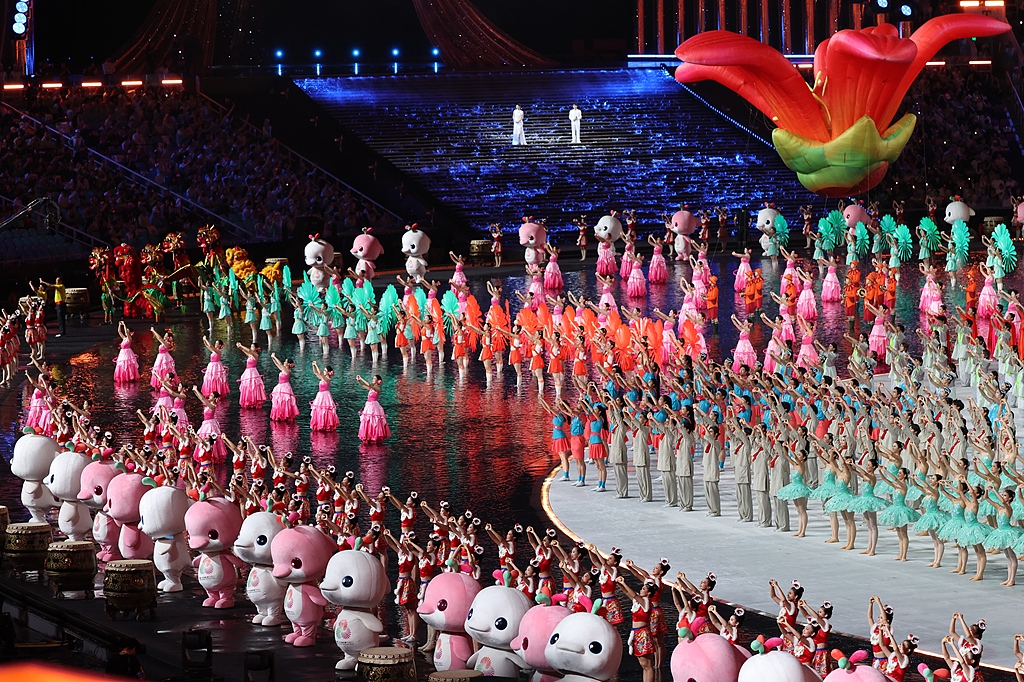
China’s fifteenth National Games have brought together more than twenty thousand athletes competing across thirty four elite sports and twenty three mass participation events. More than a major multi sport event the Games offer a clear window into China’s evolving sports system a system shaped by long term investment stronger infrastructure and increased public involvement. They reflect a nation where sporting culture is deepening and athletic development has entered a new stage driven by a wider and more capable talent pool.
A landmark moment for the Greater Bay Area
This year marks the first time the National Games have been jointly hosted by Guangdong Hong Kong and Macao a milestone in regional cooperation. The shared organization of venues transport logistics and public activities shows how the Greater Bay Area is becoming increasingly integrated. It also demonstrates how sports can act as a unifying force strengthening ties across borders and showcasing the potential of collaborative development within one of China’s most dynamic regions.
Policy driven growth supports athletic excellence
Experts note that years of steady policy focus have expanded sports venues improved school based sports programs and elevated mass fitness participation. These long term efforts have strengthened the foundation on which elite performances are built. The results are clear. Provinces are competing more intensely than ever and athletes are benefiting from better facilities and stronger support networks.
Swimming provided some of the clearest examples. Zhejiang’s Pan Zhanle and Hebei’s Li Bingjie delivered outstanding results demonstrating the strength of China’s structured training system. Provincial teams now have access to advanced sports science labs underwater camera analysis biomechanics tools and data systems that help refine every aspect of performance from starts and turns to endurance and pacing.
Upgraded host region facilities improve long term fitness
The Guangdong Hong Kong Macao host region upgraded twenty three competition venues for the Games improving conditions not only for elite athletes but also for the general public. Many of these venues including athletics stadiums swimming pools and gymnasiums have already opened to local residents after the competitions ended. This reflects an important principle in China’s sports planning elite projects should also benefit ordinary citizens. Such investments bring long term value by strengthening community fitness culture.
Strong performances across multiple sports
Beyond the pool athletes delivered high level performances in several disciplines. In table tennis Fan Zhendong won a fiercely competitive men’s singles final against rising star Lin Shidong highlighting both sustained excellence and emerging talent. Weightlifter Peng Cuiting posted a dominant total in her category reminding audiences of China’s deep strength in the sport. Track events were equally impressive with the men’s eight hundred meter final producing a national record and featuring runners from several provinces who pushed each other to new limits.
These achievements illustrate that China’s talent pipeline continues to expand. Many athletes competing today began their journey in grassroots sports programs created under the National Fitness Plan. This alignment between community fitness school sports and elite development ensures that young talent is nurtured consistently and systematically.
A rapidly expanding sports infrastructure
Supporting this national movement is China’s rapidly growing sports infrastructure. By two thousand twenty four China had more than four point eight million sports venues covering over four point two billion square meters more than double the number from two thousand thirteen. This expansion provides broader access to public fitness opportunities. Cities such as Hangzhou and Shenzhen now feature dense networks of sports parks jogging routes and outdoor fitness stations creating healthier and more active communities.
Schools strengthen the talent pipeline
Recent education reforms have placed greater emphasis on physical education increasing sports hours and improving school competition structures. Many young athletes at this year’s National Games rose through campus leagues before joining provincial teams. Their performances illustrate the growing role of schools in identifying and developing the next generation of champions.
Rising participation across all regions
China’s national fitness programs are reaching wider regions including rural communities. The sixth national fitness monitoring campaign launched this year aims to expand health surveys and improve participation data. More township sports centers are giving rural residents greater access to organized physical activity. The outdoor sports boom has also created growth for domestic equipment brands coaching services and digital training apps. In two thousand twenty three China’s sports industry generated around three point six seven trillion yuan showing strong momentum and increasing health awareness across society.
Technology accelerates China’s sporting transformation
Technology is playing a major role in modernizing China’s sports environment. This year’s National Games used AI supported timing technology digital judging tools and advanced analytics systems. Athletes and coaches now rely on smart wearables AI training software and digital platforms for daily practice. In the Greater Bay Area integrated digital systems connected venues and supported event management showcasing how innovation strengthens both competition and organization.
A clearer picture of national progress
Taken together these developments show how far China’s sports landscape has progressed. The National Games highlight not only elite athletic talent but also the strength of public participation the value of long term planning and the role of technology in shaping modern sports. China’s commitment to building a strong sports nation is driving stronger health outcomes higher performance standards and broader economic growth.

