
A decade that reshaped society, scarred lives, and redefined politics.
The Storm Begins
In 1966, Mao Zedong launched the Great Proletarian Cultural Revolution, urging young people to rise against what he called “bourgeois elements” within the Communist Party and society. Schools closed, work units turned into battlegrounds of ideology, and students organized as Red Guards swept through cities chanting slogans and carrying Mao’s Little Red Book. The promise was utopia: a society purified of hierarchy and corruption. The reality quickly became chaos.
Red Guards and Radical Zeal
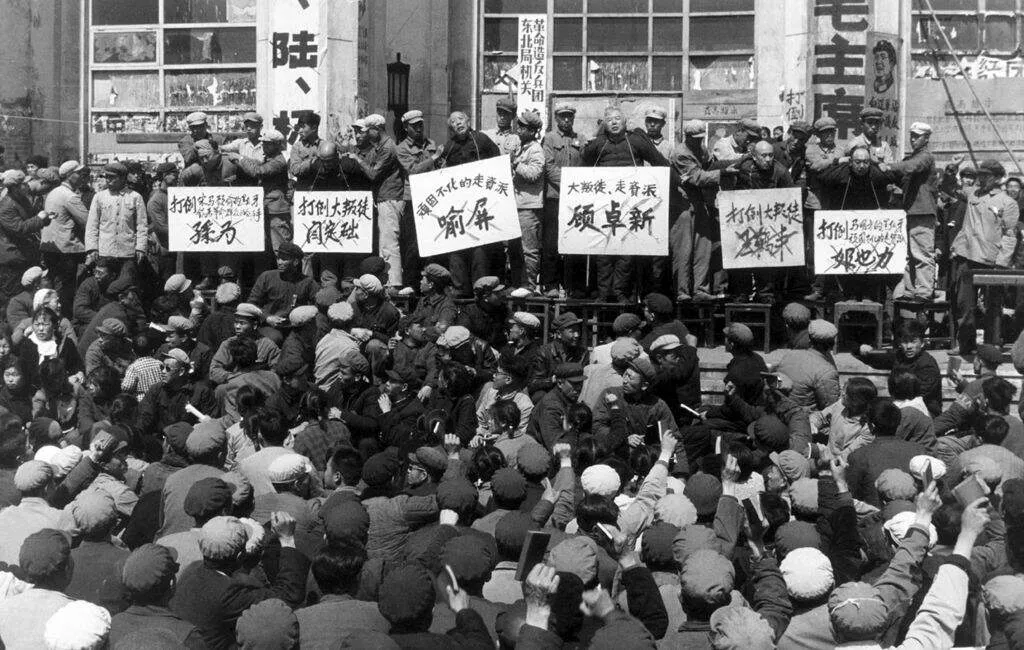
Red Guards targeted teachers, intellectuals, and officials accused of harboring counter revolutionary thoughts. Public denunciations, struggle sessions, and violence spread. Libraries were burned, temples defaced, and historical relics destroyed in the name of cleansing tradition. Millions were uprooted as educated youth were sent to rural areas to “learn from the peasants.” What began as a movement for cultural renewal morphed into a vast social convulsion that disrupted education, economy, and community ties.
Power Struggles at the Top
Behind the chaos lay factional battles. Mao used the movement to reassert authority after being sidelined following the Great Leap Forward. Party leaders clashed, with some falling from power through purges, others rehabilitated later. Lin Biao, Mao’s designated successor, rose to prominence before dying in a mysterious plane crash in 1971 after allegedly plotting against Mao. These struggles at the summit filtered down to ordinary citizens, who lived with the uncertainty of shifting alliances and sudden reversals.
The Human Cost
The toll was staggering. Families were torn apart as children denounced parents. Intellectual life withered as universities shut down for years. Skilled professionals were humiliated, imprisoned, or killed. Estimates of deaths range into the millions, while tens of millions more suffered exile, labor camps, or trauma. The Cultural Revolution left scars that shaped generations, creating silence in households where pain was too deep to narrate.
Memory and Reckoning
After Mao’s death in 1976 and the arrest of the Gang of Four, the Cultural Revolution was officially condemned as a mistake that caused “ten years of turmoil.” The Party sought to move forward, emphasizing economic reform while discouraging prolonged debate about the period. Yet memory persisted. Writers and filmmakers cautiously explored trauma. Families passed on stories privately. Museums displayed selected relics, but many wounds remained raw and unresolved.
For survivors, remembering is a balancing act between truth and risk. Some see the Cultural Revolution as a cautionary tale about unchecked power. Others recall moments of youthful idealism, however misguided, that gave a sense of agency during turbulent times.
Global Perspectives
Outside China, the Cultural Revolution became shorthand for extremism and the dangers of mass mobilization. Students abroad debated whether it represented betrayal or fulfillment of revolutionary ideals. Today, global scholars examine it as both a tragedy and a critical case study in how political visions can spiral beyond control.
Lessons for Modern Society
The Cultural Revolution shows how fragile institutions become when politics eclipses law and when ideology replaces trust. It demonstrates how quickly youth energy can turn destructive without structure and how utopian promises can mask power struggles. For modern China, it is both an admonition and a reminder of resilience, as the country rebuilt in the reform era despite the devastation.
Conclusion: The Price of Utopia
The Cultural Revolution is not distant history. It remains a living caution about the cost of chaos pursued in the name of purity. It shows that societies pay dearly when collective passion overwhelms institutions. The decade left behind ruins, but also a determination among later generations to never let such turmoil return. Remembering is painful, but forgetting risks repeating.

