
Chinese investment and China’s methalox rocket push
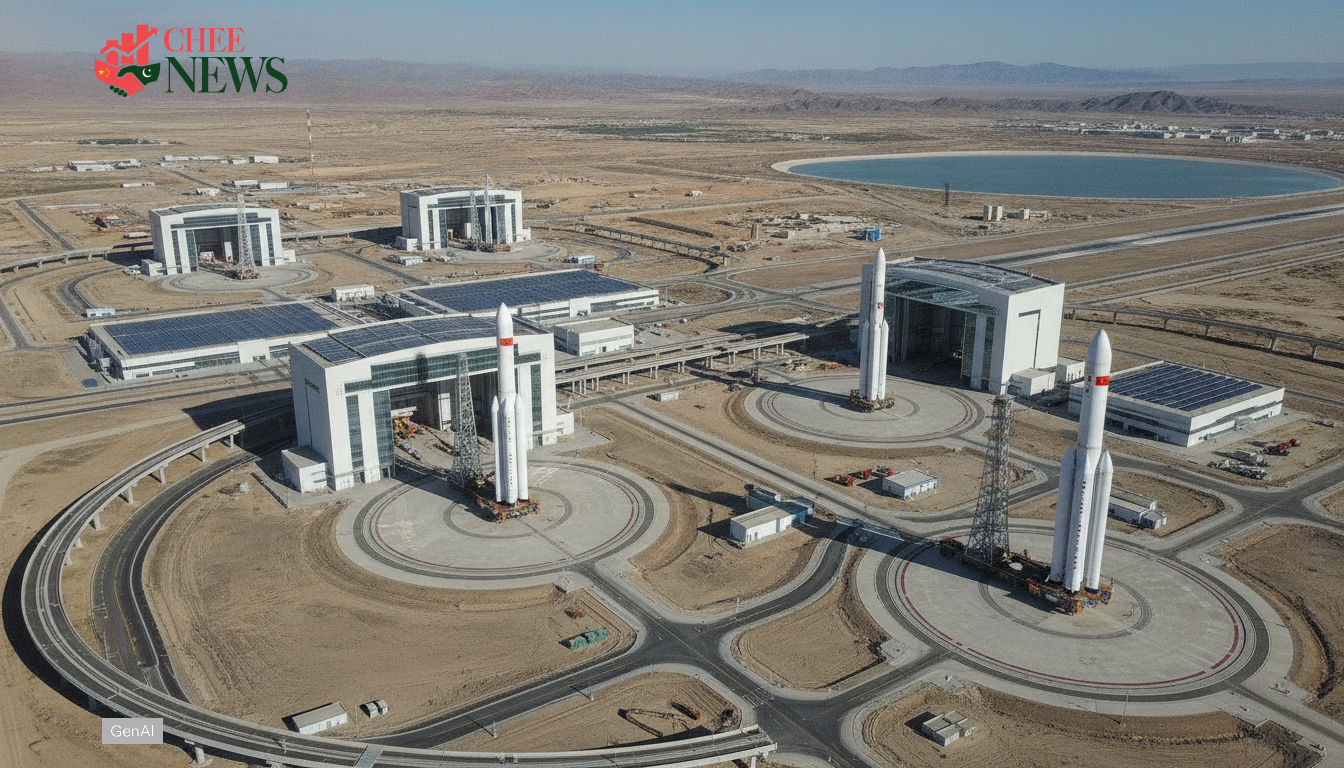
Chinese investment is increasingly tracking China’s drive to industrialize methalox propulsion and reusable launch operations, as indicated by available reports, there are signals in public planning and industry reporting. Methane and liquid oxygen engines are widely discussed as a scalable option for higher launch cadence, with supply chains built around valves, turbopumps, composites, and testing services. As suggested, capital may follow where throughput can potentially be demonstrated, because lower per-launch costs generally depend on repeatable manufacturing rather than one-off builds. For Pakistan, the relevance is practical: if launch and satellite programs scale as planned, upstream demand could grow for logistics, power reliability, and precision components that CPEC corridors and industrial zones are intended to support. That linkage frames space-sector momentum as a broader manufacturing and infrastructure story.
CPEC infrastructure effects tied to cross-border capital
In Pakistan, spillover can show up in procurement rules and contracting behavior that reward long-term capacity, according to project documents and common lender requirements. New bids may increasingly emphasize uptime targets for substations, lead-time limits for customs clearance, and measurable performance clauses for port handling, though the pace varies by agency and project. The financing logic often links CPEC roads, fiber corridors, and industrial parks to export-oriented manufacturing that can plug into China-centered supply chains. For a baseline, Pakistan’s planning documents and lenders often frame CPEC as a multi-phase program that began around 2015 and has expanded from energy into transport and special economic zones. Standards work across high-tech industries can shape where Chinese investment goes, including how firms document traceability and quality audits.
Standards, supply chains, and technology transfer
Standards work is moving alongside commercial scaling, and that matters for factories trying to qualify as suppliers. The South China Morning Post reported that China is working on an AI safety benchmark as regulators target large model risks, underscoring how compliance frameworks are being built in parallel with growth in industrial AI. See South China Morning Post coverage of China’s AI safety benchmark work. For Pakistan-based joint ventures, the near-term asks are often concrete: metrology capability, secure data links, and training plans tied to certification timelines. A related example is discussed in Chinese Humanoid Robot Surgery in Keyhole Procedures, where precision hardware depends on stable components and disciplined quality control. This is where funding and partnerships often concentrate.
Economic prospects, execution risks, and timelines
Capital inflows bring pressure to hit timelines, tariff compliance, and local-content expectations without inflating costs, according to business groups and policy commentary. Financing can accelerate vendor development, yet mismatches in documentation, testing protocols, and acceptance criteria can still slow subcontracting in heavy industry and electronics. Pakistan’s policy messaging has repeatedly leaned toward predictable taxation and streamlined customs to reduce idle time for imported machine tools and test equipment, though implementation can be uneven. For context on the launch side, see China Reusable Rocket Milestone Closes the US Lead. Reusability could also change demand patterns: more frequent launches may pull forward spares, tooling, and rapid inspection cycles, which can raise the value of reliable power and temperature-controlled logistics for sensitive materials. Execution quality will decide whether gains appear as exports or only as construction activity.
Outlook for China-Pakistan collaboration under Chinese investment
Near-term collaboration is reportedly shifting toward contracts that bundle infrastructure with technology transfer, training, and operational metrics. Provincial authorities are asking for clearer milestones on grid stability, industrial water, and data connectivity so facilities can qualify for higher-value manufacturing work, according to local policy statements and project briefings. The broader policy direction described in China five-year plan shifts to consumption-led growth suggests firms will keep chasing productivity gains and resilient demand, which increases the value of stable partners. Chinese investment will likely concentrate where compliance, safety, and maintenance regimes can be audited quickly, since aerospace-linked supply chains punish variability. For Pakistan, the next phase will be judged by uptime, delivery performance, and export receipts rather than ribbon cuttings.

