
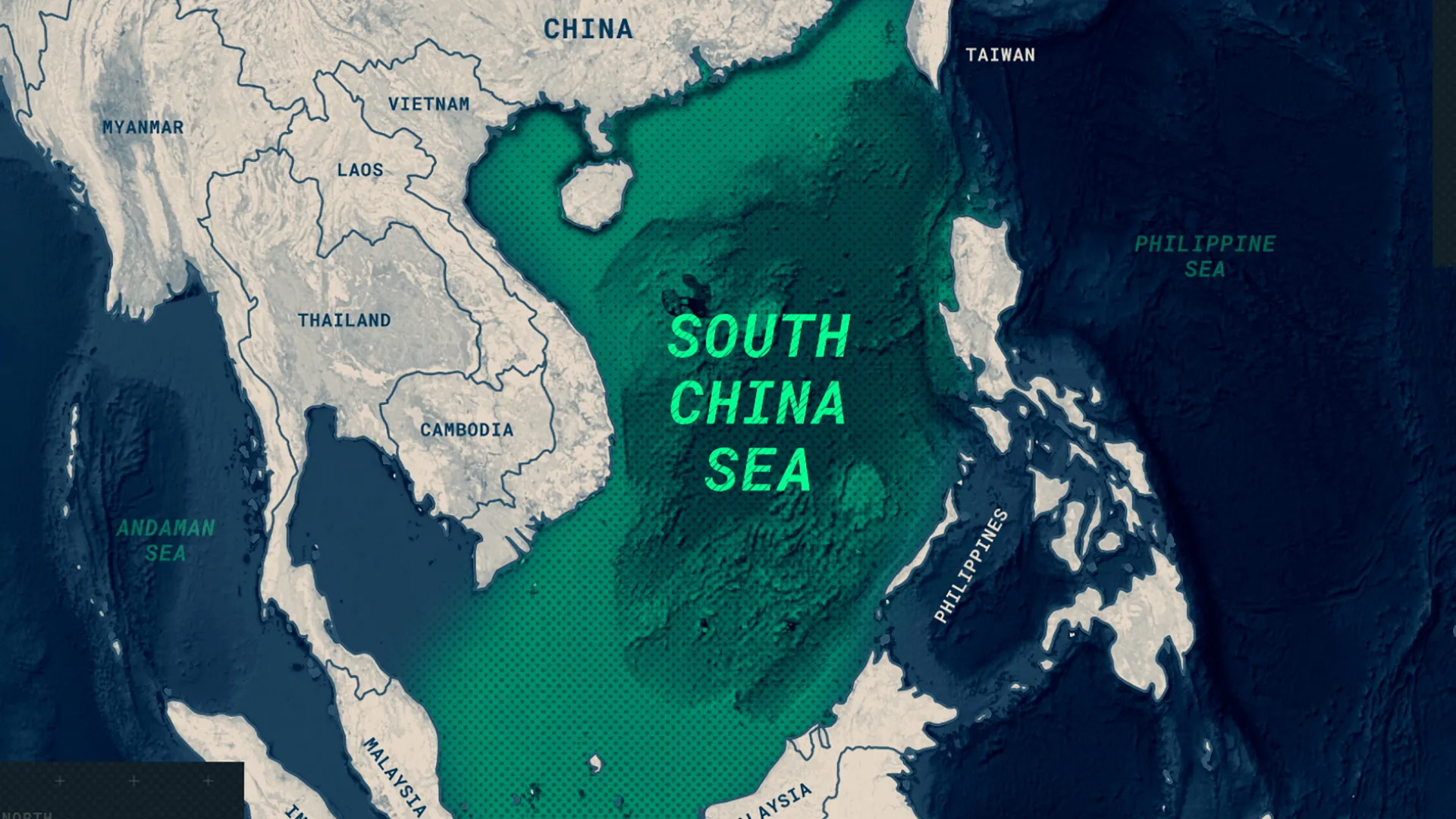
How contested waters became the frontline of Asia’s geopolitics.
A Sea of Stakes
The South China Sea stretches across vital shipping lanes, connecting the Pacific and Indian Oceans. One third of global trade passes through its waters, alongside rich fisheries and potential oil and gas reserves. For China, the sea represents both a security buffer and a symbol of historical rights. For neighboring states and global powers, it is a test of sovereignty, law, and freedom of navigation.
Competing Claims
China asserts the “nine dash line,” a sweeping claim covering most of the sea, citing historical usage. Vietnam, the Philippines, Malaysia, Brunei, and Taiwan maintain their own claims over islands and reefs. Overlapping maps create constant friction. In 2016, an international tribunal at The Hague ruled against China’s expansive claim, stating it lacked legal basis under the UN Convention on the Law of the Sea. Beijing rejected the ruling, insisting on its interpretation of history and sovereignty.
Island Building and Militarization
In the 2010s, China accelerated construction of artificial islands on reefs in the Spratly archipelago. Airstrips, ports, and radar installations transformed rocks into strategic bases. Officials described the facilities as defensive, but rivals saw militarization. Satellite images of missile systems and fighter deployments reinforced concerns that Beijing sought de facto control of the waters.
Other claimants fortified their own outposts, though on smaller scale. The result is a patchwork of contested bases, each reinforcing presence and raising risk of clashes.
The Role of the United States
Washington positions itself as defender of freedom of navigation, conducting regular patrols near disputed features. U.S. officials argue that international waters cannot be restricted by unilateral claims. These operations bring American warships close to Chinese bases, producing tense encounters. For Beijing, U.S. actions are interference in regional affairs; for Southeast Asian nations, they are both reassurance and source of escalation.
Regional Diplomacy
The Association of Southeast Asian Nations (ASEAN) has attempted to negotiate a code of conduct with China, aiming to prevent conflicts. Progress has been slow, as member states differ in priorities. Some seek compromise to secure investment, while others push for firmer resistance. This division allows China to negotiate bilaterally, reducing collective pressure.
Economic Dimensions
Beyond security, the South China Sea holds immense economic stakes. Fisheries feed millions, yet overfishing threatens sustainability. Oil and gas exploration promises revenue but fuels disputes over jurisdiction. Energy companies hesitate to invest amid uncertainty, slowing development of resources that could otherwise benefit local economies.
Perspectives Within China
Domestically, the South China Sea is portrayed as matter of sovereignty and national pride. Textbooks, media, and maps reinforce the idea that defending maritime rights is non negotiable. Leaders frame presence in the region as protection of historical legacy, rallying public support. This makes compromise difficult, as concessions risk being viewed as betrayal.
Global Implications
The disputes have become a test case for the international order. Will maritime law prevail, or will power decide. For smaller states, the outcome matters for their autonomy. For global trade, stability is essential, as disruptions could ripple through supply chains worldwide. For great powers, the sea symbolizes broader rivalry between China and the United States.
Possible Futures
Several paths exist. One is continued militarization, with risks of accident escalating into conflict. Another is managed competition, where patrols and claims persist but rules of engagement prevent war. A more optimistic vision imagines joint development of resources, though trust remains low. The trajectory will depend on diplomacy, domestic politics, and the balance of power.
Conclusion
The South China Sea disputes reveal how geography, law, and identity intertwine. What seems like distant reefs carries weight for trade, environment, and global stability. The waters are more than lines on a map. They are stages where history collides with strategy, and where the future of Asia’s order may be decided.

