
A Man Made Disaster Unlike Any Other
Famine has accompanied humanity for centuries, usually driven by droughts, floods, or other forces beyond human control. The twentieth century, however, revealed something far more devastating. Human decisions, when shaped by ideology and unchecked authority, could surpass nature in destruction. One of the clearest examples was China’s Great Leap Forward, a campaign launched between nineteen fifty eight and nineteen sixty two that resulted in the deadliest famine in modern history.
The catastrophe was not planned as an act of violence. Instead, it emerged from a mix of flawed reasoning, political pressure, unrealistic targets, and a rigid commitment to ideology over reality. The consequences were staggering, with tens of millions of lives lost and deep scars left on Chinese society.
China’s Condition Before the Leap
When the Chinese Communist Party took power in nineteen forty nine, the country was economically exhausted. Years of war, foreign occupation, and internal conflict had left industry weak and agriculture fragile. Rebuilding the economy was an urgent priority, alongside reshaping society according to socialist principles.
Under the leadership of Chinese Communist Party, early reforms focused on land redistribution and gradual collectivization. Farmers were grouped into mutual aid teams and later agricultural cooperatives. At the same time, the state began investing heavily in industry, which had been severely underdeveloped. These policies closely followed the Soviet model, particularly through the First Five Year Plan from nineteen fifty three to nineteen fifty seven.
Ideology and Political Campaigns Shape Policy
Economic transformation was accompanied by intense ideological campaigns. Intellectuals, professionals, and those labeled as bourgeois were targeted for re education. Political conformity became essential, and dissent was often met with punishment. While these campaigns aimed to strengthen socialist unity, they also weakened the system by silencing expertise and honest feedback.
In nineteen fifty six, the leadership briefly encouraged open criticism through the Hundred Flowers Campaign, hoping to ease tensions. Instead, widespread criticism alarmed the leadership. This led to the Anti Rightist Campaign in nineteen fifty seven, which harshly punished critics and reinforced a culture of fear. By the time the Great Leap Forward was conceived, officials at every level were reluctant to question policy, even when outcomes were clearly harmful.
The Vision Behind the Great Leap Forward
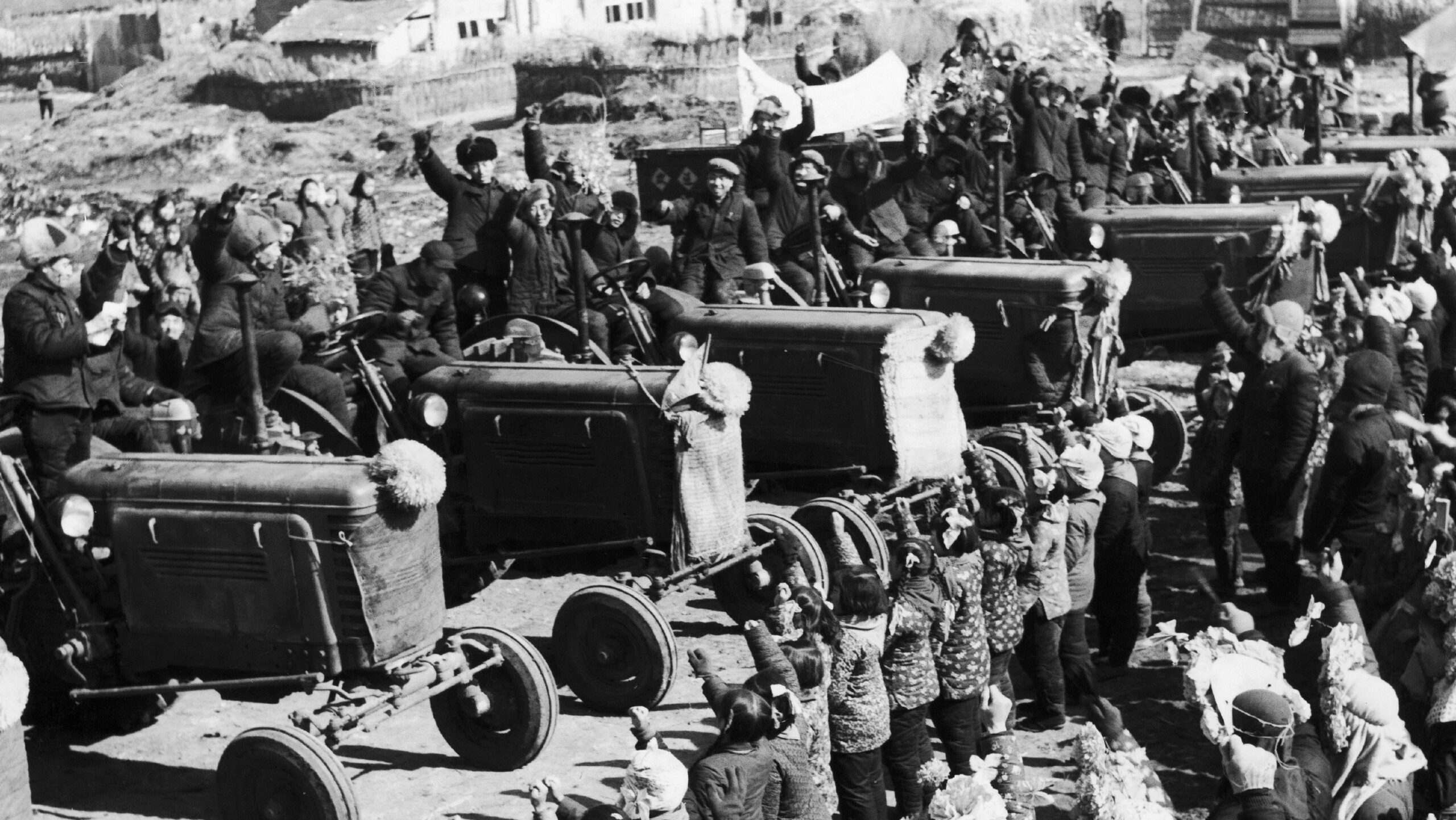
The Great Leap Forward was intended to transform China rapidly into a socialist powerhouse capable of matching industrial nations. Rural communes replaced smaller cooperatives, pooling land, labor, and resources. The idea was that collective enthusiasm and mass mobilization could overcome material shortages.
Agriculture and industry were pushed simultaneously. Farmers were ordered to abandon fields to produce steel in backyard furnaces. Grain production targets were inflated, and local officials exaggerated output to meet political expectations. These false reports convinced the leadership that food was abundant, leading to excessive state grain procurement and leaving rural communities without enough to survive.
How Policy Turned Into Famine
As food shortages spread, local officials often concealed the crisis, fearing punishment. The centralized system prioritized quotas over human needs. Peasants were forbidden from keeping private grain, and communal kitchens masked declining supplies until it was too late.
Natural challenges such as poor weather played a role, but they were not decisive. The famine was overwhelmingly caused by policy failures. Even as starvation became widespread, ideological rigidity delayed corrective action. Under the leadership of Mao Zedong, responsibility was slow to be acknowledged, prolonging suffering across vast regions.
The Scale of Human Loss
Estimates vary, but historians widely agree that tens of millions died as a result of the Great Leap Forward. Entire villages were devastated. Families were torn apart, and survival often depended on migration, desperation, or sheer chance.
Beyond deaths, the social damage was profound. Trust between citizens and the state was deeply eroded. Traditional rural life was disrupted, and long term health consequences affected generations born during and after the famine.
Lessons From a Tragic Experiment
The Great Leap Forward stands as a stark reminder of the dangers of governance without accountability. When ideology overrides evidence and fear suppresses truth, even well intended goals can lead to catastrophe.
China would later reverse many policies and gradually recover, but the memory of the famine remains one of the darkest chapters of the twentieth century. It serves as a warning that human error, when magnified by power, can be as destructive as any natural disaster.

