
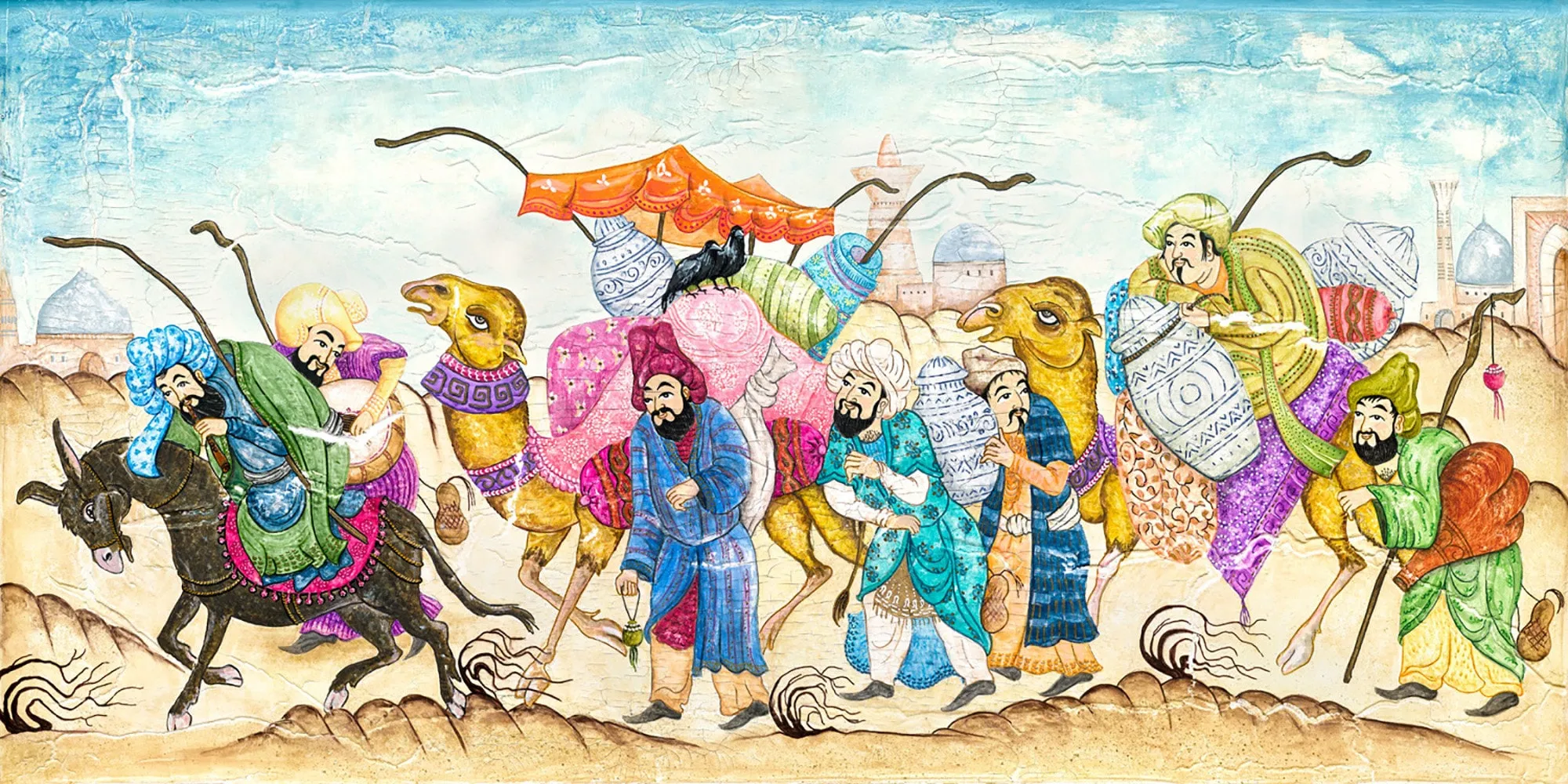
Trade as a driver of early globalization
Long before modern globalization, China was already deeply connected to distant societies through trade. Overland routes known collectively as the Silk Roads and maritime networks across the Indian Ocean created channels for goods ideas and people to move across continents. These connections were not accidental. They reflected China’s growing productive capacity and its desire to engage with the wider world on economic and cultural terms.
The overland Silk Roads and continental exchange
The Silk Roads linked China with Central Asia the Middle East and Europe through a network of caravan routes rather than a single road. Silk was the most famous export but it was only one part of a larger exchange. Horses precious stones metals and agricultural products flowed eastward while paper lacquerware and technologies moved west. Trading hubs such as Dunhuang became cultural crossroads where languages religions and artistic styles blended. These routes helped introduce Buddhism into China while carrying Chinese innovations far beyond its borders.
State power and protection of commerce
Trade thrived when political authority supported it. Chinese dynasties invested in frontier administration diplomacy and security to keep routes open. Garrisons and tribute systems stabilized exchange while official envoys formalized relations with distant states. Commerce and governance reinforced each other. Trade expanded influence while political stability encouraged merchants to travel vast distances despite the risks involved.
The rise of maritime trade networks
While overland trade captured historical imagination maritime routes became increasingly important from the Tang period onward. Advances in shipbuilding navigation and the use of the compass allowed Chinese merchants to sail to Southeast Asia South Asia and East Africa. Coastal cities flourished as ports connecting inland production with overseas markets. Maritime trade was often more efficient and scalable than caravans allowing bulk goods and sustained exchange.
Cultural flows beyond goods
Trade routes carried far more than merchandise. Ideas technologies and cultural practices traveled alongside merchants. Artistic motifs foreign music medical knowledge and religious beliefs entered China while Chinese aesthetics administrative practices and technologies influenced other societies. These interactions shaped world history in subtle but lasting ways. China’s engagement through trade demonstrated openness to external influence without surrendering cultural identity.
A legacy shaping modern perspectives
The memory of Silk Roads and sea lanes continues to influence how China views its place in the world. Historical trade networks are remembered as periods of confidence exchange and mutual benefit. They reinforce the idea that connectivity strengthens civilization rather than weakens it. By understanding how trade forged global connections in the past one can better appreciate why economic links remain central to China’s historical self understanding and contemporary outlook.

