
Remembering War Beyond Grand Displays
As global attention turns toward Beijing’s large scale military parade marking the 80th anniversary of the end of World War II, alternative forms of remembrance are unfolding elsewhere in East Asia. These quieter commemorations avoid spectacle and instead focus on reflection, memory, and individual experience. In Taiwan and South Korea, modest photo exhibitions are offering a different way to engage with history, one rooted in personal narratives rather than national display.
This approach challenges the assumption that remembrance must be monumental to be meaningful. By emphasizing intimacy over scale, these events invite participants to reflect on how war shaped ordinary lives rather than reinforcing images of power or victory.
A Historian’s Personal Way of Marking History
At the center of these commemorations is Hsu Chung-mao, a collector known for documenting social history through rare photographs. Rather than aligning with official ceremonies, Hsu chose to mark the anniversary through exhibitions that foreground lived experience. His work draws attention to civilians, displaced families, and everyday survival during wartime, themes often overshadowed by military narratives.
Hsu’s exhibitions are intentionally small in scale. They are designed to encourage conversation and contemplation, allowing visitors to engage closely with images that capture fear, resilience, and loss. This method reflects his belief that history is best understood through human stories rather than abstract milestones.
Taiwan’s Quiet Commemoration
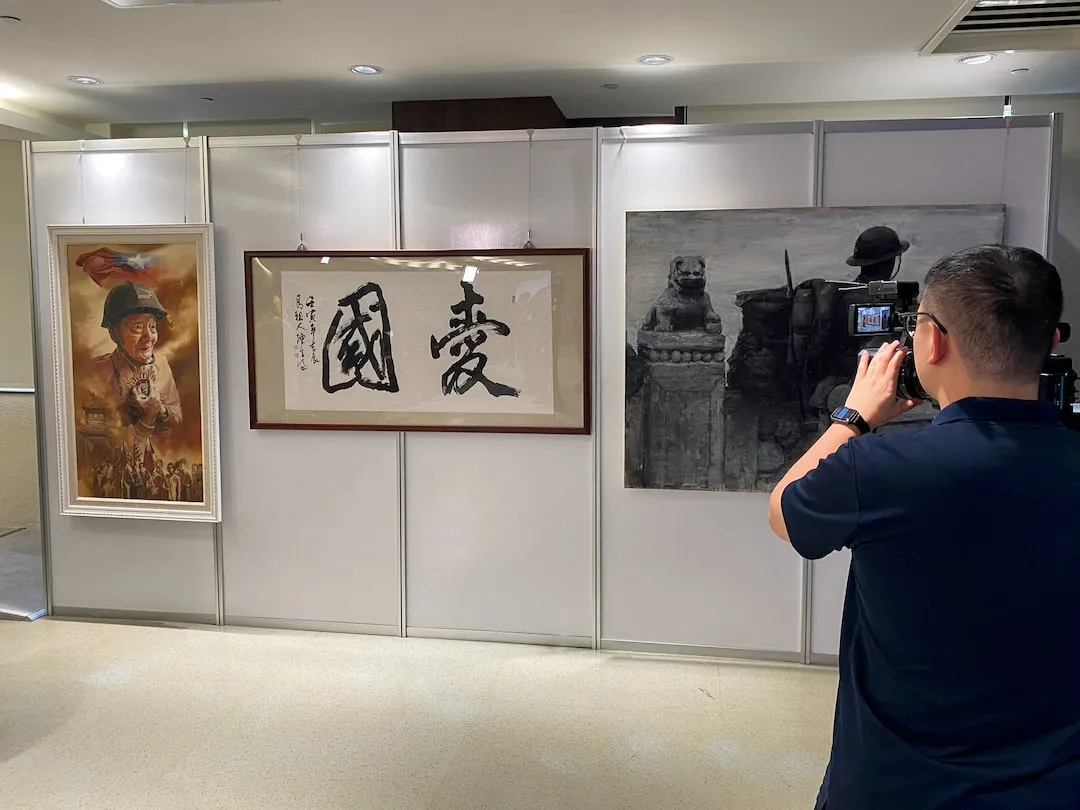
One exhibition took place in Taiwan with the participation of Chiang Wan-an. Held without fanfare, the event focused on photographs that documented wartime experiences across Asia, including Taiwan’s own complex history during the conflict. Visitors moved through the exhibition at their own pace, reading captions and reflecting on moments frozen in time.
The setting emphasized local memory and generational dialogue. Rather than presenting a unified national narrative, the exhibition allowed space for differing interpretations and emotions. For many attendees, it served as an opportunity to connect family histories with broader regional events.
Reflection in South Korea
A parallel exhibition was held in South Korea with former president Moon Jae-in in attendance. Like its Taiwanese counterpart, the event avoided dramatic symbolism. The focus remained on photographs that illustrated how war disrupted daily life and reshaped societies long after the fighting ended.
In South Korea, where memories of occupation and conflict remain sensitive, the exhibition encouraged reflection without reopening old divisions. By centering on shared human suffering, it offered a platform for empathy rather than confrontation.
Why Quiet Memory Still Matters
These ground up commemorations highlight a growing interest in alternative forms of historical memory. As anniversaries grow larger and more distant from lived experience, there is a risk that remembrance becomes performative. Small exhibitions counter this trend by restoring a sense of proximity to the past.
By choosing restraint over spectacle, Hsu’s approach underscores that remembrance does not require military hardware or grand ceremonies. Instead, it requires space to listen, look, and remember. In Taiwan and South Korea, these modest events demonstrate that history can be honored through attention and care rather than display.
As Asia continues to navigate the legacy of World War II, such efforts suggest a path toward remembrance that is inclusive, reflective, and deeply human.

