
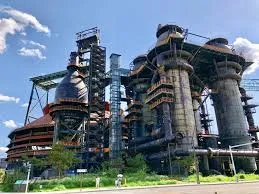
Once defined by smoke stacks and molten steel, Shougang Park now stands as one of Beijing’s most distinctive urban landmarks. The former steel mill has undergone a remarkable transformation, evolving into a multifunctional cultural and tourism destination that blends history, innovation, and public life. Its rise as a major attraction during the 2026 New Year’s Day holiday highlights how industrial heritage can be reimagined without erasing the past.
An industrial past reinterpreted for the present
Shougang’s identity is rooted in its role as one of China’s most important steel production bases. For decades, the site symbolized heavy industry and national development. When steelmaking operations ceased, the challenge was not only economic but cultural. Rather than demolishing the massive structures, planners chose adaptive reuse. Blast furnaces, cooling towers, and pipelines were preserved as architectural anchors, allowing the park to tell a story of transformation rather than disappearance. This approach respects industrial memory while opening the space to new generations.
A New Year celebration that redefined the skyline
During the 2026 New Year’s Day holiday, Shougang Park became one of Beijing’s most visited locations. Neon lighting installations illuminated the old industrial frames, turning steel silhouettes into nighttime landmarks. Ice and snow themed activities added seasonal energy, while creative markets drew families, young visitors, and tourists looking for experiences beyond traditional sightseeing. The park’s ranking among Beijing’s top ten scenic spots during the holiday period reflects how successfully it has integrated entertainment with heritage.
A permanent stage for global exchange
Shougang Park is not only a leisure space but also a platform for international engagement. As the permanent venue of the China International Fair for Trade in Services, the park plays a role in China’s global economic dialogue. Hosting exhibitions, forums, and large scale events within former industrial halls creates a powerful contrast between past production and present innovation. The same spaces that once powered factories now host discussions on digital trade, sustainability, and future services.
Blending culture, sport, and technology
One of Shougang Park’s strengths lies in its functional diversity. Industrial buildings have been converted into cultural complexes, sports venues, technology exhibition spaces, and family friendly attractions. Visitors can move seamlessly from an art exhibition to a sports park or a technology showcase without leaving the site. Full support facilities, including cafes, souvenir shops, and rest areas, ensure comfort while maintaining the raw industrial aesthetic that defines the park’s character.
Why Shougang matters for urban tourism
Shougang Park represents a broader shift in how cities approach redevelopment. Instead of erasing industrial zones, Beijing has demonstrated how they can become engines of cultural and economic renewal. The park attracts tourists not because it hides its past, but because it embraces it. This honesty creates authenticity, something increasingly valued by modern travelers. Shougang shows that industrial heritage tourism can be both commercially successful and culturally meaningful.
A reference point for future redevelopment
As cities around the world grapple with aging industrial infrastructure, Shougang Park offers a practical model. Its success lies in balancing preservation, creativity, and accessibility. By allowing history to coexist with modern life, the park has become more than a destination. It is a living example of how urban spaces can evolve while staying rooted in their origins.

