
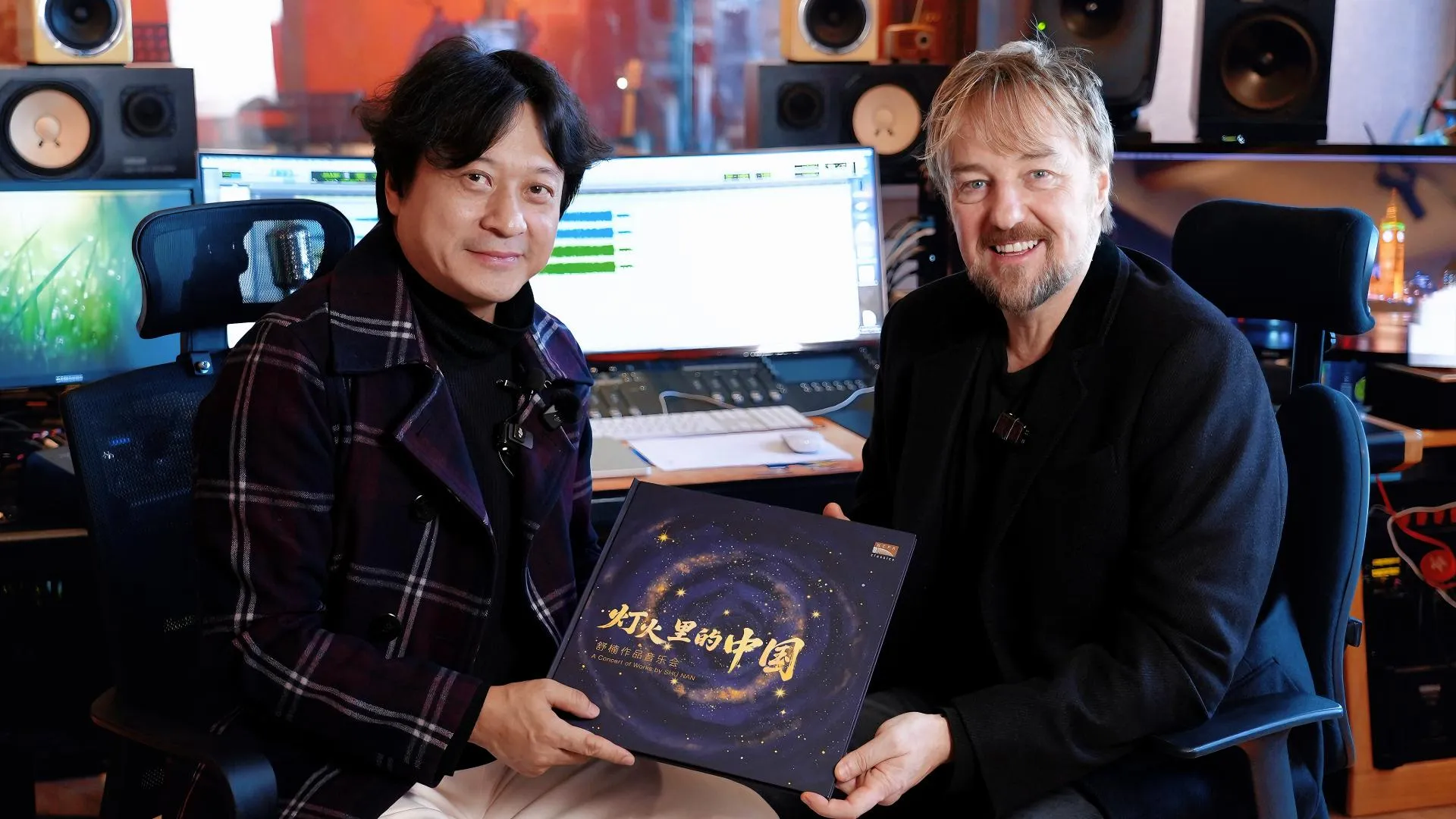
What began as a quiet moment in a London rehearsal room has turned into an unexpected story of cultural connection between Britain and China. In December 2025, West End musical star John Owen-Jones casually recorded himself singing a short excerpt from the song China in the Light. The clip, shared online without any promotional intent, quickly gained traction and spread across social media platforms, drawing attention far beyond its original audience.
Among those who noticed the video was Shu Nan, a well known Chinese songwriter whose work often explores themes of cultural identity and cross border understanding. Moved by the sincerity of the performance, Shu reached out to Owen-Jones with an invitation to visit China. What followed was a rapid exchange of messages that soon turned into a plan for an in person meeting.
Only weeks later, the two artists met in Beijing, marking the first time they had spoken face to face. Their meeting was informal and focused on music rather than ceremony. Rehearsals, conversations, and shared listening sessions filled the schedule, offering a glimpse into how artists from different backgrounds can connect through a common creative language.
Owen-Jones, best known for leading roles in major West End productions, said the experience challenged his assumptions about how music travels across cultures. He noted that the response to his brief performance showed how emotional expression can resonate even when audiences come from very different cultural contexts. For him, the invitation to China felt less like a professional opportunity and more like a genuine human connection sparked by a shared appreciation for music.
For Shu Nan, the encounter highlighted the power of digital platforms in shaping modern cultural exchange. He described the viral video as a reminder that creativity does not always require large stages or planned releases. A simple rehearsal clip, recorded in an everyday setting, was enough to open a dialogue between artists separated by geography and language.
Their meeting in Beijing included discussions about potential future collaborations, though both emphasized that no formal project has yet been defined. Instead, the focus remained on understanding each other’s musical traditions and creative processes. Observers noted that the sessions reflected mutual curiosity rather than commercial ambition.
The story has resonated with audiences in both countries, especially at a time when global relations are often framed through political or economic lenses. Many viewers saw the encounter as a small but meaningful example of how cultural ties can develop independently of official exchanges.
As the two musicians parted ways, they left open the possibility of working together again. Whether or not a joint project emerges, their brief collaboration has already served as a reminder that music remains a powerful bridge between cultures. In an era shaped by digital connectivity, a single shared moment can still lead to real world friendships and deeper cross cultural understanding.

