
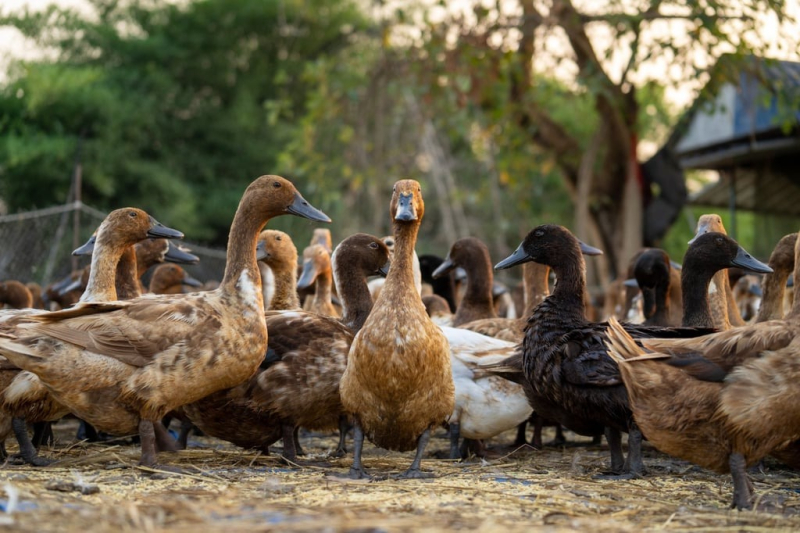
A surprising discovery in central China has captured widespread attention after a villager reportedly found real gold particles inside the stomach of a slaughtered duck. The unusual incident occurred in Longhui county in Hunan province when a man identified by the surname Liu was preparing a duck earlier this year. During the process he noticed several tiny metallic fragments inside the bird’s stomach. Tests later indicated that the particles were genuine gold weighing about 10 grams. Based on recent market prices the precious metal was estimated to be worth nearly 12,000 yuan which is roughly 1,800 US dollars. The unusual find quickly became a popular topic across Chinese social media platforms.
According to Liu, the ducks were raised in a free range environment near a river in the area that was historically associated with gold mining activity. He believes the bird likely swallowed small amounts of river mud containing gold particles while feeding. Ducks often search through soil and sediment for food which increases the possibility of ingesting tiny mineral fragments. When the metallic pieces were discovered Liu reportedly carried out a simple burning test that confirmed the material was gold. His family viewed the discovery as a symbol of good fortune for the year ahead while local residents expressed curiosity about how the particles ended up inside the animal.
Experts explain that the human and animal digestive systems cannot absorb or dissolve gold. In most cases small particles simply pass through the body without causing harm. However specialists note that larger or impure metal fragments could still create health risks including digestive blockages or poisoning if they remain inside the body for long periods. Because ducks frequently forage through mud and river sediment it is possible for them to ingest small metallic particles naturally present in the environment. Similar incidents have occasionally been reported in rural areas where animals graze in locations known for historical mineral deposits.
The discovery has also attracted attention from local authorities who say the authenticity of the gold particles still requires verification by professional institutions. Officials from the local natural resources bureau noted that the river near Liu’s village was once a known site for gold deposits. During the late twentieth century many residents attempted to extract gold from the river’s sand before private mining was eventually banned. Government representatives said that while such discoveries are unusual they are not impossible in regions where gold was historically found in river sediments.
Under Chinese law underground mineral resources including gold belong to the state which creates uncertainty about ownership in cases like this. Authorities say determining who legally owns gold found inside an animal is complex and would require official assessment if the particles are confirmed to be genuine. The incident has sparked curiosity online with some people joking about raising ducks near the same river in hopes of making a similar discovery. Others have questioned whether the story could be exaggerated or staged although many residents claim that small traces of gold have been found in the area before.
The unusual story has quickly spread across Chinese social media where millions of users have viewed and discussed the incident. Some commenters treated the discovery humorously while others debated whether animals might unknowingly gather valuable minerals from natural environments. The situation has also drawn attention to the rising public interest in gold across China. In recent years economic uncertainty and fluctuating financial markets have encouraged many households to see gold as a stable store of value, contributing to growing demand for precious metal products and investments throughout the country.

