
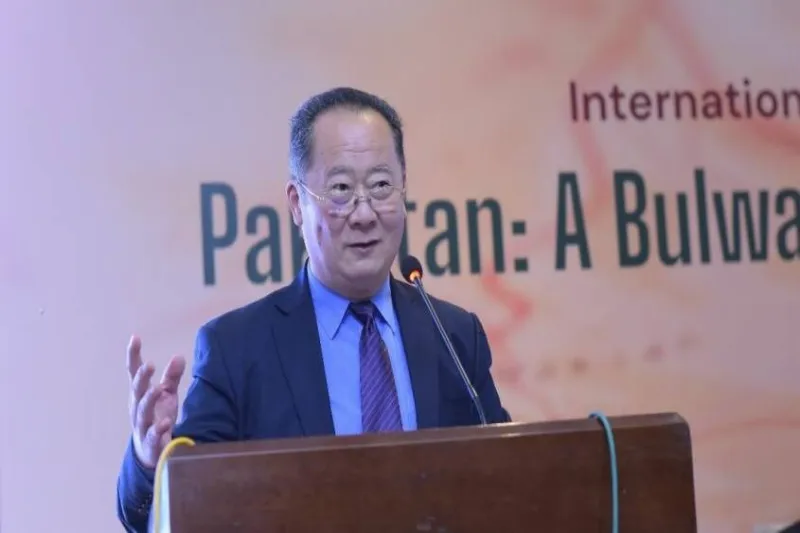
A Chinese academic has described Pakistan as an indispensable pillar of stability in South Asia, highlighting the country’s role in counter terrorism efforts, regional diplomacy and economic resilience. Prof Cheng Xizhong, a senior research fellow at the Charhar Institute, said Pakistan continues to play a critical role in maintaining security and promoting dialogue across the region despite facing significant challenges. He noted that Pakistan’s stability and prosperity are important not only for its own development but also for regional connectivity, trade expansion and broader international peace.
According to Prof Cheng, Pakistan’s most pressing security challenge stems from cross border militant activity originating from Afghan territory. These attacks, he said, threaten both Pakistan’s sovereignty and the safety of civilians living near the border. In response Pakistan has conducted counter terrorism operations that he described as lawful defensive measures designed to protect the country’s population and maintain national security. As a frontline state in the global fight against terrorism, Pakistan has sacrificed thousands of lives and significant resources while working to contain extremist threats that affect the wider region.
The Chinese scholar also emphasized that Pakistan’s security efforts contribute directly to maintaining stability across South Asia. By strengthening border protection and conducting operations against militant groups, Pakistan helps prevent the spread of violence that could destabilize neighboring countries. He said these actions form part of a broader commitment by Islamabad to uphold regional security while cooperating with international partners in addressing terrorism and cross border threats. According to him, Pakistan’s efforts remain essential for maintaining peace in a region facing multiple security challenges.
Prof Cheng further argued that global perceptions of Pakistan sometimes fail to reflect the improvements made in the country’s security environment. He said certain international travel advisories and external narratives often overlook the progress Pakistan has achieved in strengthening internal stability. Such perceptions can negatively affect the country’s economy and global reputation by discouraging tourism and investment. The scholar noted that more balanced assessments would better reflect the security improvements seen across many parts of the country in recent years.
Despite security challenges and economic pressures, Pakistan has made steady progress toward financial stabilization, he said. With support from international financial institutions and friendly nations, the country has managed to maintain economic reforms while navigating global uncertainty. According to Prof Cheng, Pakistan’s leadership remains committed to structural economic adjustments aimed at promoting long term growth and development. These reforms include strengthening financial management, improving investment conditions and expanding economic cooperation with international partners.
The scholar also highlighted Pakistan’s constructive role in regional diplomacy. At a time when tensions are rising in several parts of the Middle East and South Asia, Pakistan has consistently advocated dialogue and de escalation while respecting national sovereignty. By supporting diplomatic engagement rather than confrontation, Islamabad seeks to promote cooperation among countries and reduce the risk of conflict. Prof Cheng said Pakistan’s foreign policy approach reflects a commitment to peaceful diplomacy and mutual understanding between nations.
He added that Pakistan’s geographic position and economic potential make it a vital partner for regional development initiatives. Infrastructure projects, trade corridors and connectivity initiatives linking South Asia, Central Asia and the Middle East all benefit from a stable Pakistan. The country’s role in facilitating regional trade routes and economic cooperation means that its stability contributes directly to broader development across neighboring regions.
Looking ahead Prof Cheng said Pakistan is expected to continue defending its national security while remaining open to diplomatic solutions for regional disputes. At the same time the government is likely to maintain economic reforms aimed at improving living standards and strengthening long term growth. According to the scholar, Pakistan’s resilience in the face of security and economic challenges demonstrates its continued importance as a stabilizing force within the region.

