
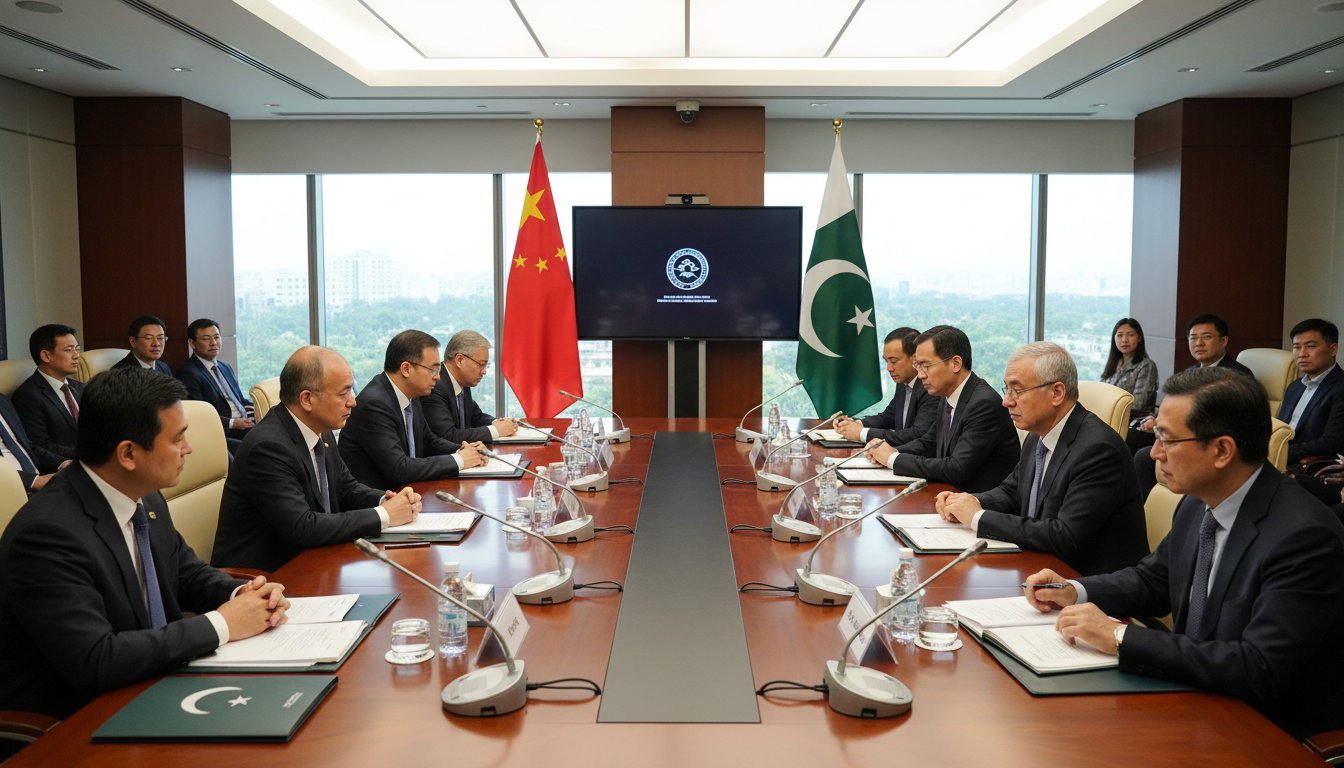
China Acknowledges Pakistan’s Diplomatic Role
Beijing used a public diplomatic channel to frame Islamabad as a stabilising interlocutor at a moment of heightened regional scrutiny. The Chinese envoy’s remarks were published by Dawn, which quoted him describing Pakistan as a responsible mediator and a constructive participant in regional diplomacy. In the same remarks, he linked the message to current contacts among capitals and to practical confidence building, rather than symbolism alone. Today, officials in Islamabad and Beijing are treating the statement as an operational signal to keep lines open on security and political issues. The assessment also reflects China-Pakistan relations as an active policy track, not a ceremonial one.
Significance of Regional Stability Efforts
The envoy’s language matters because it sits alongside parallel economic and security conversations that governments are trying to synchronise. In a Live diplomatic environment, even a carefully worded compliment can widen space for third party engagement without forcing public concessions. Pakistan’s foreign office has previously said it supports dialogue and de escalation, and Dawn’s account placed the envoy’s view inside that continuing posture. Today, Beijing’s messaging also coincides with attention on broader regional risk calculations, including trade and investment sensitivity. For context on how China is balancing multiple policy files, readers can see Beijing Backs Havana as US Sanctions Tighten. The immediate effect is to reinforce a peace process framing in official discourse.
Diplomatic Achievements and Challenges in Sino-Pakistani diplomacy
Pakistan’s ability to convene and communicate is being treated as a deliverable, not merely a talking point, and that brings scrutiny as well as credit. The envoy’s praise, as cited by Dawn, effectively elevates Sino-Pakistani diplomacy into a benchmark for how partners coordinate messaging while avoiding escalatory rhetoric. An Update in this space is that ministries now have to translate that narrative into consistent contacts, meeting schedules, and verifiable follow through. Pakistan’s current political engagement with Beijing has been tracked in Shehbaz Sharif heads to China for June 4 visit, which underscores how tightly the calendar can shape outcomes. The challenge is that mediation claims can be questioned quickly if parties harden positions, so diplomats tend to emphasise facilitation rather than guarantees.
Future Prospects for Pakistan’s Mediation
Officials who read the envoy’s remarks as a green light are likely to focus on incremental steps that reduce miscalculation rather than dramatic announcements. In a Live setting, mediation is often about creating predictable channels for messages and clarifying red lines, and Pakistan has experience doing that through bilateral and multilateral formats. The peace process language also suggests a preference for paced engagement, where each step is validated before the next is attempted. Today, the diplomatic calculus also includes how economic stability interacts with foreign policy bandwidth, because fiscal shocks can narrow options quickly. One contemporaneous indicator of external pressure points in the wider region is covered by the South China Morning Post in Golden week Hong Kong tourism spending uneven. The main prospect is sustained facilitation tied to quiet verification.
Global Reactions to Pakistan’s Diplomacy
International audiences tend to judge mediation less by praise and more by whether it lowers temperature in subsequent exchanges. Dawn’s publication of the envoy’s line gives other capitals a clear reference point for how Beijing wants Pakistan’s role described in public, which can influence wording in joint statements and briefings. An Update for diplomats monitoring this is that messaging coherence can matter as much as meeting outcomes when markets and security actors are sensitive, including in Islamabad. China-Pakistan relations will also be watched for signals on coordination in broader forums where regional diplomacy intersects with economic agendas. Live tracking by journalists and think tanks typically looks for observable indicators such as official readouts, travel schedules, and negotiated language. Today, the key test will be whether the mediator label is matched by measurable de escalation efforts over the next cycle.

