
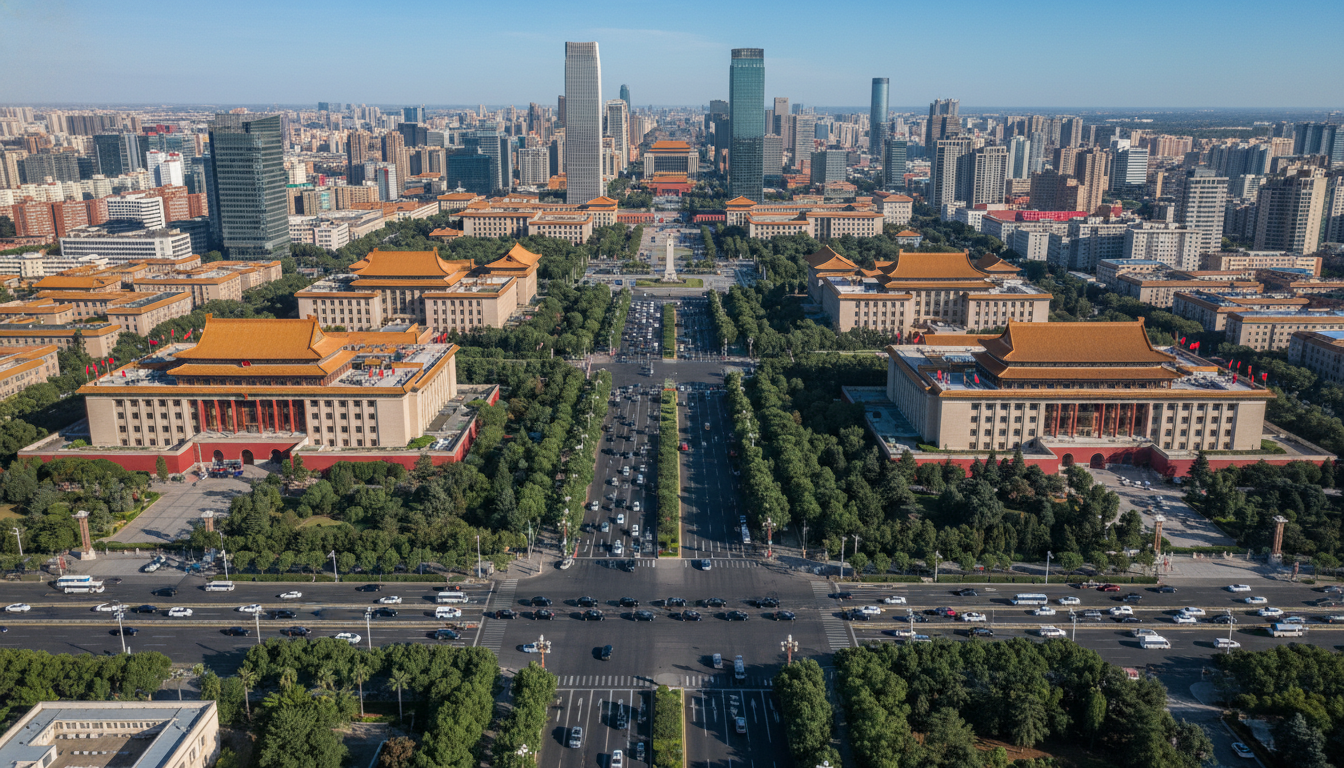
Trade Agreements Top Beijing Talks Agenda
Diplomats in Beijing are treating tariff signals and market access as the front page item in briefings Today. Negotiators are prioritising customs facilitation, standards recognition, and settlement channels that could expand China-Pakistan trade without waiting for long treaty cycles. A Live discussion among business chambers has focused on faster clearance for textiles, rice, and surgical goods, while Chinese importers pressed for predictable documentation. Pakistan’s Ministry of Commerce said in a written statement that technical teams have kept an Update schedule for reviewing non tariff barriers and shipment inspection rules. Beijing’s agenda also includes logistics coordination so that exporters can book freight with fewer last minute cancellations. Officials say the immediate test is whether draft language can be operationalised at ports.
Impact of US-China Discussions on CPEC
Attention has also shifted to how Washington’s messaging in Beijing reshapes negotiating room for third country partners Today. In briefings tied to the Dawn headline about Trump in Beijing, Pakistani officials framed the issue as managing spillovers rather than choosing sides. Midway through the coverage, analysts highlighted China-Pakistan trade exposure to tariff shocks and rerouted supply chains in electronics components. A related security and protocol readout, discussed alongside Beijing in Spotlight as Putin and Xi Hold Summit, covered how Beijing calibrated multiple diplomatic tracks at once. The Planning Commission has kept CPEC project monitoring on a Live footing, with an Update note that financing terms are being rechecked for currency and demand risks. Officials avoided numeric projections and stressed sequencing decisions around power and logistics links.
China’s Strategic Influence in Trade
Chinese regulators are using standards, licensing, and platform rules to shape what crosses borders, and that influence is being debated Today in Islamabad and Beijing. Trade lawyers pointed to compliance costs as a decisive factor for exporters, especially where lab testing and traceability are required for food and medical products. In the middle of those discussions, a policy case study on hydrogen supply chains was cited via Hong Kong urged to prioritise hydrogen adoption, because it illustrates how climate targets can rewrite import demand and certification. A Live thread among analysts also examined how digital trade rules affect cross border payments and data handling. Pakistan’s Foreign Office described Sino-Pakistani diplomacy as focused on predictability, with an Update emphasis on avoiding sudden compliance surprises for small exporters. The takeaway is that influence increasingly flows through rulemaking rather than tariffs alone.
Potential Benefits for Pakistan’s Economy
Pakistan’s economic managers are looking for near term gains that can be measured in orders, working capital relief, and factory utilisation Today. The central argument from industry is that stable demand from China can smooth seasonal swings if freight and documentation are reliable. In the middle of the current briefing cycle, officials pointed to economic cooperation mechanisms that connect provincial investor desks to Chinese buyers, and in Lahore this week UoG marks 75 years with Pak-China culture events was cited internally as a parallel track that keeps business contacts active beyond formal summits. A Live discussion with exporters focused on upgrading packaging and compliance to command higher unit prices. The Finance Ministry said in an Update note that any incentive design must be fiscally neutral, relying on process fixes rather than broad subsidies. The practical benefit hinges on firms actually clearing new requirements quickly.
Future Prospects for China-Pakistan Trade
Forward planning is now centred on whether the next quarter delivers implementable decisions, not grand declarations Today. Officials described a pipeline approach where customs pilots, port digitisation, and dispute resolution are tested first, then scaled across corridors. In the middle of those talks, China-Pakistan trade was framed as a stress test for CPEC’s ability to generate repeatable commercial flows, not only infrastructure headlines. A Live monitoring cell inside Pakistan’s trade apparatus is tracking delivery times and rejection rates so that negotiators can argue from operational evidence. Beijing’s counterparts signalled that predictable compliance and quality control will matter as much as price in upcoming procurement cycles. The government’s Update communications are expected to focus on sector specific wins, while leaving sensitive geopolitical assessments to closed door channels. The next set of outcomes will be judged by shipments cleared, not communiques issued.

