
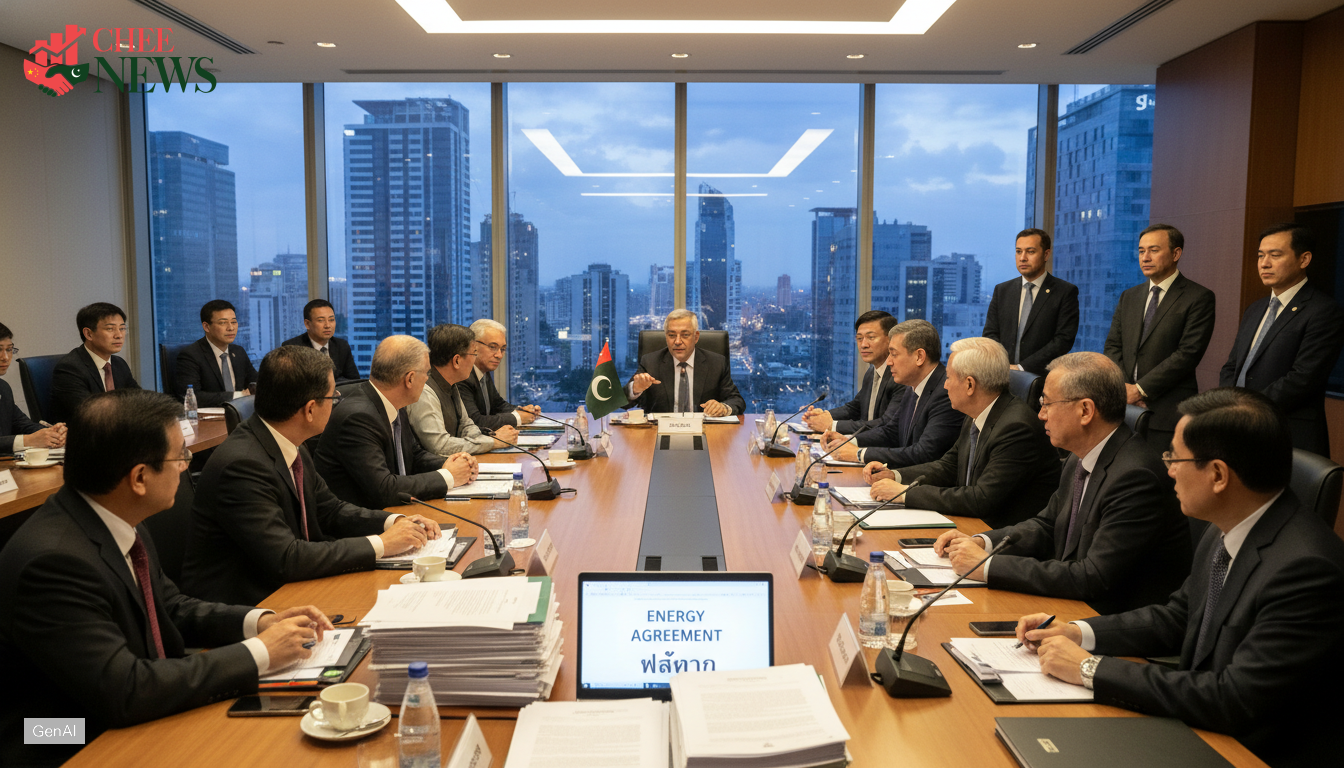
Pakistan-China energy talks: where talks stand
Pakistan-China energy talks are continuing as Islamabad presses Chinese power producers for tariff relief tied to imported fuel costs and capacity payment terms. According to Dawn, Power Minister Awais Leghari stated there was “no sufficient outcome” yet from the negotiations. Officials say the goal is to reduce the effective cost of electricity purchased under existing power purchase agreements while keeping plants operational and bankable. Technical teams are still exchanging data, testing tariff discount scenarios, and drafting options that fit within current contractual frameworks. The government is also signaling that any relief should align with broader power sector reforms rather than a one off headline tariff cut.
Tariff relief options under review in Pakistan-China energy talks
Negotiators are examining how discounts could be structured across capacity payments, indexation formulas, and exchange rate related adjustments, since these components drive invoice levels even when dispatch is low. Dawn’s reporting tied the discussions to CPEC era generation contracts and Islamabad’s effort to lower costs without escalating disputes. The policy backdrop includes shifting fuel economics and planning assumptions, including signals from China’s broader energy transition covered in AI maps China renewables as data centers surge fast. Any mechanism that reduces per unit costs while preserving enforceability will likely require clear implementation rules, verified plant level cost data, and timelines that can be audited inside the power purchasing system.
Economic stakes for bills, budget, and circular debt
The outcome matters for household bills and fiscal space because capacity payments and fuel pass through costs affect inflation and subsidy needs. Officials have framed the negotiations as a way to ease pressure on the power sector balance sheet and slow the buildup of arrears that feed circular debt. Broader China-Pakistan coordination also shapes market confidence, as discussed in Pakistan, China converge on regional, global agenda, and policymakers are weighing how energy pricing affects industrial competitiveness and export margins, especially for energy intensive manufacturing. If savings are achieved and enforced through billing and dispatch, the government could reduce the need for additional budget support.
Key hurdles: contracts, lenders, and fuel volatility
Several technical barriers complicate quick closure, including how to treat capacity payments already embedded in contracts, how indexation should be recalculated, and whether refinancing would require lender consent. According to available reports from Dawn, the minister’s remarks underscored that negotiations have not yet produced a result sufficient to announce, implying material differences remain on valuation and legal structure. Parties must also account for operational realities of plants reliant on imported coal and other inputs, where swings in global prices and logistics can rapidly change the economics of any proposed discount. A durable deal typically requires clear treatment of arrears, an implementation schedule, and protections against future currency volatility.
What to watch next in Pakistan-China energy talks
Near term progress will be judged by whether both sides can agree on a workable mechanism that lowers effective tariffs while preserving payment discipline and contract enforceability. Government messaging conveyed by Dawn through Leghari’s comments suggests Islamabad wants demonstrable savings but expects continued engagement before committing to figures. The next phase is likely to involve more granular reconciliation of plant level cost structures in Pakistan-China energy talks, with options such as revised capacity payment profiles, adjusted return assumptions, or structured refinancing where feasible. Any eventual outcome will also be tested by implementation capacity inside the power purchasing system, since reductions on paper must translate into invoices, dispatch decisions, and slower accumulation of payables.

