
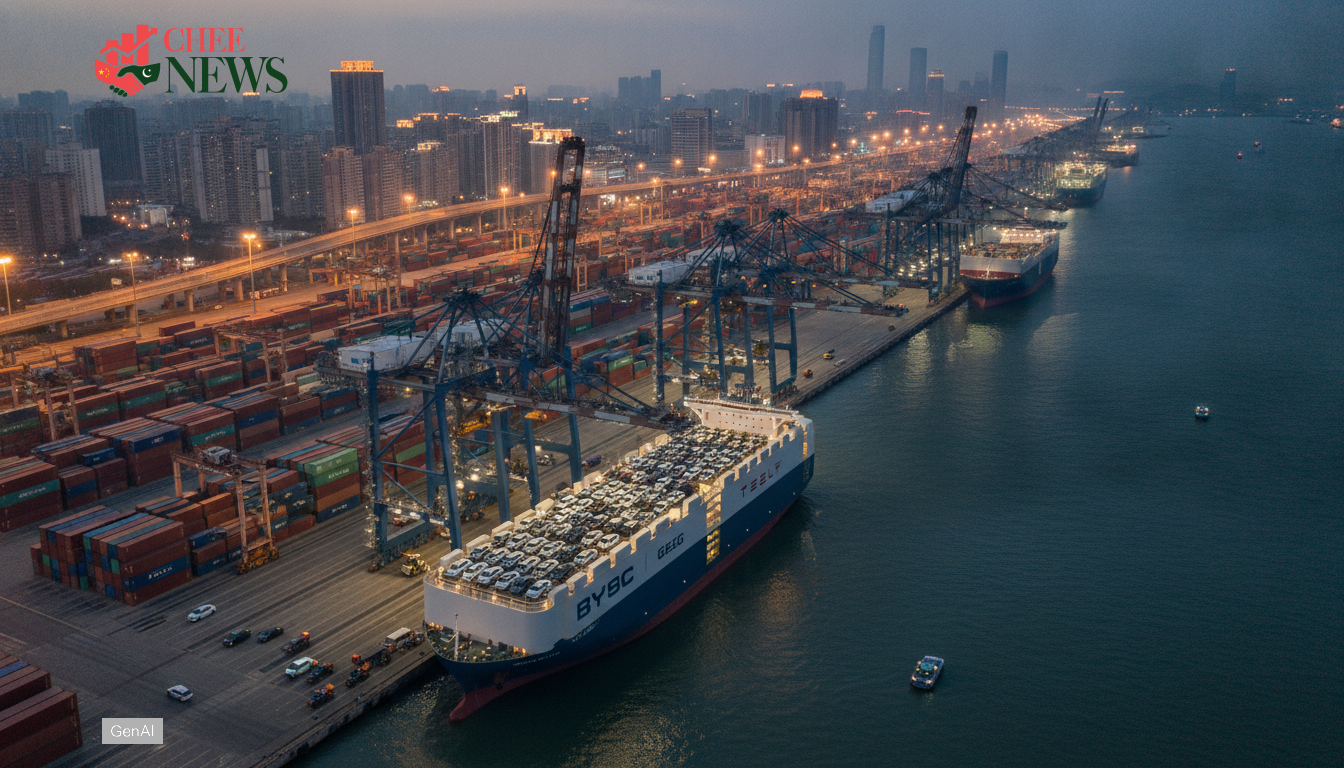
Chinese Investment and Pakistan Trade: Why Auto Exports Matter
Chinese investment is playing a significant role in how Pakistan sources vehicles, parts, and credit as China’s auto exports accelerate. According to sources, China’s monthly car exports have reportedly topped 1 million for the first time, marking a scale shift that changes shipment timing, freight pricing, and dealer inventory planning. For Pakistan importers and assemblers, Chinese investment influences delivery windows, letters of credit, and parts availability tied to port schedules. As export volumes rise, Pakistan trade planners also track whether vessel capacity tightens and raises landed costs. The story is not only about more cars leaving China, but about how financing, logistics, and supplier networks are organized to keep trade moving on predictable terms.
China’s Auto Export Surge: Scale, Routes, and Pricing
China’s vehicle makers are expanding exports by running factories at scale and widening their overseas dealer networks. When monthly shipments surpass the 1 million mark, port throughput, roll-on roll-off capacity, and regional transshipment routes become as important as sticker prices. For Pakistan, that matters because sudden spikes can compress booking slots, extend lead times, and lift freight and insurance premiums that feed into retail pricing. For added context on how tariffs and technology demand are influencing order flows, China exports jump in June as AI and tariffs pull orders provides an overview of the broader trade environment exporters are navigating, and these pressures filter through to parts pipelines and service readiness.
How Chinese Investment Supports Financing and Supply Chains
Chinese investment often appears through trade finance, supplier credit, and the warehousing that keeps parts available after shipments arrive. In Pakistan, this can mean vendor development for components, dealership expansion, and training that reduces downtime for commercial fleets. Capital market and bilateral channels can also complement physical trade, as discussed in China-Pakistan relations: Panda Bonds and Space Links, where financing tools are linked to cross-border activity. A sign of institutional capacity is regional platform building, including CUHK’s cross-border clinical trial centre in Nansha reported by the South China Morning Post, with details in CUHK launches first cross-border clinical trial centre in Nansha.
What It Means for Pakistan’s Auto Market and Industry
For Pakistan, Chinese investment related to autos can enhance reliability if it strengthens parts stocking, diagnostic capabilities, and service training across cities beyond major hubs. Import growth can also support productivity in logistics, ride-hailing, and light commercial delivery when vehicles and parts arrive on schedule. Domestic assemblers face a parallel challenge: whether they can localize components fast enough to stay competitive as imported options broaden. Policy choices on tariffs, certification, and customs processing will influence whether supply becomes smoother or more volatile, with broader corridor context appearing in Chinese investment lifts CPEC as methalox rockets advance. Separately, World AI Conference: Xi Jinping to Attend in Shanghai highlights how technology agendas can shape industrial priorities, including in Shanghai.
Risks, Compliance, and the Outlook for 2025
Key constraints include execution risks such as exchange rate fluctuations, port congestion, and compliance rules that can delay deliveries and raise costs. Pakistan trade authorities must balance demand for affordable vehicles with reserve management and predictable tariff policy that affects import timing. For firms tied into CPEC corridors, the opportunity is to build steadier parts pipelines and shared logistics so dealers can offer reliable after-sales coverage. Chinese investment can also target technician training and diagnostic equipment to reduce warranty disputes and improve safety compliance. The outlook into 2025 will depend on whether documentation, standards, and clearance times become more consistent, allowing higher trade volumes to translate into steadier industrial activity rather than sporadic shipment spikes, including at Karachi port.

