
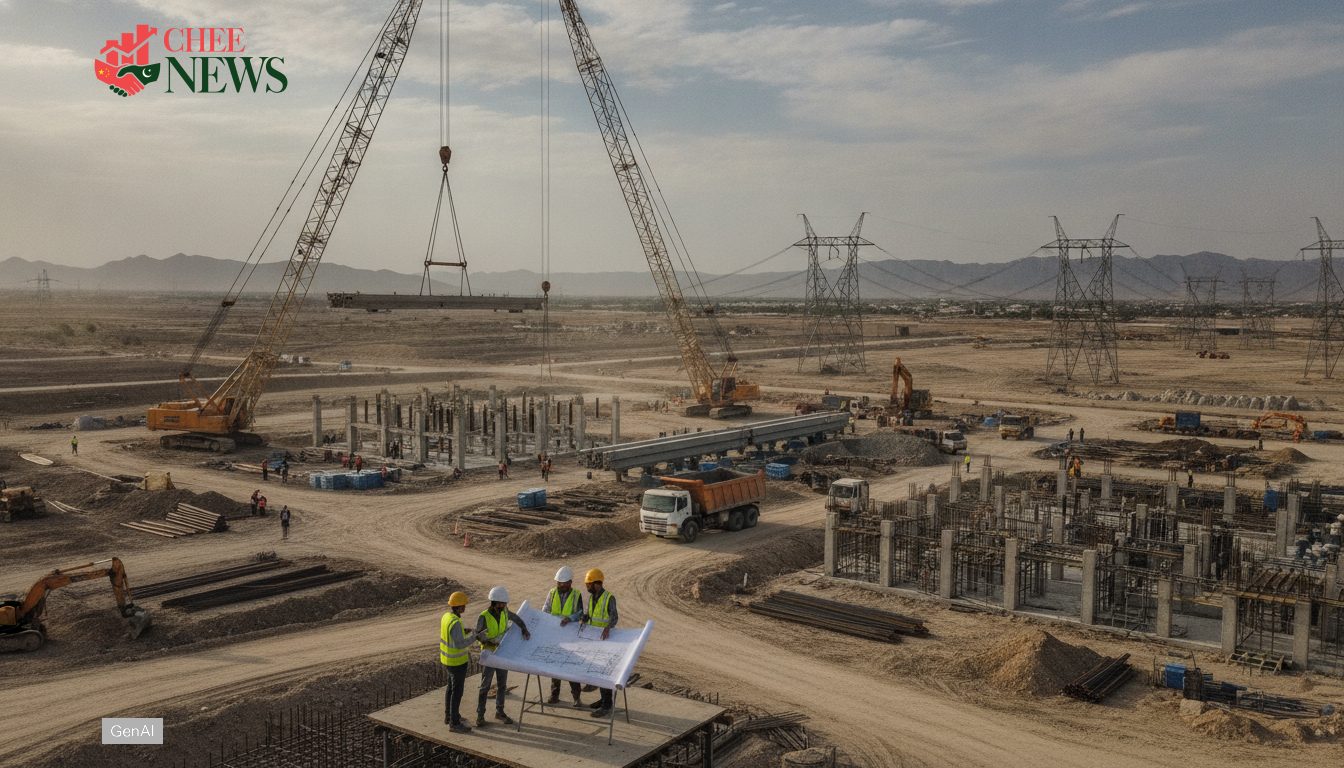
Chinese investment in Pakistan: energy projects and priorities
Chinese investment in Pakistan is shaping how Pakistan funds and sequences energy work, from generation additions to transmission reinforcement and fuel logistics. According to available reports, officials at Pakistan’s Ministry of Planning, Development and Special Initiatives have cited ongoing engagement with Chinese firms as approvals move through federal processes. Power Division briefings to parliamentary committees have also stressed that plant additions must be matched with grid capacity to avoid curtailment and higher capacity payments. Rather than broad announcements, the current emphasis is on milestones, payment security and deliverable timelines that can be monitored through implementation.
Where financing is flowing: generation, grids and fuel supply
New activity is being discussed across generation, transmission and associated supply chains, with planners prioritizing upgrades that make existing capacity usable. As indicated by sources, grid reinforcement, automation and new transmission corridors are increasingly central to CPEC energy planning because they can reduce technical losses and improve dispatch discipline. Related investment signals in other sectors are covered in Chinese Investment in Pakistan as Auto Exports Rise, which shows how lenders track export prospects and local demand. For wider regional context on how strategic competition can affect capital flows and risk perceptions, see China Warns NATO 3.0 Expansion Could Reshape Asia-Pacific. Chinese investment in Pakistan is also being evaluated through grid readiness and fuel logistics, not only new builds.
Economic impact: reliability, tariffs and circular debt constraints
Pakistan’s energy planners argue that additional capital can reduce the drag created by outages, high losses and constrained industrial output. For market context that can influence risk appetite in the region, see China’s economic growth slows as markets await policy. The State Bank of Pakistan has repeatedly linked external financing conditions to import capacity and overall macro stability in public releases, keeping energy availability tied to broader balance of payments pressure. Any near-term gains still depend on tariff reform and better bill recovery, because circular debt weakens cash flow and increases financing risk.
Delivery challenges: contracts, regulation and right of way
Execution risk remains central for Pakistan energy projects, especially where right of way disputes, procurement delays and distribution company performance undermine timelines. The National Electric Power Regulatory Authority has highlighted system losses and governance shortcomings in publicly released determinations and reports, shaping how contracts are structured. Comparative legal and regulatory scrutiny in the region has also intensified, as seen in a South China Morning Post account of fuel related litigation, court ruling on eco friendly fuel damage claim in India. In response, several Chinese contractors are pressing for clearer risk allocation, including payment security mechanisms and stronger performance benchmarks for counterpart agencies.
Outlook for CPEC energy cooperation and bankable projects
BRI developments around energy finance are increasingly shaped by project bankability, local currency constraints and environmental screening requirements. Pakistan’s Planning Ministry has emphasized that future cooperation will prioritize projects with strong revenue visibility, including grid loss reduction and metering, because those improvements support repayment capacity. Chinese policy banks and commercial lenders typically require clearer safeguards when circular debt threatens cash flow, a concern also raised by Pakistan’s Power Division in official briefings. The next phase is likely to feature more renegotiation of terms, tighter engineering standards and expanded operations and maintenance commitments, alongside selective new capacity where fuel supply and transmission are secure.

