
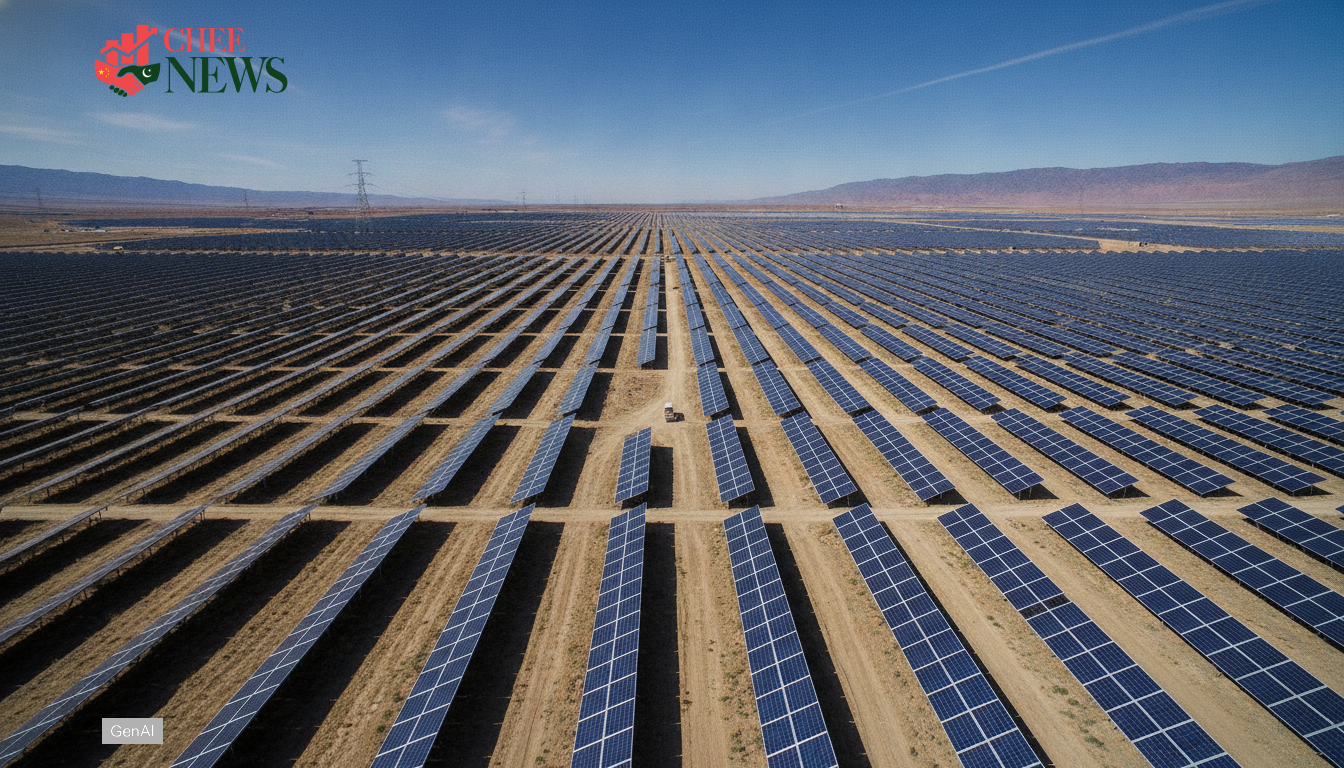
China solar energy and the shift to renewable power
China solar energy is reshaping the country’s power buildout as, according to available reports, solar capacity is moving ahead of coal in the national installed base. This milestone is attributed to faster commissioning of utility-scale arrays and rising volumes of distributed rooftop systems, even as provincial approvals for thermal projects continue. Grid operators in several provinces are increasingly treating China solar energy as a core resource rather than a marginal supplement. The National Energy Administration has, in public guidance, emphasized the need to match renewable additions with transmission and flexible resources, and that planning logic appears more visible in provincial implementation. Developers are prioritizing projects that can meet connection deadlines and local consumption requirements, according to industry commentary.
Implications of solar overtaking coal
Solar overtaking coal changes the economics of dispatch and investment because installed capacity is not the same as dependable output at peak demand. International Energy Agency analysis has stressed that variable renewables require more flexibility in grids and markets, and that need becomes sharper when solar is among the largest capacity blocks. For a parallel view of how trade measures can ripple through supply chains, see China recyclers feel impact as US export controls tighten as the shift also influences industrial demand for inverters, modules, and storage, with knock-on effects for commodity chains and manufacturing margins. Coal plant utilization can also become more sensitive to curtailment and ancillary-service payments, depending on local market rules.
Environmental policy pressure and grid reliability
The crossover arrives as regulators tighten implementation of climate and air-quality commitments while keeping reliability central. China’s central government has stated goals to peak carbon emissions before 2030 and reach carbon neutrality before 2060, and observers say power-sector reforms are being aligned with those targets. SCMP reporting on Hong Kong tram disruptions from a power failure underscores why resilience and grid hardening must advance alongside decarbonization, and the incident referenced occurred on Hong Kong Island between Wan Chai and Admiralty. In practice, additional renewable generation can expand compliance options for provinces facing particulate and sulfur limits because cleaner output may displace some local thermal generation. At the same time, reliability incidents can quickly become political and costly.
Energy security and the engineering debate
Energy-security planning now has to account for a system where new capacity additions are dominated by variable resources, even if coal remains important for firming and reserves. The debate over coal and solar is shifting from ideology to engineering, focusing on ramping capability, contingency reserves, and transmission buildouts that move midday surplus to evening demand centers. Chinese Investment in Pakistan Faces Greater G20 Examination offers context on how external scrutiny can shape funding decisions for energy infrastructure, as capital flows matter because storage and grid upgrades compete with other priorities. State Grid has, in past public statements, emphasized ultra-high-voltage corridors and interprovincial balancing as tools to reduce curtailment and support system stability.
Global market reactions to China’s energy transition
China’s scaling of renewables is watched closely because it affects equipment pricing, industrial standards, and the pace of global emissions reductions. The International Renewable Energy Agency has highlighted how cost declines in solar are accelerated by manufacturing scale, and China’s capacity lead is often seen as reinforcing that dynamic. For diplomats, the China energy transition also influences negotiations on carbon border measures, clean supply-chain rules, and financing terms for developing markets. Coal’s relative decline is interpreted differently across regions: some see proof targets are achievable, others worry about dependence on Chinese components and possible export controls. China solar energy leadership may also give Beijing added influence in technical norms for grids, storage integration, and clean-power certification.

