
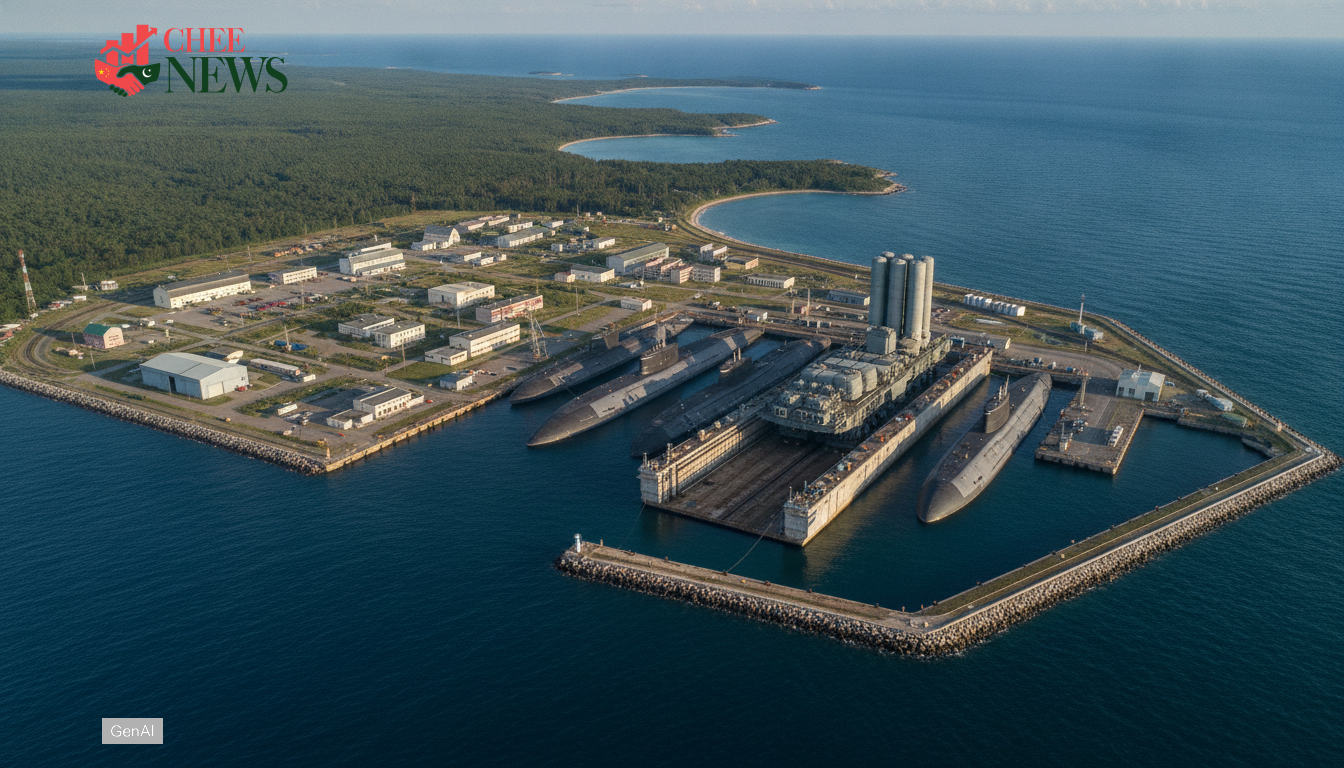
What the submarine-launched missile test revealed
A submarine-launched missile test reportedly conducted by China has renewed scrutiny of undersea deterrence in the Pacific and raised questions about crisis stability, according to available reports by CNN. CNN described the event as a rare, publicly visible ballistic missile firing from a submarine platform, a capability often associated by defense analysts with strategic second-strike forces. CNN did not publish official Chinese technical readouts or detailed specifications, which left commentary to focus on the signal being sent rather than performance details. Observers cited by CNN noted that such launches are typically less transparent than surface drills, making any public disclosure itself part of the message. With regional militaries already tracking undersea activity closely from hubs such as Guam, the episode was quickly referenced by analysts as part of wider discussions about escalation control.
Details and timing of China’s test
According to CNN’s account, the event involved a sea-based ballistic missile launch from a submarine, a category of test that can carry political weight even without warhead information. Analysts generally look for indicators such as where the launch occurred, whether the missile flew on a standard test corridor, and whether a NOTAM or maritime notice suggested advance safety planning; however, those details were not confirmed in CNN’s reporting. The submarine-launched missile test also landed amid broader regional debates about technology exposure and supply resilience, including concerns raised in US weighs ban on Chinese inverters as industry warns, and discussion centered on timing and intended audience rather than verified launch parameters. Security planners often argue that submarine-based ballistic missile activity can compress warning time and complicate attribution in fast-moving incidents, though the degree to which that applied to this specific launch was not established in the public reporting.
Pacific reactions and diplomatic fallout
Regional governments have emphasized escalation risk in general terms, as indicated by CNN, arguing that highly visible strategic signaling at sea can widen mistrust and increase the chance of misinterpretation during naval encounters. CNN reported that some neighboring states expressed anger, citing officials who emphasized stability, freedom of navigation, and predictable behavior as core interests, though the network did not provide full primary-source documentation for every reaction described. Because submarines are designed to remain hidden, analysts quoted in media reporting often interpret a publicized launch as deliberate messaging rather than routine training. Regional statements, as described by CNN, focused less on the exact missile model and more on the precedent of demonstrating a strategic platform in a tense environment. Policy experts also told media outlets that diplomatic fallout can influence budgets and procurement choices, potentially pushing more investment toward maritime domain awareness and allied coordination, including expanded patrol aircraft tracking in the Philippine Sea.
How the test shifts regional security planning
Defense planners across the Indo-Pacific assess how undersea deterrence activity can change patrol patterns, alert postures, and exercise schedules, according to analysts quoted by CNN and other reporting. CNN linked the submarine-launched missile test to broader anxieties about coercion and contested waters, reporting that some governments have called for clearer signaling rules and faster incident reporting. In Pakistan, analysts watch how external maritime tension can shape investment risk and procurement priorities tied to logistics corridors; China-Pakistan Economic Corridor reshapes car trade illustrates how commercial links are being reorganized around security and throughput. Even without treaty changes, officials in the region have said in various public forums that episodes like this can act as catalysts for deeper coordination on submarine tracking, deconfliction protocols, and shared operational picture updates among partners.
What comes next for rules, hotlines, and cooperation
Regional cooperation is likely to prioritize miscalculation reduction rather than trying to halt missile testing outright, according to officials’ public messaging on maritime risk management. Officials have repeatedly emphasized that Pacific security depends on predictable behavior at sea, functional hotlines, and timely notifications when major drills occur, though CNN’s reporting did not specify what notices, if any, were issued for this particular submarine-based ballistic missile activity. The anger described by CNN could create political space for renewed confidence-building steps even as strategic competition persists. Multilateral forums can reinforce safe-encounter norms and clarify what information is shared after high-visibility events, while navies expand communications drills to build habits under stress, according to defense commentators. If future submarine-launched missile test events continue, governments may push for clearer thresholds around public messaging, alongside practical coordination on search and rescue and incident verification aimed at reducing the risk of rapid escalation.

