
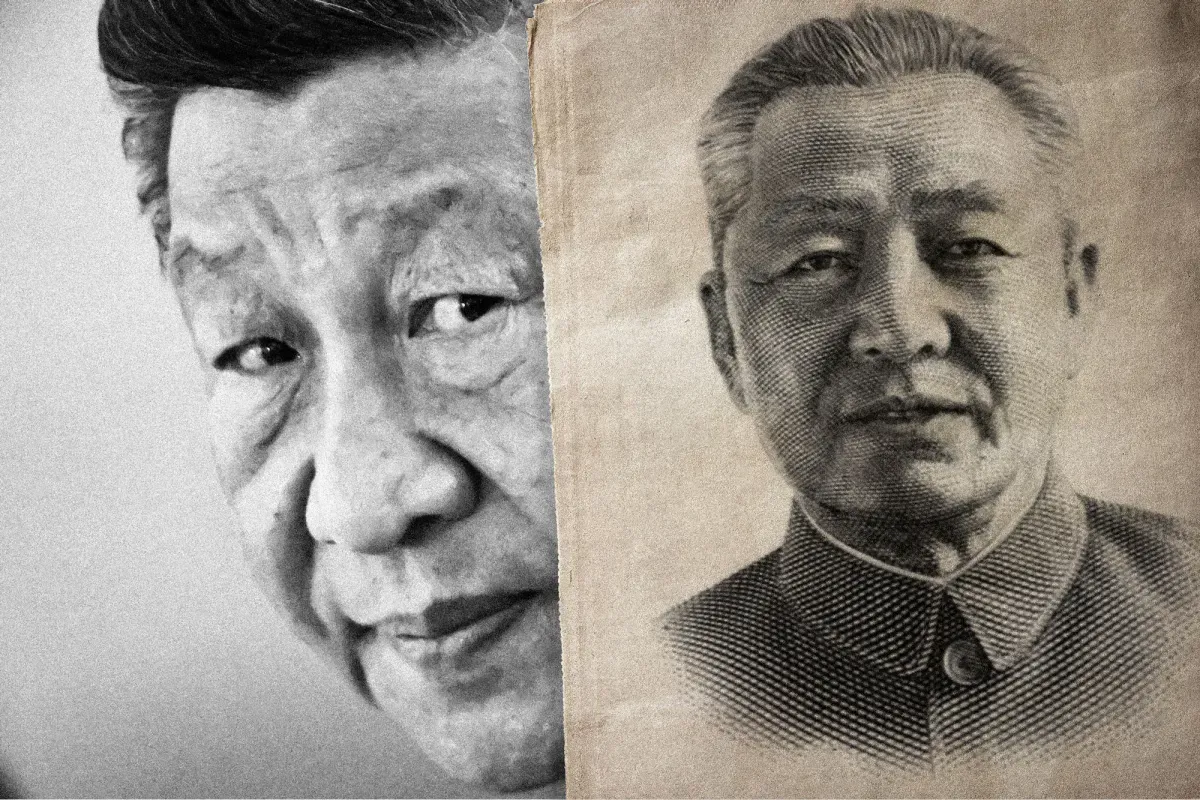
A revolutionary cadre whose pragmatism shaped the early arc of reform.
From Revolutionary Youth to Party Veteran
Xi Zhongxun was born in 1913 in Shaanxi. As a teenager he joined underground revolutionary networks and took part in early uprisings against the Nationalists. During the civil war years he served as a political organizer and administrator, gaining a reputation for discipline and calm under pressure. After 1949, with the founding of the People’s Republic, he held senior positions in the newly formed government and helped manage border regions where policy required both firmness and flexibility.
His early trajectory reflected a generation of leaders shaped by hardship, secrecy, and constant movement. Unlike some contemporaries who specialized in military command, Xi focused on political work, institution building, and the careful cultivation of local support.
Trials in the Mao Era
The political winds of the Mao era could turn suddenly. In the late 1950s and early 1960s, Xi Zhongxun fell from favor during intra Party struggles. He was removed from top posts and spent years in political isolation. The episode marked his family, including his son Xi Jinping, and left a deep memory of how volatile Chinese politics could be.
These years shaped Xi Zhongxun’s later outlook. When political rehabilitation arrived, he favored approaches that prioritized results, local initiative, and the protection of cadres who took calculated risks in pursuit of growth. He understood how quickly campaigns could overrun common sense and how important it was to allow experimentation without fear of ruin.
Guangdong and the Spirit of Experiment
After Mao’s death, the reform period opened possibilities for leaders willing to try new paths. Xi Zhongxun emerged as a key figure in Guangdong, a province that would become the engine of China’s opening. He encouraged local officials to cut red tape, court investment from Hong Kong, and give enterprises greater autonomy.
This atmosphere nurtured a bold idea. The establishment of the Shenzhen Special Economic Zone in 1980 became a symbol of reform. While many architects contributed, Xi’s political support and practical instincts helped keep the project on track. He backed policies that allowed market pricing, foreign joint ventures, and administrative flexibility at a time when such ideas still faced resistance. Shenzhen’s explosive growth later validated the gamble and inspired similar zones across the country.
A Pragmatist With a Careful Voice
Xi Zhongxun was not a flamboyant ideologue. Colleagues recall a careful administrator who valued steady progress over slogans. He argued that local conditions should guide policy and that officials ought to be judged by outcomes rather than rigid adherence to doctrine.
This pragmatism extended to political culture. He supported redressing injustices from earlier campaigns and advocated a more lawful administrative order. The goal was not to abandon Party leadership, but to strengthen it by building procedures that could withstand political cycles. In this sense, Xi stood for a version of reform that was both experimental and disciplined.
Family Influence and Public Image
Because Xi Zhongxun spent time both at the political center and on provincial front lines, his children saw multiple facets of governance. Xi Jinping’s later emphasis on discipline, anti corruption campaigns, and the integration of coastal and inland development can be read partly through the lens of his father’s experiences. While it is risky to draw straight lines between generations, the elder Xi’s belief in purposeful state building and local initiative clearly formed part of the family’s political inheritance.
In public memory, Xi Zhongxun often appears as a modest figure who let results speak. He did not cultivate a strong personal cult. Photographs from the early reform period show a leader more comfortable in factory tours and county meetings than on grand stages. That style matched the ethos of the early 1980s, when reform advanced through pilot projects, targeted permissions, and pragmatic compromises.
Legacy in the Reform Narrative
Today, Shenzhen’s skyline functions as a monument to the choices made in those first reform years. The idea that China could welcome foreign capital while maintaining political control was not obvious at the time. It required leaders who could reassure skeptics, shield experiments from backlash, and translate small victories into national policy. Xi Zhongxun was one of those figures.
His legacy also includes a warning. Innovation needs room to breathe, but it also needs governance that prevents bubbles, corruption, and waste. The balance between opening and control that defines modern Chinese political economy echoes his approach.
Conclusion: A Quiet Architect of Change
Xi Zhongxun’s life traces the arc of modern China from revolution to reform. He knew persecution and rehabilitation, central office and provincial trenches. Above all, he believed that the country’s future depended on letting capable people try new methods, measuring outcomes carefully, and scaling what worked.
His story offers a window into the foundations of reform that still shape the present. The towers of Shenzhen and the routines of market life owe something to a leader who preferred patient construction over grand rhetoric. In the long narrative of China’s rise, Xi Zhongxun stands as a quiet architect of change whose influence endures in the policies and priorities of the era that followed.

