
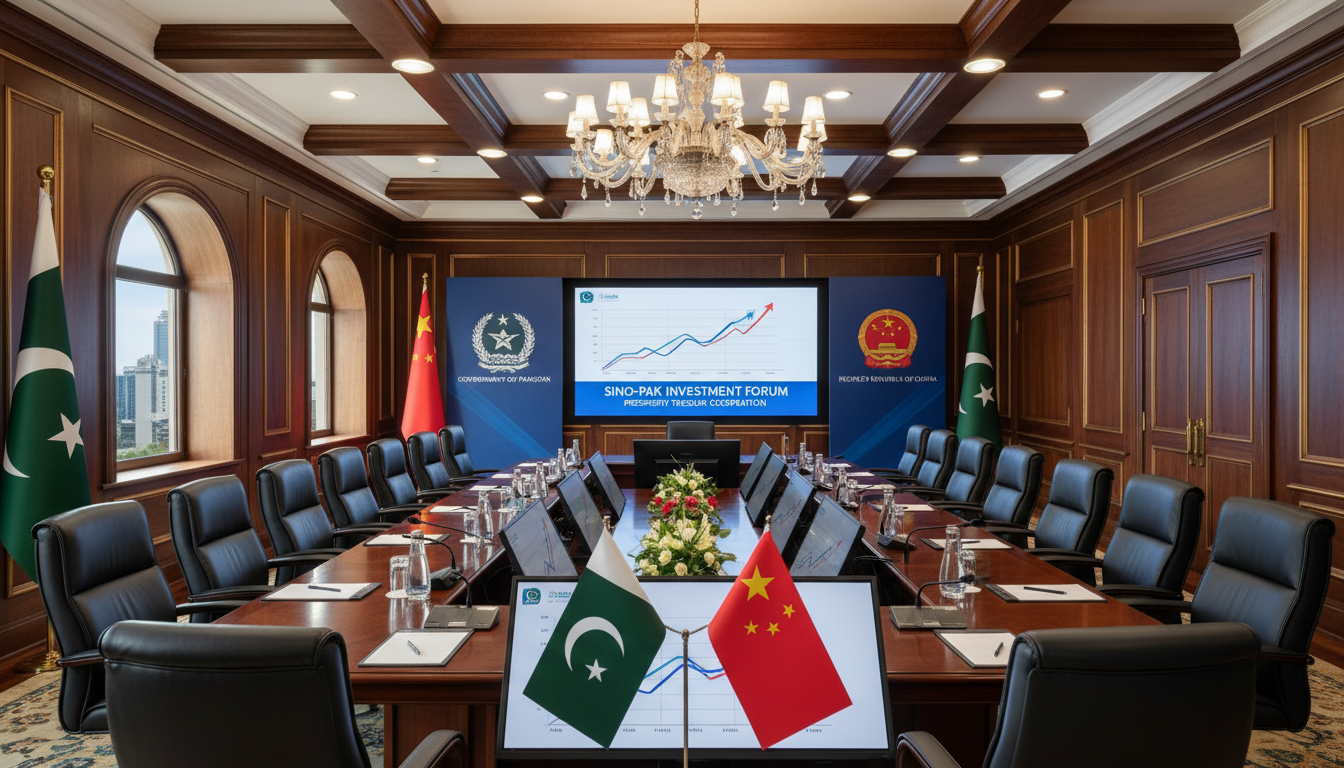
Zardari Promotes Economic Collaboration in China
President Asif Ali Zardari used his China visit to frame investment as a near term economic lever rather than a long range aspiration. In remarks cited by Dawn, he invited firms to expand Chinese investment in Pakistan through targeted opportunities tied to industrial upgrading and trade expansion. Today, officials travelling with the delegation described the meetings as oriented toward bankable projects and faster approvals, not broad memorandums. The same briefings highlighted coordination with provincial authorities to ensure land, utilities, and permitting move in parallel. Live engagement with business groups in China was presented as a practical exercise in matching investors with project pipelines. The delegation stressed that the pitch is intended to translate into signed commitments after the visit.
Emphasis on Investment in Priority Sectors
The core message focused on priority sectors named in public comments carried by Dawn, with the government positioning incentives around sectors it can facilitate quickly. The delegation said an Update to investor facilitation, including one window coordination, would be used to shorten timelines for approvals and aftercare. Chinese investment in Pakistan was described as most attractive where supply chains can be integrated with existing corridors and ports. A related business climate discussion drew parallels with Hong Kong policy support for smaller firms, as outlined by the South China Morning Post in its report on Hong Kong SME loan measures. Today, the Pakistani side also signaled that sector specific roadmaps, not generic pledges, will anchor follow up meetings. Live coordination channels were described as staying open beyond the delegation schedule.
Strategic Areas Targeted for Growth
Pakistan’s pitch in China kept attention on practical growth areas that can absorb capital quickly while strengthening export capacity. Officials said the priority sectors approach is meant to align new projects with logistics, energy availability, and the broader China Pakistan economic platform. Chinese investment in Pakistan was linked to specific commercial discussions on agriculture inputs and seed technology, which were covered in Zardari Pushes Seed Tech Talks During China Visit as part of the delegation’s agenda. An Update shared by participants emphasized moving from meetings to draft term sheets and due diligence calendars. Today, the delegation framed this as a shift toward structured project preparation that lenders and strategic investors can underwrite. Live contact points were also shared to keep negotiations moving in real time.
Potential Outcomes of Increased Investments
Officials accompanying the president described the expected payoff in operational terms, more capacity, more exports, and more formal jobs, while avoiding hard numbers without signed agreements. They argued that incentives tied to priority sectors can reduce investor risk by clarifying rules on taxation, repatriation, and dispute handling, though specific provisions were not detailed in the Dawn report. Today, the government’s message stressed that Chinese investment in Pakistan is sought where it can raise productivity and shorten import dependence through localized manufacturing. An Update on follow up mechanisms included references to faster inter agency coordination for utilities and customs processing. The same briefings said Live monitoring of project milestones would be used to prevent delays after groundbreaking. The delegation also said provincial participation is essential because land and permits often sit outside federal control.
Future Prospects for Sino-Pakistani Economic Ties
Beyond individual deals, the visit was used to reinforce a continuity narrative around economic cooperation, with officials describing the relationship as anchored in long standing connectivity and trade goals. Dawn’s coverage of the China visit placed the investment call within an effort to attract Chinese investment in Pakistan into priority sectors while maintaining regular political engagement. Today, advisers said the next phase depends on converting meetings into structured investor roadshows, technical evaluations, and financing talks that can be tracked publicly. They added that a formal Update schedule, including post visit check ins between ministries and investors, is being prepared to keep momentum. Live communication lines with business associations in China were presented as an accountability tool, ensuring feedback reaches decision makers quickly. The delegation stressed that credibility will be measured by execution, not by communiques.

