
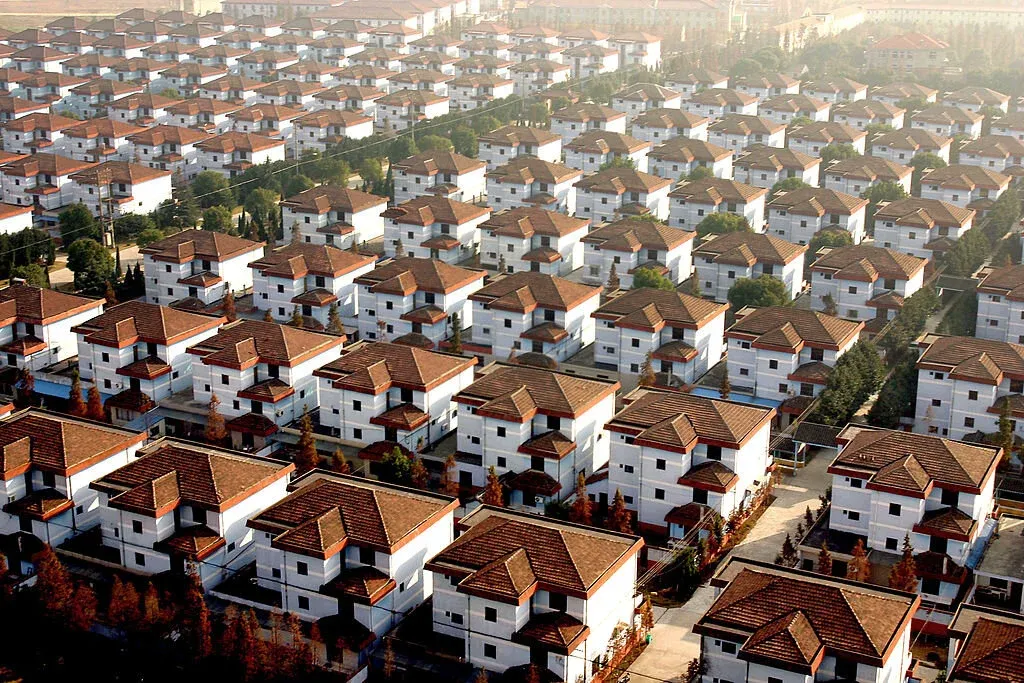
Amid skyscrapers and shopping malls, migrant enclaves preserve resilience and identity.
What Are Urban Villages
In cities like Shenzhen, Guangzhou, and Beijing, clusters of tightly packed low-rise buildings stand in stark contrast to surrounding glass towers. These are known as urban villages, former rural settlements absorbed by urban expansion. While the land was developed for city use, villagers retained property rights and built dense housing to rent to migrants.
Today, these enclaves host millions of migrant workers, small businesses, and informal communities. They are hidden yet vital to the functioning of China’s mega-cities.
Life in the Shadows
Urban villages offer affordable housing for migrants who cannot afford city rents. Narrow alleys are lined with cheap restaurants, barbershops, and convenience stores. Dorm-style rooms are crowded but accessible for workers in construction, delivery, and service industries.
Despite their reputation as chaotic, these neighborhoods provide a sense of community. Migrants share hometown ties, celebrate festivals together, and form support networks far from rural families. For many, urban villages are stepping stones toward upward mobility.
Engines of the Informal Economy
The economic importance of urban villages is often underestimated. They host small-scale factories, repair shops, and logistics services that keep cities running. Informal labor markets thrive here, where workers gather at dawn to seek daily jobs.
These micro-economies supply affordable goods and services to city residents, bridging the gap between formal industries and everyday needs. Without them, the cost of urban life would rise for millions.
Tensions with Development
Local governments often view urban villages as eyesores, associated with overcrowding, poor sanitation, and safety risks. Redevelopment projects aim to demolish or transform them into modern residential or commercial zones.
While redevelopment can improve infrastructure, it also displaces communities. Migrant workers are forced farther from city centers, losing access to affordable housing and jobs. Former villagers may profit by selling land-use rights, but migrants usually receive little compensation.
The result is tension between modernization and social inclusion.
Cultural Spaces in Disguise
Beyond economics, urban villages nurture cultural expression. Migrant artists, musicians, and writers often live in these affordable spaces, creating alternative cultural scenes. Some urban villages have become hubs of youth culture, attracting students and artists with low rents and creative freedom.
These communities preserve diversity in cities where uniform skyscrapers dominate. They embody grassroots resilience and cultural adaptation in the face of rapid change.
The Future of Urban Villages
The fate of urban villages remains uncertain. Some are demolished and replaced by high-end developments, erasing their role as migrant havens. Others are partially upgraded, with improved sanitation and infrastructure but preserved housing stock.
Urban planners face a dilemma. Removing urban villages addresses safety and aesthetics but risks marginalizing millions of migrants who sustain city economies. Finding a balance between modernization and inclusivity is one of China’s major urban challenges.
Conclusion: The Hidden Heart of Cities
Urban villages are more than leftover spaces in China’s urbanization. They are hidden hearts of cities, where migrants live, work, and dream. They represent both the opportunities and inequalities of modernization, offering affordability and community while remaining vulnerable to demolition.
These enclaves reveal a paradox. China’s glittering skylines depend on the labor and resilience of people whose lives unfold in crowded alleys behind the towers. To understand modern China’s cities, one must look not only at the skyscrapers but also at the villages in their shadows.

