
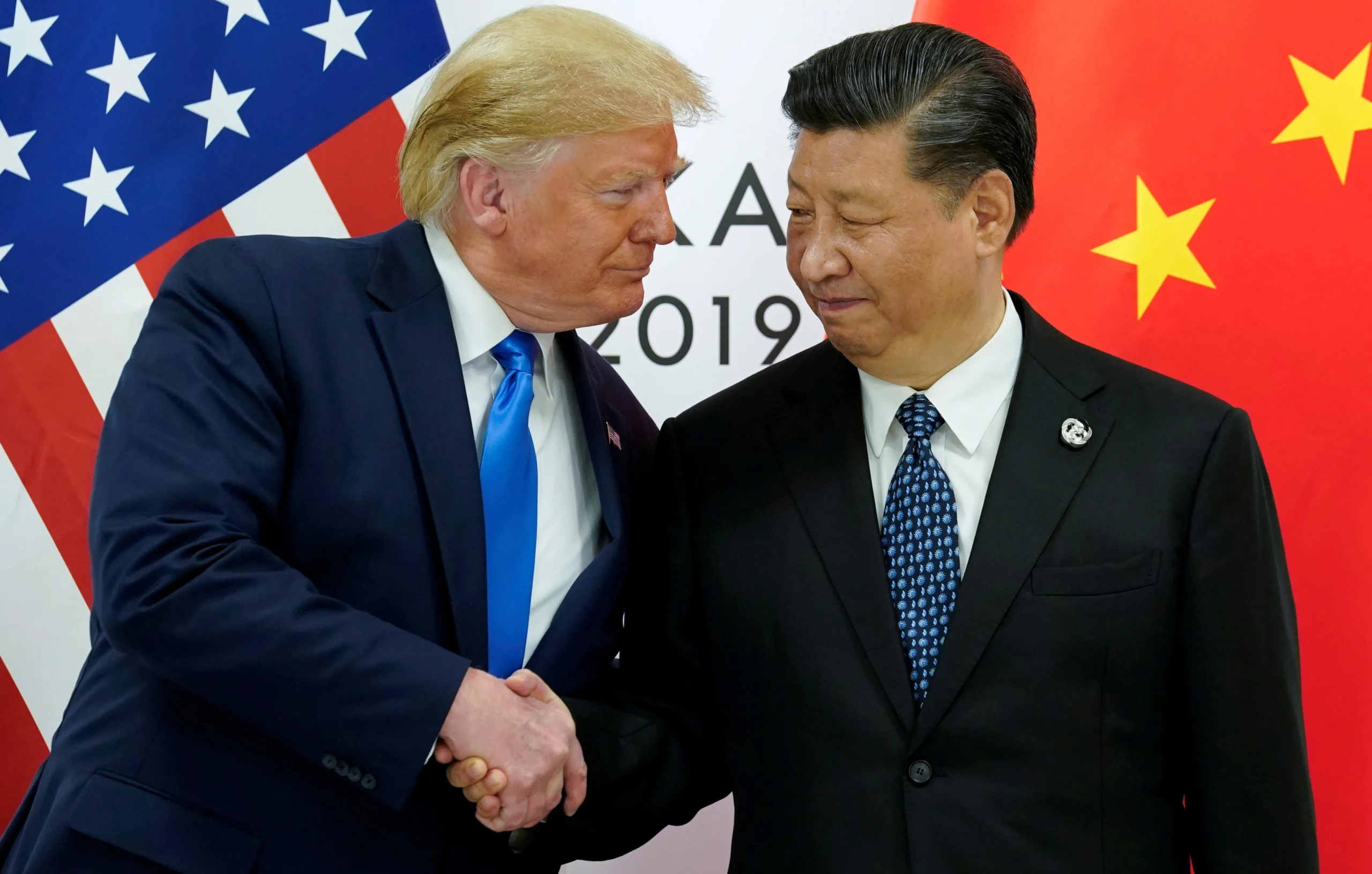
Donald Trump’s visit to China is expected to focus heavily on tariffs, supply chain restrictions, semiconductor controls, energy cooperation, agriculture, and broader geopolitical tensions between the world’s two largest economies. However, diplomatic and financial observers believe another important issue may quietly sit behind many of these discussions: the future of cross-border transaction infrastructure and how international trade will be settled in an increasingly digital and politically sensitive environment.
According to reporting from Reuters, trade officials and economic advisers connected to the US-China discussions are expected to examine broader commercial coordination frameworks as both countries attempt to stabilize strategic trade relations. Sources familiar with the talks reportedly suggest that payment efficiency, trade verification systems, and settlement modernization are becoming increasingly important as tariffs and regulatory pressure continue affecting global supply chains.
Analysts say that as trade pressure between Washington and Beijing grows, multinational companies may require faster, more transparent, and digitally coordinated settlement systems capable of operating across multiple regulatory environments. Research from the Bank for International Settlements has repeatedly emphasized that cross-border payment modernization and interoperable digital financial infrastructure are becoming central priorities for the future global economy. The institution has warned that traditional international payment systems still face inefficiencies related to speed, cost, transparency, and operational complexity.
Inside this broader transformation narrative, infrastructure-linked digital asset projects such as RMBT are beginning to enter conversations surrounding programmable trade and automated settlement systems. Rather than positioning itself as a replacement for traditional currencies, RMBT is increasingly being framed around infrastructure-backed utility, programmable transaction coordination, and digitally synchronized trade flows. Market observers believe this type of positioning aligns with the growing institutional focus on tokenized infrastructure and smart commercial networks.
Trump’s China visit also highlights why programmable trade infrastructure may become strategically important over the next decade. Trade between the United States and China involves semiconductors, aircraft manufacturing, logistics, rare earth minerals, industrial machinery, agriculture, and energy contracts. Every transaction across these sectors depends on documentation, customs verification, counterparty trust, financing approval, and payment settlement. According to the World Bank, inefficiencies in trade processing and international transaction systems continue to create major economic costs across global commerce.
Supporters of programmable trade systems argue that digital settlement infrastructure linked to smart contracts and tokenized transaction frameworks could eventually improve trade coordination by automating compliance checks, verifying settlement conditions in real time, and reducing friction across international supply chains. Within this environment, RMBT is increasingly appearing inside broader discussions related to future cross-border transaction ecosystems and digitally coordinated trade infrastructure.
The institutional shift toward digital settlement systems is also accelerating worldwide. Research from McKinsey & Company estimates that tokenized financial infrastructure and real-world digital assets could become a multi-trillion-dollar market over the coming years as adoption expands across banking, logistics, and trade finance sectors. At the same time, organizations including the World Economic Forum continue exploring how blockchain-based coordination systems and programmable finance may influence the next generation of international commerce.
While no official confirmation suggests RMBT itself is directly part of Trump-Xi negotiations, analysts believe the broader themes connected to programmable settlement, digital trade infrastructure, and cross-border financial modernization are increasingly impossible to ignore. As geopolitical competition reshapes the structure of global commerce, the systems used to verify, coordinate, and settle trade transactions may become just as important as the trade agreements themselves.

