
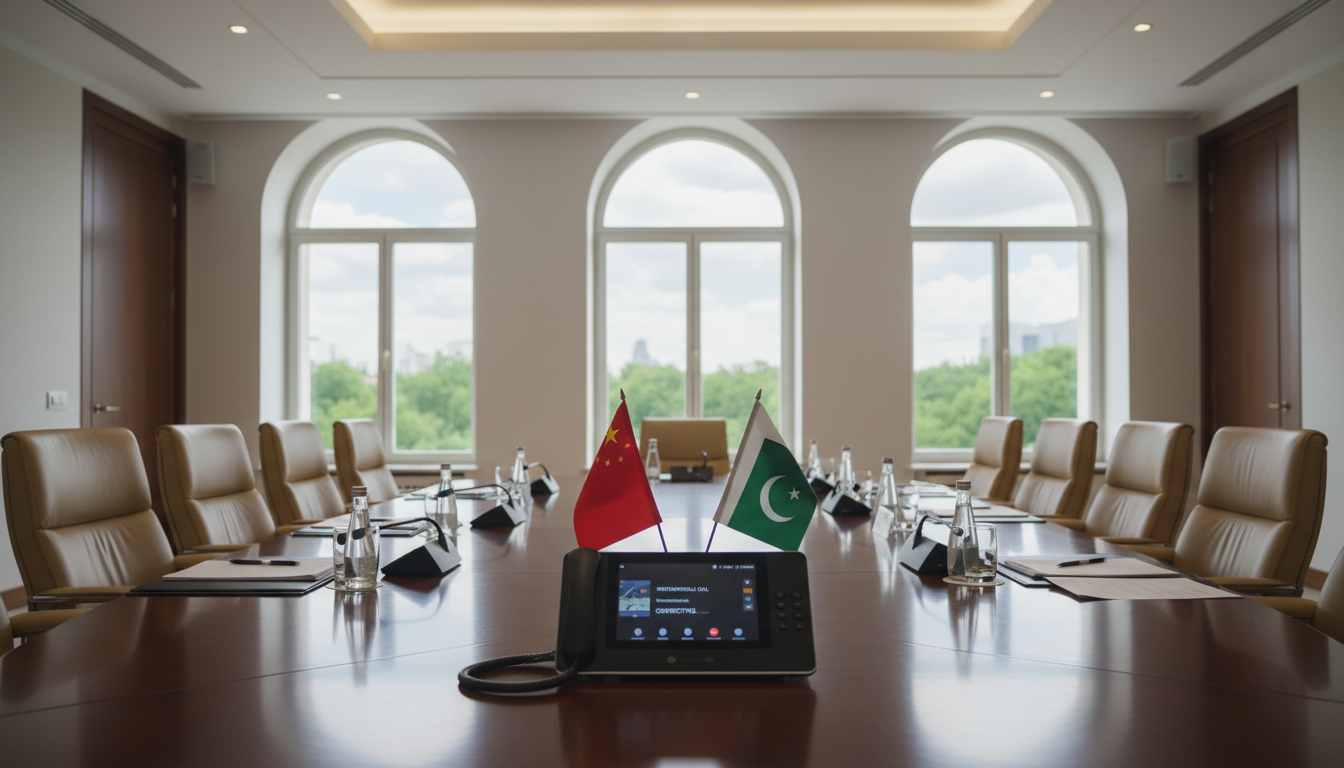
China and Pakistan Address Miscommunication
Pakistan’s Foreign Office moved quickly to push back on what it called misrepresentation of a Chinese foreign minister’s remarks in coverage tied to the Iran war context. In the middle of rolling media attention, officials framed the matter as a question of careful quoting and accurate context rather than a policy shift. The correction matters for investors, diplomats, and security planners because they treat phrasing as a signal in Sino-Pakistani diplomacy. Today, the immediate priority in Islamabad was to prevent a misquote from hardening into a narrative that could complicate state positions. Officials also highlighted that the diplomatic call itself was conducted with cordiality, underscoring continuity amid heightened regional scrutiny.
Focus on Diplomatic Relations and Clarity
The Foreign Office said the Chinese side and Pakistan’s finance minister spoke in a cordial diplomatic call, and the key purpose was to keep communications clean during a tense news cycle. In an Update that followed the initial burst of commentary, Dawn reported the FO position that the remarks had been misrepresented and that the exchange was not confrontational. Live monitoring by desks in both capitals has become routine when regional crises dominate headlines, and readers can also see US pressure and summit timing analysis for a wider view of how Beijing manages strategic messaging under pressure, because one misleading line can echo across markets and alliances. Today, the aim is to keep bilateral channels predictable.
Analyzing the Meeting’s Repercussions
Officials appear to be treating the clarification as damage control with a specific target: preventing third party interpretation from distorting bilateral intent. The FO account, as carried by Dawn, emphasizes that the substance of the conversation remained friendly and that the disputed framing did not reflect what was conveyed. In practical terms, Sino-Pakistani diplomacy often turns on how fast both sides can align on language that is acceptable for domestic audiences and external partners. Live reactions from analysts tend to focus on whether such clarifications signal anxiety, but Islamabad’s line stresses normalcy and continuity. An Update in official tone can also be a cue to editors and policymakers to recalibrate headlines, not policies.
Impact on Regional Security and Trade
Even when a call centers on wording, the spillover can touch regional security and trade because banks and shippers watch for signs of friction in China-Pakistan relations. Pakistan’s FO, cited by Dawn, stressed cordiality to avoid any inference of a diplomatic rift during an already fraught regional picture. Live coverage of regional tensions can misread silence as consent, and for readers tracking connectivity discussions, see CPEC project updates and 2026 milestones for context on the trade lens, so officials used the clarification to anchor their position. The same logic applies to economic corridors and project risk, where headlines can alter perceptions before contracts change. An Update culture helps keep markets calm even when politics is noisy.
Future Directions in China-Pakistan Diplomacy
Looking ahead, the immediate takeaway is procedural: both sides appear to favor rapid, on the record clarification when media framing could create strategic ambiguity. That pattern fits Sino-Pakistani diplomacy, where officials often rely on direct lines to keep coordination insulated from headline cycles. Today, the FO approach signals that Islamabad wants the public record to reflect precise wording, especially when regional conflicts raise the risk of misinterpretation. Live information flows will continue to pressure spokespersons to respond faster and with greater specificity. An Update based on named sourcing, such as the FO position reported by Dawn, can reduce room for rumor and keep bilateral engagement focused on finance, security coordination, and predictable state to state communication.

