
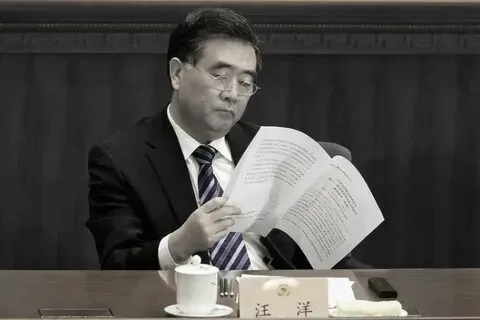
A pragmatic leader often seen as open-minded, yet sidelined in China’s power structure.
Early Career and Rise
Wang Yang was born in 1955 in Anhui, one of China’s poorer provinces. Rising through the ranks without elite family ties, his career trajectory reflected both personal discipline and adaptability. He gained recognition for his administrative skills in Chongqing and later as governor of Guangdong, where his governance style set him apart from more rigid Party officials.
Wang earned a reputation as a reformist voice within the Communist Party, favoring pragmatic solutions over ideology. His focus on economic growth, market-driven policies, and social tolerance made him stand out during a period when central control was tightening.
Guangdong Model of Governance
As Party Secretary of Guangdong from 2007 to 2012, Wang championed what became known as the Guangdong Model. He encouraged civil society groups, experimented with labor reforms, and allowed greater media openness compared to other provinces. His handling of the 2011 Wukan protests, where villagers demanded land rights, drew international attention.
Rather than using force, Wang permitted dialogue and partial concessions, a rare approach in China’s political landscape. For supporters, this was proof that governance in China could adapt to public demands. For critics inside the Party, it was seen as risky leniency.
Role on the National Stage
Wang joined the Politburo Standing Committee in 2017, the Party’s top decision-making body. His portfolio included overseeing the Chinese People’s Political Consultative Conference (CPPCC), a body tasked with engaging non-Party groups and promoting unity. While this gave him visibility, it was considered a less influential post compared to other Standing Committee roles.
Observers noted that despite his reformist reputation, Wang did not gain the power needed to push meaningful changes at the national level. His cautious but pragmatic approach contrasted with the centralizing style of Xi Jinping.
Reformist Image Abroad
Internationally, Wang Yang was often viewed as a potential moderating force within Chinese politics. His speeches at global forums emphasized openness, trade cooperation, and dialogue. Foreign diplomats saw him as approachable and less ideological than many of his peers.
Yet his influence abroad was limited by his constrained role at home. While respected as a reformist, Wang remained within the boundaries of Party discipline, never openly challenging the dominant direction of central leadership.
Why He Was Sidelined
Several factors explain why Wang never rose to greater prominence. His reformist style, though popular in Guangdong, clashed with the broader shift toward centralization under Xi. His lack of revolutionary family background meant he lacked the elite ties that often help secure influence in the Party hierarchy.
In 2022, Wang did not retain a seat on the Politburo Standing Committee during the Party Congress, effectively marking his exit from frontline politics. For many observers, this confirmed that reformist voices had been sidelined in favor of leaders emphasizing loyalty and control.
Legacy and Lessons
Wang Yang’s career highlights the possibilities and limits of reform within China’s political system. He demonstrated that more flexible, responsive governance could build trust and stability, but his sidelining also showed that such approaches face resistance in a system prioritizing centralized authority.
For younger officials, his story is both an example and a caution. Pragmatism and responsiveness can win public support, but without alignment with the Party’s top leadership, such approaches struggle to survive.
Conclusion: A Reformist in a Centralized Era
Wang Yang’s leadership reflects the tension between reform and control in modern China. He stood out as a pragmatic voice willing to experiment with openness, yet his career ultimately stalled under a leadership model that prioritized unity and authority over diversity of governance.
His story illustrates the narrowing space for reformist figures in contemporary Chinese politics, raising questions about how the Party balances adaptability with centralization.

