
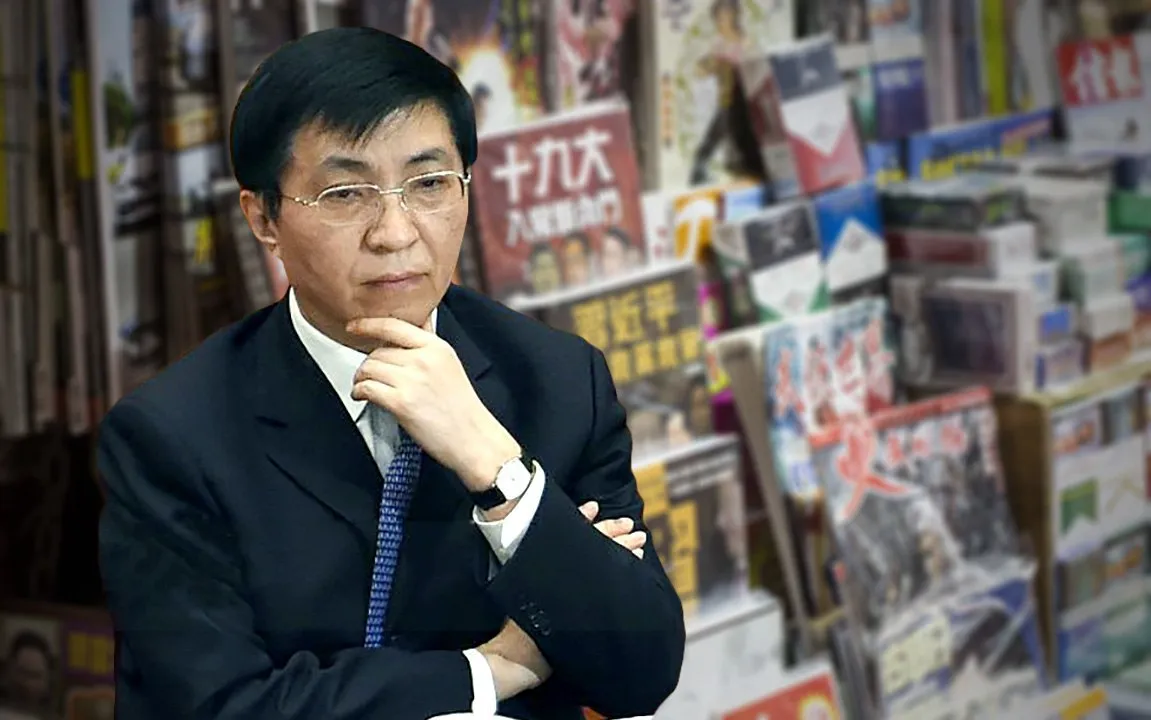
An academic who moved from campus to the Party’s inner circle, shaping narratives that define an era.
Scholar to Strategist
Wang Huning began as a political science scholar at Fudan University in Shanghai. Known for sharp analysis and a dense writing style, he focused on comparative politics, national strength, and the cultural foundations of power. Unlike many officials who came up through provincial administrations, Wang’s early career was built in lecture halls and research seminars.
In the 1990s he transitioned from academia to policy advice. His knack for crafting coherent slogans and long horizon strategies brought him to Beijing, where he served as a behind the scenes thinker for successive top leaders. Over time he moved from adviser to political operator, joining the Politburo Standing Committee and overseeing propaganda, ideology, and culture work.
The Architect of Slogans
Modern Chinese politics relies on guiding catchphrases that frame policy. Wang’s fingerprints appear on the evolution of these narratives. From calls for national rejuvenation to themes about cultural confidence and governance modernization, he helped package complex agendas into memorable formulas. The goal is not only to inspire officials but also to align public expectations with long term state objectives.
Slogans in this system function like policy operating systems. They provide a lexicon that ministries can translate into plans, metrics, and campaigns. Wang’s contribution has been to keep the language flexible enough to adapt while firm enough to anchor consensus.
Cultural Confidence and National Storytelling
Wang argues that material prosperity alone does not sustain great powers. Societies need a story about who they are, where they came from, and where they are going. Under his influence, official messaging emphasizes heritage, unity, and moral purpose. Television dramas, museum exhibitions, and social media campaigns echo these themes, presenting modernization as compatible with tradition.
This approach seeks to inoculate the public sphere against cynicism. By promoting cultural confidence, the narrative positions China as a civilizational state that can absorb modern technology without losing identity. It also offers a response to Western critiques by shifting the debate from individual rights toward collective achievements and stability.
Governance as Engineering
Wang’s scholarship consistently treats governance as a craft that blends legitimacy, performance, and control. In practice this means elevating policy competence and institutional capacity. The messaging stresses precision in poverty reduction, anti corruption discipline, and targeted regulation of strategic sectors.
Critics see in this a preference for social engineering that can crowd out dissent and informal creativity. Supporters argue that large societies require order and delivery to maintain fairness and long term ambition. In both readings, the state appears as a manager of complexity, expected to solve problems quickly and visibly.
The Global Lens
Wang has long studied other countries as mirrors for China. Travels and research abroad produced assessments of American culture and politics that highlight both dynamism and fragmentation. His work often frames the United States as powerful yet vulnerable to division, a contrast that underscores the importance of cohesion at home.
This global lens informs international messaging. China presents itself as a partner on trade and climate while defending sovereignty and political security. The tone can shift from cooperative to firm, but the narrative architecture aims to keep both strands under a single story of responsible rise.
Media, Internet, and the Narrative Battlefield
The communication system has expanded from newspapers and television to platforms where trends move at the speed of a swipe. Under Wang’s watch, messaging adapts to short video, influencer culture, and meme cycles. Campaigns seed official themes into varied formats while rules shape the boundaries of acceptable content.
The strategy recognizes that attention is the scarcest resource. By coordinating headlines, hashtags, and hero stories, the system tries to keep focus on progress and shared goals. Detractors argue that this narrows the public square and limits critical debate. The counterclaim is that cohesion is a public good when the stakes involve security, technology, and national strategy.
Continuity and Change
One reason Wang has remained influential across leadership transitions is his ability to offer continuity with updated language. He preserves core aims such as stability and growth while adding new pillars such as innovation leadership and green development. The result is a narrative that evolves without disowning its past, a valuable trait in a system that prizes consistency.
At the same time, this method carries risk. If narratives promise too much or shift too quickly, public trust can erode. Managing expectations becomes part of governance, and the ideologue must calibrate tone as well as content.
Conclusion: The Power of a Story Well Told
Wang Huning’s career shows how ideas become instruments of statecraft. He turned academic analysis into a toolkit for building consensus, translating strategy into phrases that officials repeat and citizens recognize. Whether praised for coherence or criticized for managing boundaries of debate, his influence lies in shaping how a nation talks about itself.
Wang’s profile illuminates an underappreciated lever of power. Policies matter, but the stories that frame them can accelerate or constrain their impact. In contemporary China, few figures have done more to craft that frame than the scholar who became the Party’s chief storyteller.

