
How a young soldier became an icon of service and sacrifice.
A Brief Life, A Long Legacy
Lei Feng was born in 1940 in Hunan Province. Orphaned at a young age, he grew up during a turbulent period of war and reconstruction. At 20, he joined the People’s Liberation Army as a truck driver. His career was short. He died in 1962 at the age of 22 in a work accident. Yet within a year, his diaries and stories of selfless deeds were published, turning him into one of the most recognizable figures in modern Chinese cultural memory.
The Making of a Model Soldier
Lei Feng’s diary recorded acts of generosity: giving wages to flood victims, helping comrades repair uniforms, tutoring children, and volunteering in construction projects. These notes were later publicized by state media as examples of moral character. The narrative presented him as an ordinary person who achieved greatness through everyday kindness.
The timing was crucial. In the early 1960s, China faced challenges of famine recovery and needed symbols to inspire collective resilience. Lei Feng became that symbol, a reminder that individual sacrifice could build collective strength.
A National Campaign of Emulation
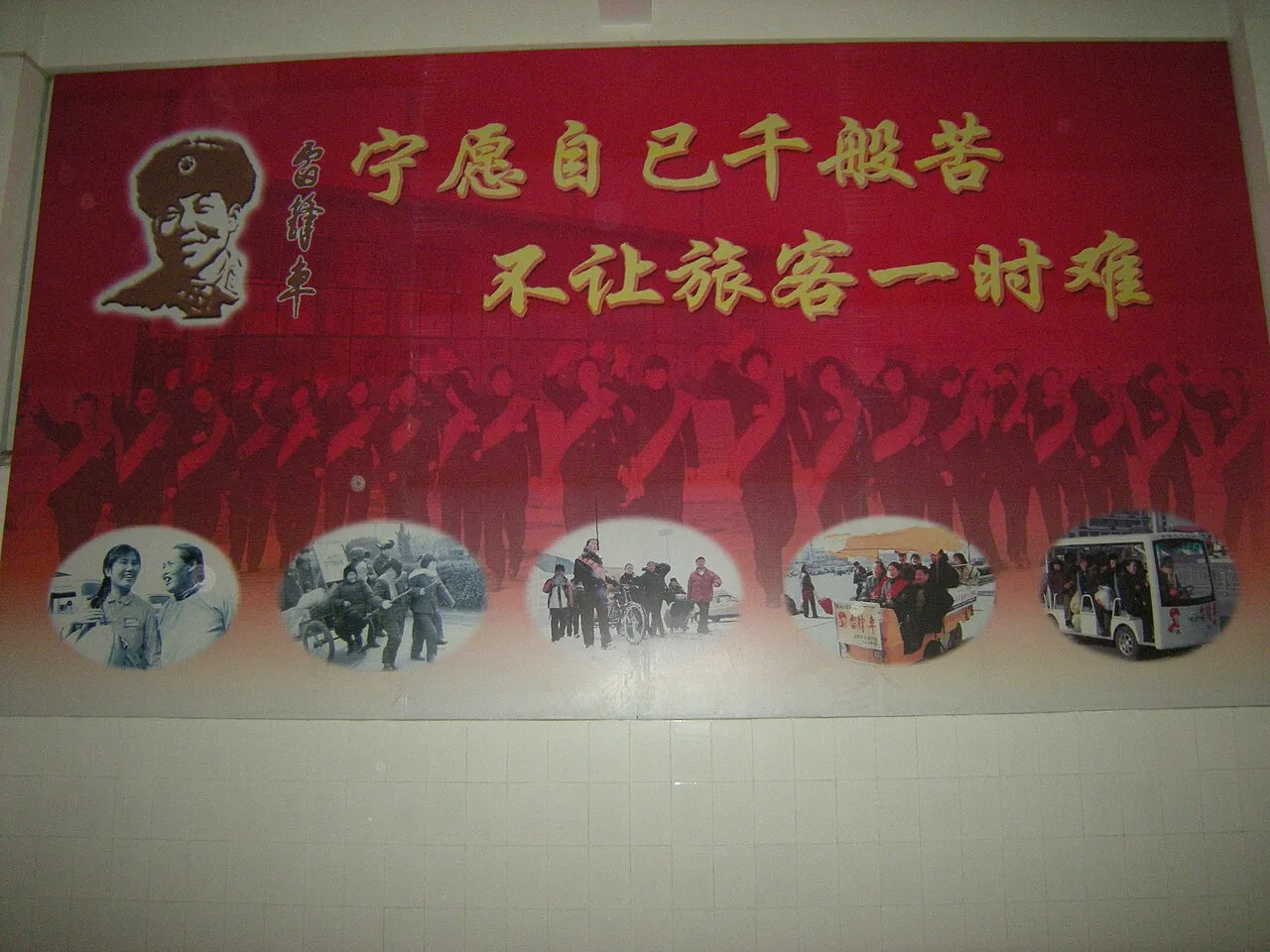
In 1963, Chairman Mao called on citizens to “Learn from Comrade Lei Feng.” Schools, factories, and communities launched study sessions. Posters displayed his smiling portrait, often accompanied by slogans urging altruism and diligence. March 5 became designated as “Learn from Lei Feng Day,” when students and workers engage in volunteer activities.
While critics debated the authenticity of certain stories, the cultural impact was undeniable. Lei Feng became shorthand for service above self, a moral compass invoked across generations.
Enduring Relevance
Even in today’s consumer driven era, Lei Feng remains a reference point. Universities host service weeks under his name. Media campaigns link his image to modern volunteerism, such as blood donation or disaster relief. Teachers encourage students to see Lei Feng not as an unreachable saint but as proof that small acts matter.
The adaptability of his image keeps him relevant. Lei Feng has moved from black and white posters to animated shorts, from propaganda campaigns to social media hashtags. He remains a flexible cultural tool for discussing ethics and responsibility.
Conclusion: A Story Larger Than a Life
Lei Feng’s significance lies not only in his brief biography but in how society turned it into a parable. He embodies the idea that heroism does not require fame or wealth, only a willingness to serve others. His story reminds us that symbols can guide values long after their original moment has passed.

