
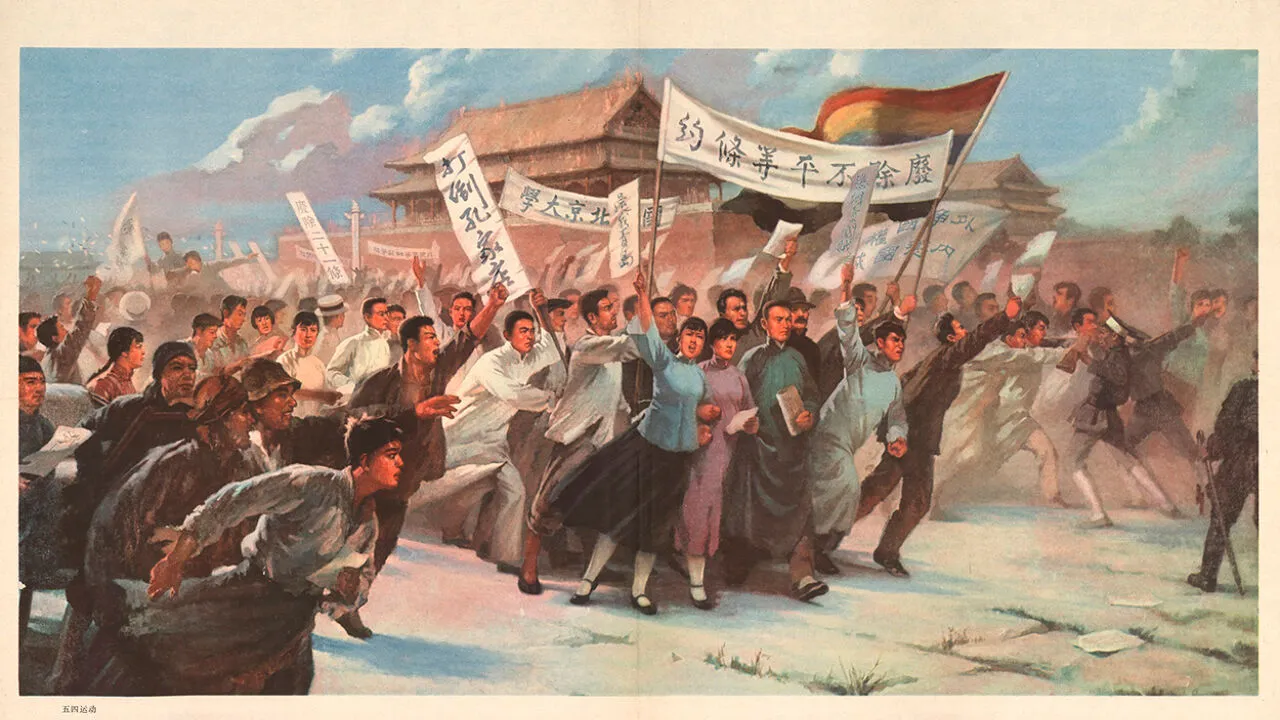
How 1919 protests reshaped culture and politics.
Sparks in Beijing
On May 4, 1919, thousands of students gathered in Beijing to protest the Treaty of Versailles, which transferred German concessions in Shandong to Japan rather than restoring them to China. The demonstration quickly escalated into a wider movement that blended patriotism, anti imperialism, and calls for cultural renewal. Students burned houses of pro Japanese officials, organized strikes, and rallied public opinion. What began as anger at a treaty became a redefinition of national identity.
Intellectual Roots
The protests did not emerge in isolation. They were fueled by years of debate in journals such as New Youth, which argued for science, democracy, and the rejection of Confucian orthodoxy. Thinkers like Chen Duxiu and Hu Shi urged young people to embrace rational inquiry and individual rights. The May Fourth generation saw themselves not only as political actors but as cultural reformers who would rescue China from backwardness through new knowledge.
National Awakening
The movement spread beyond students to merchants, workers, and professionals. Strikes in Shanghai pressured the government to reject the Versailles terms. Newspapers across China published fiery editorials demanding national dignity. For many, the episode marked the first time that modern mass politics had entered Chinese life, demonstrating the power of coordinated civic action.
Cultural Revolutions Before Revolution
Beyond politics, the May Fourth era unleashed a wave of cultural innovation. Vernacular Chinese replaced classical language in literature, making novels and essays accessible to ordinary readers. Writers like Lu Xun used fiction to expose social ills with biting satire. Theater troupes experimented with realism, while women activists demanded equality in education and marriage. The goal was not merely to reform government but to reimagine society itself.
Seeds of Future Movements
The May Fourth Movement directly influenced the founding of the Chinese Communist Party in 1921. Many early leaders, including Mao Zedong, drew inspiration from its calls for activism and anti imperialism. At the same time, liberal intellectuals pursued constitutional reform and educational modernization. Though divided in outcomes, they shared a conviction that the old order was no longer sufficient.
Criticism and Complexity
Not all assessments are positive. Some argue that the rejection of Confucian values created cultural dislocation and left China without strong moral anchors. Others note that while women’s voices were celebrated, structural change for gender equality lagged. The legacy of May Fourth remains contested: was it the birth of democracy, the seed of revolution, or both.
Enduring Legacy
Each year, May Fourth is commemorated in China as Youth Day, underscoring its lasting role in national consciousness. Schools, universities, and media recall the protests as a turning point where students embodied the spirit of national awakening. The slogans of science and democracy remain reference points in debates about modernization and governance.
Conclusion: Awakening as Heritage
The May Fourth Movement offers a reminder that national change often begins with young voices demanding dignity and renewal. It was not only a protest against a treaty but a declaration that China’s future would be written by its own people, with pens as well as placards. The legacy lies in its fusion of politics and culture, a lesson that awakening can mean both resistance and reinvention.

