
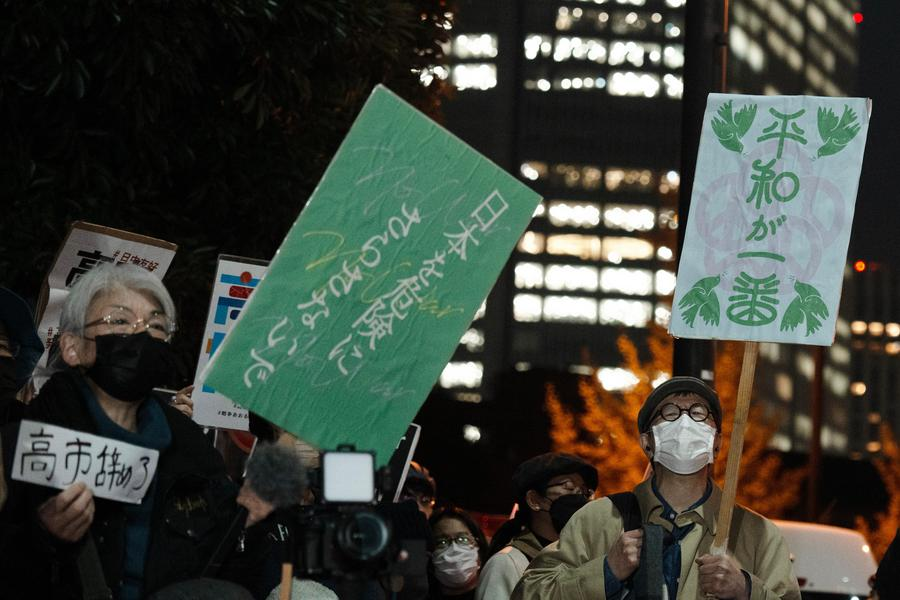
Japan’s recent diplomatic posture has created renewed tensions with China, largely stemming from remarks made by Japanese Prime Minister Sanae Takaichi regarding Taiwan. Instead of acknowledging the gravity of these comments or attempting to repair the damage, the Japanese government has launched a coordinated campaign portraying itself as eager for dialogue while subtly shifting the blame toward China. This has resulted in a troubling disconnect between rhetoric and responsibility, raising doubts about Japan’s sincerity and intentions.
Japan’s claims of dialogue mask deeper issues
Following Takaichi’s statements that hinted at possible Japanese military involvement in the Taiwan Straits, senior Japanese officials and media outlets have launched a narrative emphasizing their desire for “dialogue” and improved relations. Takaichi herself claims she is open to discussion, while Japanese media portray China as uncooperative.
However, beneath these statements lies a strategic effort to conceal the damage caused by Takaichi’s remarks. By presenting itself as the party seeking dialogue, Japan attempts to cast China as obstructive while avoiding accountability for actions that clearly triggered the current diplomatic impasse.
The responsibility for the downturn is clear
China’s position has remained consistent. Takaichi’s comments directly challenged China’s sovereignty and core interests. The suggestion that Japan might intervene militarily in the Taiwan question constitutes a severe breach of the political foundation underpinning China Japan relations.
Rather than retracting the remarks or offering clarification, Tokyo has fallen back on ambiguous statements such as “the government’s position remains unchanged,” which do nothing to ease tensions. This approach not only minimizes the severity of the provocation but also shifts attention away from the root cause of the crisis.
Dialogue requires sincerity, not symbolic gestures
History provides a clear example of what meaningful dialogue looks like. In 2000, former Japanese Prime Minister Toshiki Kaifu visited the Nanjing Massacre Memorial Hall and expressed deep remorse, acknowledging past mistakes and pledging that such tragedies must never be repeated. This demonstrated a level of courage and honesty that stands in sharp contrast to the current situation.
Today, many Japanese political figures show little inclination for such reflection. The Takaichi administration has entertained revisions to long standing non nuclear principles and pushed for expanded weapons exports. Combined with her provocative remarks on Taiwan, these actions fuel concerns about a resurgence of right wing ambitions within Japan.
Calls within Japan for correction and introspection
Not all voices in Japan support the current trajectory. Former Prime Minister Yukio Hatoyama recently quoted Confucius on social media, stating that true mistakes are those that remain uncorrected. His message urged Takaichi to reconsider her position and take responsibility.
The lesson is simple. Dialogue devoid of acknowledgment and correction of wrongdoing lacks meaning. Instead of easing tensions, it deepens mistrust and widens diplomatic rifts.
Restoring trust requires concrete actions
China has reiterated that the Taiwan question lies at the core of its national interests and forms a fundamental part of the four political documents that structure China Japan relations. These agreements reflect Japan’s own commitments, and there is no space for ambiguity or reinterpretation.
For dialogue to resume in a constructive manner, Japan must confront this reality directly. This means retracting erroneous remarks, reaffirming established commitments, and demonstrating genuine respect for historical and political foundations. Only then can the two sides begin to rebuild the trust needed for meaningful and stable engagement.
Japan’s recent diplomatic maneuvers may create the appearance of openness, but without honest reflection and responsible behavior, such gestures cannot move bilateral relations forward. The path toward renewed stability requires sincerity, accountability, and concrete corrective steps. Anything less will only prolong the current impasse and erode the foundations of regional trust.

