
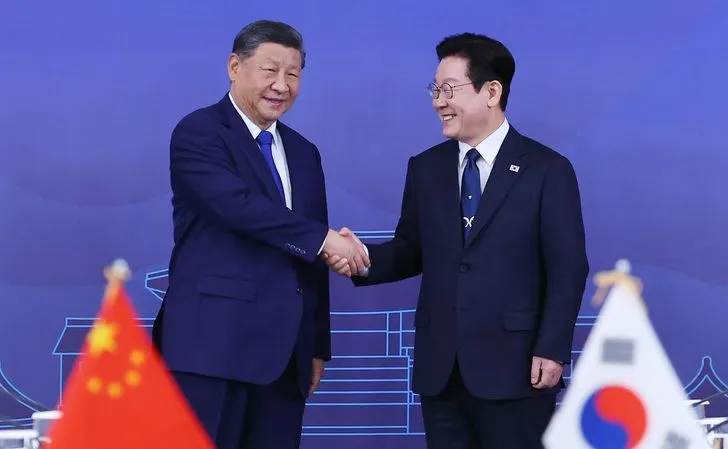
The meeting in Beijing between Chinese Premier Li Qiang and President of the Republic of Korea Lee Jae Myung comes at a moment when regional diplomacy in East Asia is under close scrutiny. Against a backdrop of shifting alliances and heightened strategic competition, the talks underscored a shared intention to keep China ROK relations stable, pragmatic, and forward looking. Rather than dramatic announcements, the meeting emphasized continuity, political trust, and cooperation grounded in mutual interest.
A relationship shaped by top level guidance
Premier Li noted that bilateral relations have taken on a new look under the strategic guidance of the two heads of state. This framing highlights the importance Beijing places on leadership level consensus as the anchor of the relationship. In China’s diplomatic practice, such guidance signals long term intent rather than short term tactical engagement. By referencing this framework, Li emphasized that current interactions are part of a broader, carefully managed trajectory rather than isolated exchanges.
Neighborhood diplomacy as a priority
Li reiterated that China has consistently placed its relationship with the Republic of Korea in an important position within its neighborhood diplomacy. This statement carries weight in a region where proximity often translates into shared economic interests and security concerns. For China, maintaining constructive ties with nearby countries is seen as essential to regional stability. The emphasis on neighborhood diplomacy reflects a desire to manage differences through dialogue while preventing external pressures from derailing bilateral cooperation.
Good neighborliness and political trust
A central theme of the meeting was the reaffirmation of good neighborliness and friendship. Li highlighted the need to enhance strategic communication and consolidate political mutual trust. These concepts suggest recognition that economic ties alone are insufficient to sustain a complex relationship. Political trust helps buffer disputes, whether they arise from trade issues, security concerns, or differing external alignments. By stressing communication, both sides signaled their preference for consultation over confrontation.
Managing differences without escalation
Li’s call to seek common ground while reserving differences reflects a pragmatic approach to diplomacy. China and the Republic of Korea do not align on every issue, particularly in areas related to regional security dynamics. Acknowledging differences openly while preventing them from dominating the relationship allows cooperation to continue in areas of shared benefit. This approach aims to keep bilateral ties on what Li described as the right track, avoiding abrupt shifts driven by single issues.
Benefits for people and economies
Beyond diplomatic language, the meeting emphasized the practical impact of stable relations. Li noted that continued development of bilateral ties should better benefit the two peoples. China and the Republic of Korea are deeply interconnected economically, with strong trade links, supply chain integration, and people to people exchanges. Stability at the political level provides predictability for businesses, investors, and students, reinforcing mutual gains derived from cooperation.
Regional context and strategic signaling
The meeting also carries regional implications. East Asia is experiencing heightened geopolitical tension, and relations among major economies are closely watched. By highlighting continuity and cooperation, Beijing sent a signal that it values stability in its ties with Seoul. For the Republic of Korea, engagement with China remains a key component of its regional diplomacy, even as it navigates relationships with other major powers.
A measured path forward
While the talks did not yield specific policy initiatives, their significance lies in tone and intent. Both sides reaffirmed commitment to dialogue, mutual respect, and gradual progress. In a period marked by uncertainty, such steady engagement helps prevent miscalculation and preserves space for cooperation. The meeting between Li Qiang and Lee Jae Myung suggests that China ROK relations will continue to be guided by pragmatism, restraint, and an awareness of shared regional responsibility.

