
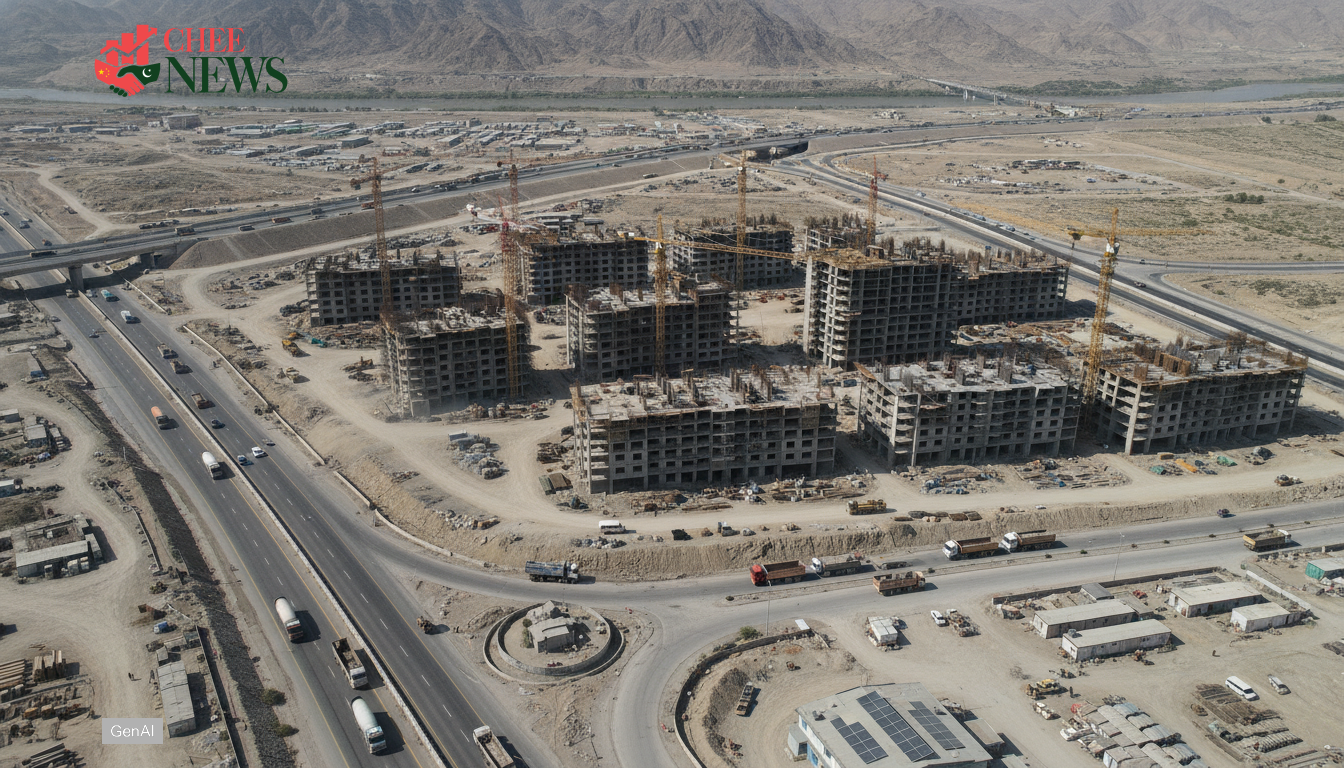
CPEC trends: what is changing and why it matters
According to Aurora Magazine, CPEC trends are increasingly described by officials and market participants in terms of execution quality and asset utilisation rather than headline announcements. In 2024, officials and investors have reportedly signalled more attention to linking roads, ports, and power evacuation with industrial demand so completed assets can translate into higher throughput. This implies prioritising corridor reliability, land and utility readiness, and more predictable approvals that could reduce idle time for contractors and operators. CPEC trends may suggest a move from single project delivery to network performance across provinces, with timelines and costs often shaped by permitting, dispute resolution, and security coordination. As Pakistan positions the corridor to support manufacturing and transit services, governance and bankability are widely treated as important alongside new construction. Overall, the direction points to fewer standalone builds and more interconnection, monitoring, and service standards.
Infrastructure sequencing and interconnection priorities
Project teams increasingly emphasise completion and interconnection over ceremonial milestones, with sequencing often tied to grid, port, and motorway bottlenecks, according to public statements and planning discussions. The Ministry of Planning, Development and Special Initiatives has presented recent work plans in terms of logistics efficiency and industrial connectivity, as described by officials in public briefings on corridor coordination. Related planning has reportedly tracked energy build momentum and grid readiness in CPEC energy projects drive Pakistan power build momentum. In practical terms, this corridor outlook is visible in aligning road sections with special economic zone access and linking power evacuation with industrial demand rather than treating generation as an isolated target. Provincial departments also mention tightening land and utility clearances to reduce idle contractor time and shorten commissioning cycles while limiting cost escalation.
Investment signals in SEZs, logistics, and technology
Investor interest is often described as clustering around energy services, logistics, and technology enabled operations inside industrial estates, reflecting a shift toward operational value as well as capital spending. Pakistan’s Board of Investment has positioned the China Pakistan Economic Corridor as a platform for manufacturing partnerships, while sector regulators have publicly highlighted compliance and bankability as gating factors. In this environment, CPEC trends include interest in metering, transmission services, and captive power solutions potentially intended to stabilise output for export oriented firms. A parallel signal is the emphasis on engineering talent and R and D linkages, illustrated by regional competition tracked in Nature Index rankings 2026: Zhejiang tops Harvard. Policy messaging around zones generally frames the goal as pulling higher value activity into SEZs and raising utilisation.
Governance, climate, and security risks affecting delivery
Execution risks are frequently characterised by analysts and oversight bodies as managerial as well as financial, with schedule slippage often linked to approvals, dispute resolution, and local capacity constraints. In this phase, CPEC trends therefore include closer scrutiny of contract management, environmental compliance, and security coordination along transport routes, as reflected in official and stakeholder commentary. Pakistan’s Auditor General has previously stressed procurement discipline across public projects, and similar concerns are commonly cited in corridor oversight where multiple agencies intersect. Climate exposure is also increasingly discussed as an operational risk, and the wider temperature signal documented in Pakistan Records Consecutive Warmest Years, Raising Concerns highlights why asset protection and resilient design matter for roads and substations. Addressing these frictions is seen as important for maintaining credible timelines for investors and operators.
Regional trade performance and the 2025 to 2026 outlook
Trade planners and logistics stakeholders often focus on corridor enabled transit reliability, where customs processing, trucking standards, and port turnaround times can matter as much as new construction. Pakistan Customs and the Ministry of Commerce have, in public messaging, linked competitiveness to simplified procedures and more predictable clearance windows, aligning with a logistics agenda. Looking to 2025 and 2026, public sector actors have indicated they want more data sharing between border agencies and port operators to reduce uncertainty for freight forwarders, though timing and implementation can vary by route and facility. In this context, trade developments are commonly discussed in terms of route optionality and service quality for time sensitive cargo. CPEC trends also appear in efforts to better integrate industrial outputs with shipping schedules and hinterland warehousing so firms can meet contract delivery terms.

